
Role of Synthetic Traffic in Performance Testing
Discover how synthetic traffic enhances performance testing by providing controlled scenarios. Learn its benefits, limitations, and best uses for success.
Cloud testing guides cover running load and performance tests from cloud infrastructure instead of your own machines. You'll find how to load test Azure web apps, APIs and exchanges, where load tests fit into CI/CD and GitHub Actions, what a staging environment and a QA team are for, roundups of online load testing tools, and how LoadFocus features such as dashboards work.

Discover how synthetic traffic enhances performance testing by providing controlled scenarios. Learn its benefits, limitations, and best uses for success.
Explore how HTTP/3 load testing transforms cloud testing strategies.
Discover how multi-region deployment impacts load testing results, performance optimization, and reliability strategies for cloud-based applications.
Learn how to set performance budgets for web apps to optimize user experience and improve loading times in 2026. Boost your site's efficiency today.
Discover how cache invalidation impacts testing accuracy and performance reliability in software development processes. Effective cache invalidation is…

Discover how network jitter impacts cloud load testing and explore effective strategies to manage its effects for reliable performance results.

Learn why edge locations are key in cloud load testing for better performance.
Ensure reliable infrastructure auto-scaling with load testing for optimal cloud performance.

Performance testing security is essential in 2026 to ensure applications are resilient and protected against vulnerabilities. Prioritize it for safer…
Compare cloud testing pricing models for 2026: Pay-As-You-Go vs Subscription. Find cost-effective solutions.

AI-driven automated test script generation enhances test coverage and improves software quality through faster and more accurate testing processes.

Traffic spikes during a product launch? ML model input data drifts, causing slower predictions? A new API integration introduces untested code paths?
Master serverless architectures performance testing in 2026 with practical strategies, tools, and solutions for cold starts, scaling, and real-world load.

Set up end-to-end multi-cloud performance testing, with distributed load generation, vendor-agnostic tooling and cost controls that hold.

Explore quantum computing's 2026 impact on cloud testing, opportunities, and challenges.

Explore how 5G networks reshape cloud testing with ultra-fast speeds, low latency, and network slicing, driving performance innovation in 2026.

Learn why performance testing in 2026 must include accessibility metrics to create inclusive and high-performing digital experiences for all users.
Serverless scaling is not a free pass. Why cold starts, concurrency limits and per-invocation cost make performance testing non-negotiable.
Translate load testing results into business KPIs like conversion rates and customer satisfaction to drive strategic decisions.
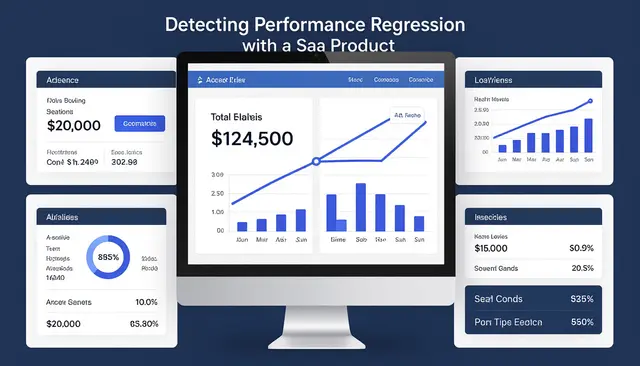
Explore how performance regression testing with automation identified critical issues in a SaaS product and maintained reliability.
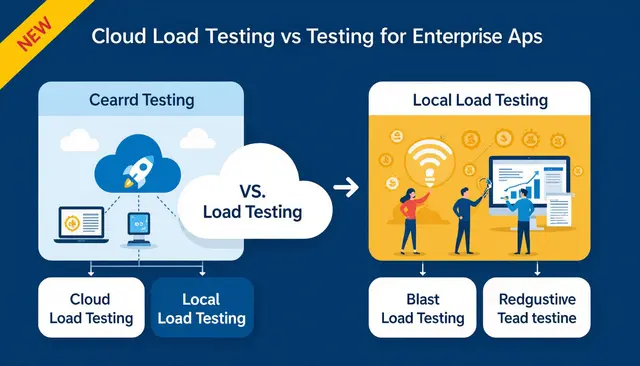
Cloud against local load testing for enterprise apps, compared on scalability, cost and accuracy, and the trade-offs each approach forces.

Explore how serverless computing transforms load testing strategies in 2026 and what testers must consider to stay ahead.

Learn how AI chatbots transform performance testing by improving scenario creation and analysis. Essential insights for QA teams to boost efficiency.
Embed performance testing in DevOps for continuous feedback, faster releases, and optimized reliability.
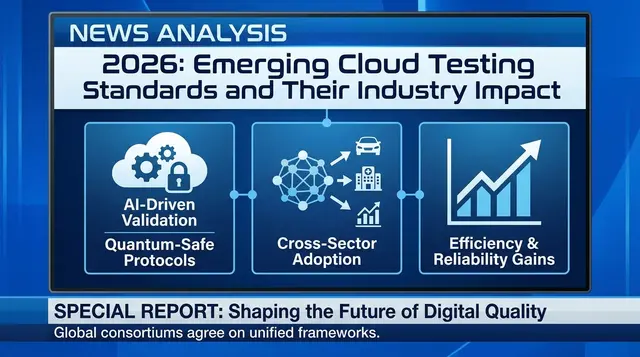
Explore the latest cloud testing standards in 2026, their impact on performance testing, and actionable strategies for organizations to stay ahead.

Explore how cloud testing supports sustainable software development by optimizing resource usage, reducing waste, and driving green IT initiatives.
Why performance testing matters more for cloud-native apps in 2026, as rising complexity and user expectations reshape how teams test.

Explore the latest cloud testing standards in 2026, their impact on performance testing, and what organizations need to know to stay ahead.
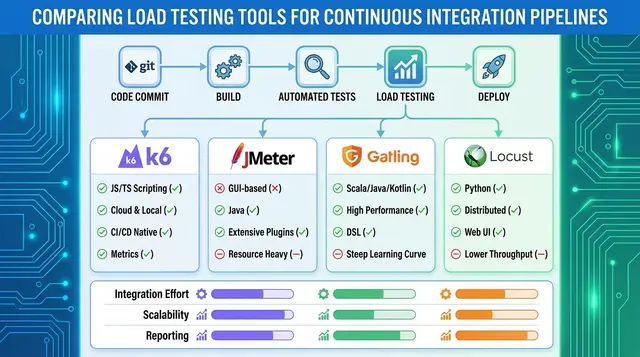
Discover the best load testing tools for CI/CD pipelines in 2026. Compare features, integrations, strengths, and real-world scenarios for DevOps teams.

Testing services individually misses the failures that appear when they call each other.

Edge computing moves work closer to users, so a single-region load test no longer represents them.
Performance testing before release finds problems too late to design around.

Growth exposed capacity limits that had been invisible at lower traffic. The fixes were architectural, so finding them late would have been expensive.
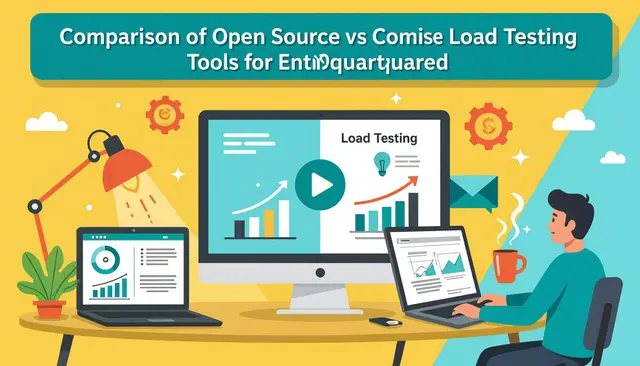
Open source is free to licence and expensive to operate at scale. Decide on who maintains the tests, since that determines what survives a team change.

A script that replays one fixed user hides caching effects and looks faster than reality.

AI is moving performance testing from scripted runs to continuous analysis of production-like behaviour.
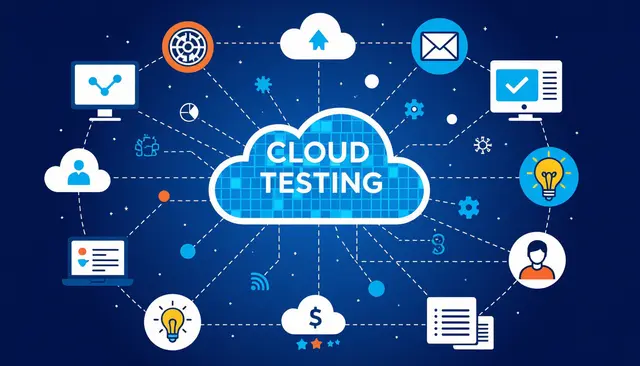
Judge a platform on CI integration and result analysis, not on maximum virtual users.

Mix journeys by real proportion rather than testing each endpoint evenly. Vary data per user, or caching makes the system look faster than it is.

The recurring challenges are test data, environment parity and cost control, not tooling.
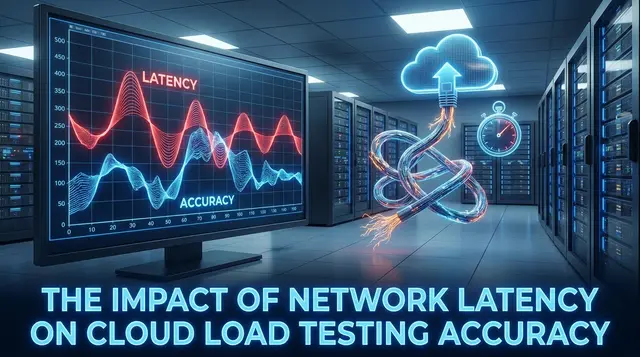
Latency between the load generator and your servers is added to every measurement.
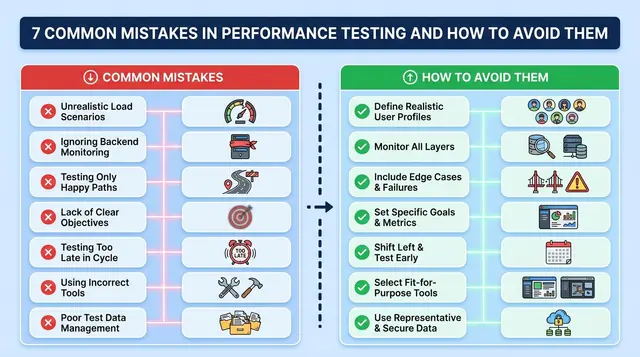
The common mistakes are testing too late, testing an unrepresentative environment, and measuring averages.

Mobile users abandon faster and on worse networks, so the tolerance is lower than desktop. Test on throttled connections rather than office wifi.

Cold starts make serverless latency bimodal, so averages describe neither case.
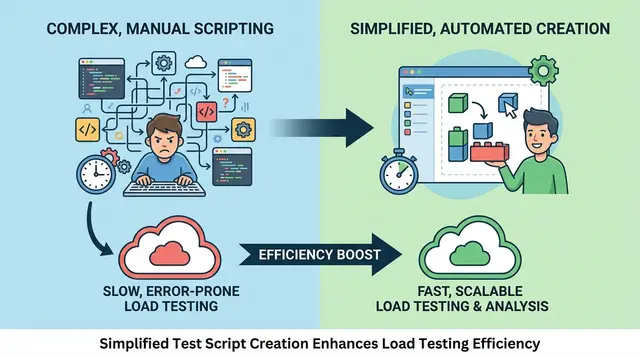
Most load testing time goes on writing and maintaining scripts, not on running them.
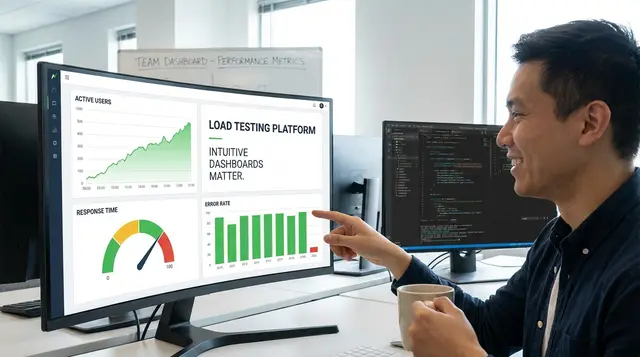
Usability drives adoption more than feature depth in testing tools. Show the few numbers that trigger a decision, not everything the platform can plot.
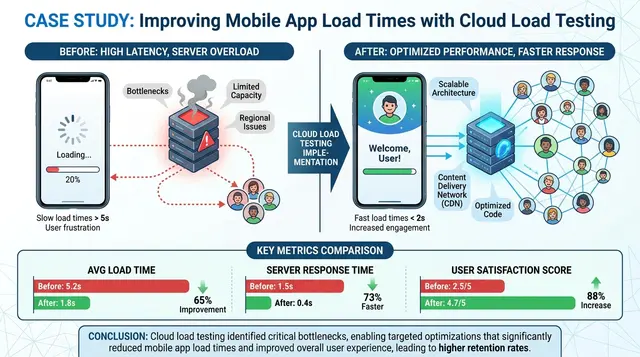
Mobile load time is dominated by network conditions rather than device speed. Testing from real regions surfaced delays that local testing never showed.
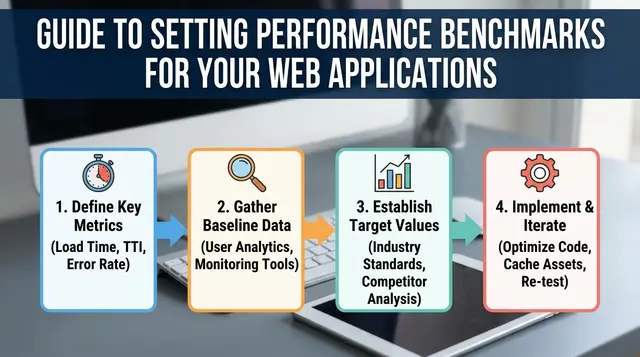
A benchmark is only useful against a stated target, not as an isolated number.
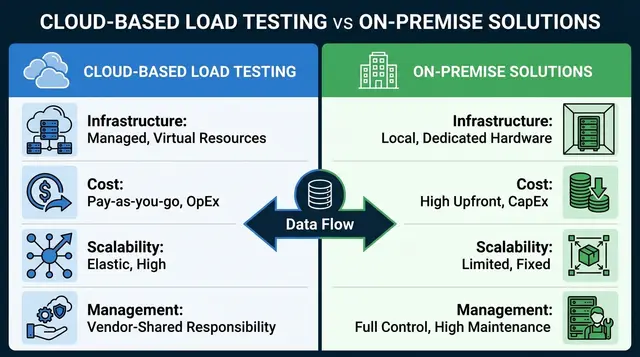
Cloud wins for startups on time to first test; on-premise wins only with strict data residency needs.
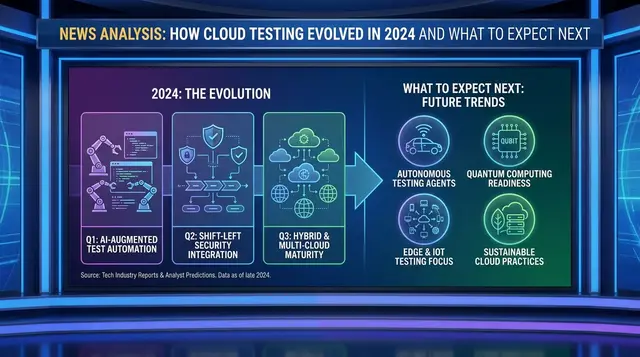
Testing has shifted from a release gate to a continuous signal, which changes how teams are staffed.

Adoption depends on how quickly someone unfamiliar can get a useful result. More automation on top of a confusing tool multiplies the confusion.
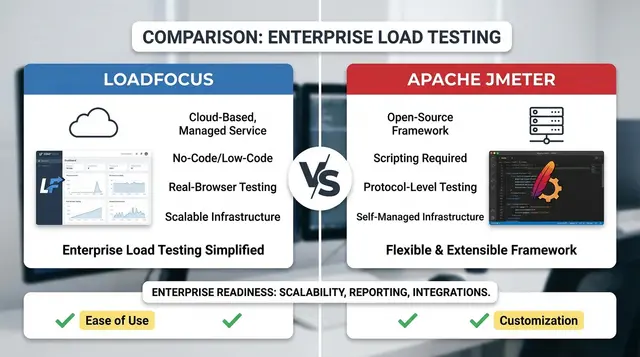
JMeter is free but the running cost is the infrastructure and expertise it needs.
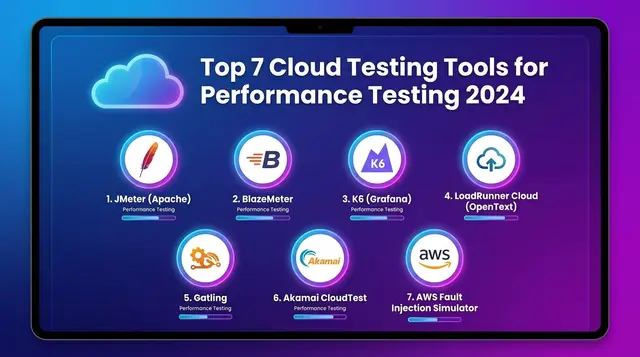
Cloud testing removes the load-generator capacity problem, which is what limits most on-premise tests.

Testing services in isolation misses the failures that only appear when they call each other.

Non-functional requirements are testable numbers: response time, availability, throughput.

A canary sends a small traffic slice to the new version so failures stay small and reversible.

Code-free load testing lowers the barrier for teams without a dedicated performance engineer.
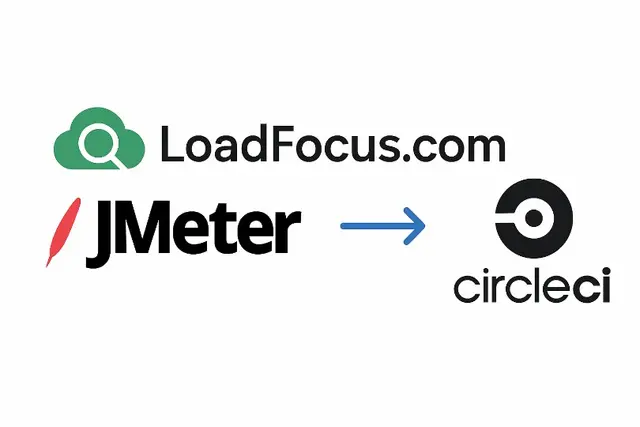
Fail the job on a threshold. A report nobody opens changes nothing. Keep the pipeline test short and schedule longer soak tests separately.

A workflow is triggered by an event and runs jobs made of steps, which is the whole model.

Playwright drives Chromium, Firefox and WebKit through one API. Auto-waiting removes most of the sleep-based flakiness older frameworks suffer from.

QA is broader than finding bugs: it covers process, risk and release confidence.

Load test an Azure Web App without crashing it. Autoscaling reacts after load arrives, so test the scale-out itself, not the steady state.

Keep the pipeline fast. A suite people skip because it is slow provides no safety at all.
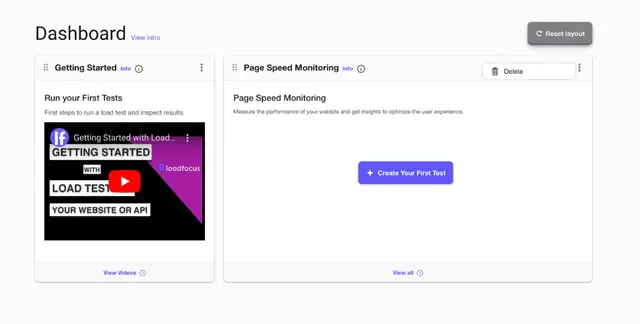
A dashboard is only useful if it shows the few numbers you act on. Arrange widgets around a question you ask often rather than around what is available.

Depth in one area beats shallow familiarity with every tool. Automation is a skill within testing, not a replacement for knowing what to test.

Releasing often only works if the pre-release checks are automated and identical every time.

The closer the parity, especially in data and scale, the more useful it is. A staging environment that drifts from production gives false confidence.

Exchanges fail at the order book and matching engine, not at the marketing pages.

Emulators catch layout and viewport problems quickly and cheaply. Test the viewports in your analytics rather than a generic device list.

Assert on content as well as status, since a wrong body is still a failure. Keep assertions cheap. Heavy ones distort the timings you are measuring.
Don’t miss out on the latest testing tips and tricks, tools and news related to software testing.
Already +20,000 members in the list.
Load test websites and APIs from 25 cloud regions, monitor page speed and uptime, and get AI analysis that explains your results in plain English.