




Load testing best practices for QA
Repeatable, comparable, shareable.

A performance result nobody can reproduce is an anecdote. LoadFocus keeps every run, so tests are repeatable, results are comparable across releases, and the report you hand to a developer says what changed rather than what you remember.


The hard part is not running the test

Running a load test once is easy. Running the same test next sprint, against a changed build, from the same regions, and being able to say with confidence that the difference is real, is the part that takes a platform. Without stored baselines every result is a fresh argument.


Building a suite you can trust

Bring the scripts you already have

Upload existing JMeter test plans and run them in the cloud, so the work your team has already invested in scenarios is not thrown away.

Hold the variables still

Pin regions, virtual users, ramp-up and duration so consecutive runs differ by the build rather than by the setup. That is what makes a comparison mean something.

Hand over evidence, not opinions

Export a PDF report and share a result link, so the conversation starts from percentile response times and error rates instead of from impressions.


Where to go next


Load testing for QA engineers: FAQ

What are load testing best practices?

Test from your real peak concurrency upward, hold every variable except the build constant between runs, compare against a stored baseline, read percentiles rather than averages, and run from the regions your users are actually in.

Can I reuse my existing JMeter scripts?

Yes. Upload your JMeter test plans and run them from the cloud without maintaining your own load generators.

What is ramp-up time and why does it matter?

Ramp-up is how quickly virtual users are added. Adding them instantly tests a thundering herd, adding them gradually tests sustained load. They surface different failures, so the choice should be deliberate.

Should I look at average or percentile response time?

Percentiles. An average is dragged down by the many fast responses and hides the slow tail, and the slow tail is what a user experiences as the site being broken.

How do I make a load test reproducible?

Fix the regions, virtual user count, ramp-up and duration, store the run, and compare later runs against it as a baseline rather than against a remembered figure.

Can I share a result with a developer who has no account?

Yes. Results can be exported as a PDF report and shared, so a fix conversation starts from the same numbers.

Learn more. Read on our blog.

Outgrown your testing tools?

Load test websites and APIs from 25+ cloud regions, monitor page speed and uptime, and get AI analysis that explains your results in plain English.Start for free
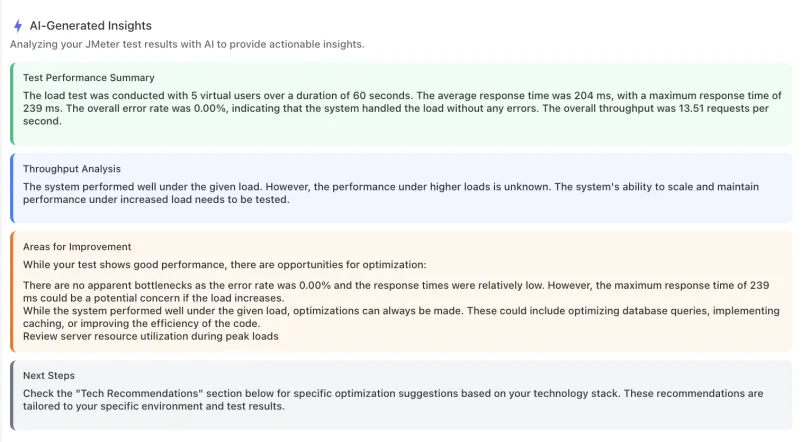
AI analysis of a load test result: performance summary, throughput analysis, and recommended improvements in plain English

We'll help you get started

Browse use cases, getting started videos, tutorials, and our showcase to find what you need to succeed with LoadFocus, and as a business.

Learn

Browse our documentation covering everything from use cases to getting started guided and videos.

Explore

Tools to make your testing development and overall experience much better.


A newsletter that sparks joy

Get notified about our upcoming features and articles.


×