





What is Locust?
Locust is an open-source load testing tool written in Python. Tests are defined as Python classes (a "locustfile"), each Locust instance simulates a user, and tests scale via distributed worker processes coordinated by a master node. Locust ships a built-in web UI for monitoring tests in real-time.
Locust is well-loved by Python-fluent engineering teams who want code-defined load tests in their primary language. The distributed mode requires self-managing master/worker infrastructure, typically Docker containers or Kubernetes, but for teams comfortable with that, Locust scales to large VU counts.
When Locust is the right tool
Locust fits these workflows:
- Python-fluent teams. If your engineering org writes Python and wants tests in the language they already know, Locust's locustfile.py model is natural.
- Code-defined complex scenarios. Multi-step user flows, custom data generators, conditional branching, all expressed in Python with full library access.
- Self-hosted infrastructure preference. Teams that want to run load tests inside their own VPC for compliance/data-residency reasons can self-host Locust on their own Kubernetes.
- Open-source budget. No license fees; the cost is the engineering time to operate the platform.
Where Locust stops being enough
Locust's open-source self-hosted model means you take on operational complexity that managed services handle for you:
- Distributed orchestration is your responsibility. Setting up Locust master + worker pods, scaling them, capturing logs, and managing test runs requires DevOps work that doesn't directly produce load test value.
- No managed multi-region execution. To run from multiple geographic regions, you provision worker fleets in each region yourself.
- No persistent dashboard or history. Locust's web UI is real-time during a test; capturing historical results requires saving to a separate data store.
- No JMeter/k6 script support. Locust uses its own Python-based locustfile format. Existing .jmx or .js scripts don't run on Locust.
- No native page speed or API monitoring. Locust is purely load testing. Continuous monitoring needs separate tools.
The main alternatives to Locust
Locust's appeal is that tests are ordinary Python, so the question for most teams is how much of that they give up by moving. Here is the field, with the language trade-off made explicit.
| Tool | Tests written in | Licence | Distributed load | Best fit |
|---|---|---|---|---|
| Apache JMeter | GUI, saved as .jmx | Apache 2.0 | Master/slave, you operate | Protocol breadth and a large plugin ecosystem |
| k6 | JavaScript | AGPL v3 | Paid (Grafana Cloud k6) | Teams who prefer JavaScript and CI thresholds |
| Gatling | Java, Scala, Kotlin | Apache 2.0 | Paid (Gatling Enterprise) | JVM teams who want a typed DSL |
| Artillery | YAML and JavaScript | MPL 2.0 | Paid (Artillery Cloud) | Node teams who prefer YAML scenarios |
| Grafana Cloud k6 | k6 JavaScript | Commercial | Included | Teams already standardised on Grafana |
| LoadFocus | .jmx and k6 JavaScript | Commercial | Included, 25+ regions | Python teams who want hosted runs without workers |
Nothing on this list keeps you in Python. That is the honest headline: if writing scenarios as Python classes is the reason you chose Locust, staying on Locust and hosting the workers yourself is a legitimate answer, and we would rather say so than pretend otherwise.
LoadFocus vs Locust: feature comparison
The table below compares LoadFocus against Locust in typical usage. Locust is open-source (free); the comparison is on capability + operational cost, not license cost.
| Feature | LoadFocus | Locust |
|---|---|---|
| License cost | Free tier; from $19/mo | Free (open-source) |
| Operational cost | Zero (managed cloud) | You manage master/worker infrastructure |
| Deployment model | Cloud SaaS | Self-hosted (VM/Kubernetes) |
| Geographic test coverage | 25+ cloud regions | Wherever you deploy workers |
| Max throughput | Up to 12,500 VUs | Bounded by your infrastructure |
| Web UI | Yes (persistent dashboard) | Yes (real-time only) |
| JMeter (.jmx) script support | Yes (native) | No |
| k6 (.js) script support | Yes (native) | No |
| Python locustfile support | No | Yes (specialty) |
| Historical results + trend graphs | Yes | Manual (Prometheus/InfluxDB exports) |
| CI/CD integration | Yes (CLI + GitHub Action) | Yes (subprocess invocation) |
| AI-generated analysis | Yes (all plans) | No |
| Page speed monitoring | Yes | No |
| API monitoring | Yes | No |
When LoadFocus is the right upgrade from Locust
Locust is a good fit for Python teams with the bandwidth to operate it. The decision to move to LoadFocus usually comes down to operational cost, geographic distribution, or platform consolidation.
You don't want to operate the load-test platform
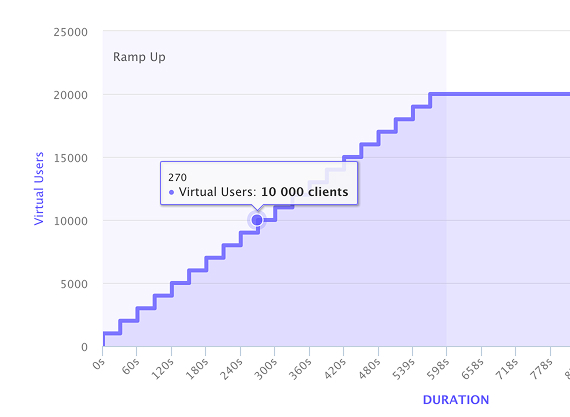
Setting up + scaling + monitoring Locust master/worker fleets is real work. LoadFocus removes that operational overhead, you select VU count + region, the platform handles the rest.
You need multi-region load from regions where you don't have infrastructure
Self-hosted Locust runs from wherever you provision workers. LoadFocus runs from 25+ regions globally without you provisioning anything.
You want persistent test history and trend graphs
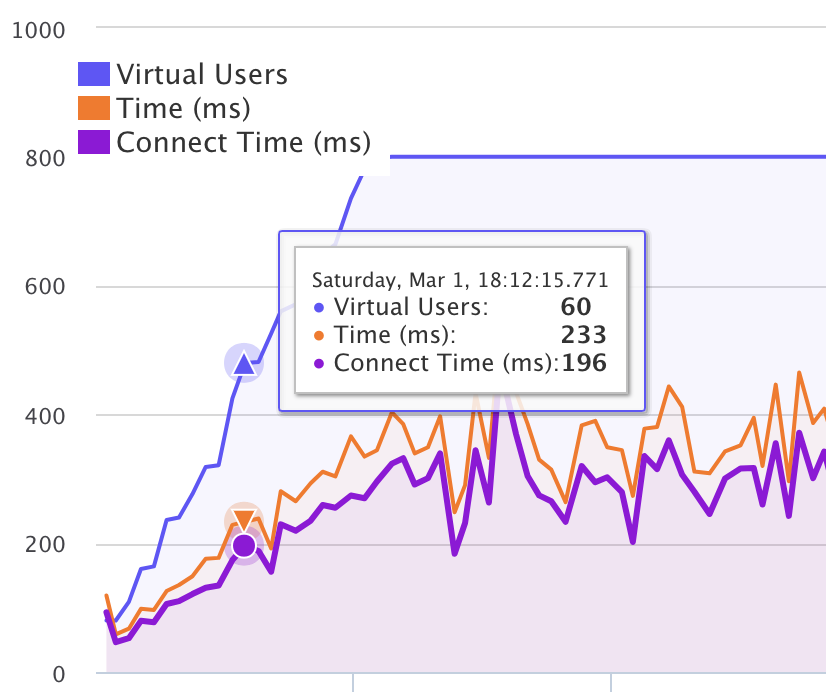
Locust's UI is real-time. To track regressions across runs, you'd build custom data export + visualization. LoadFocus stores test history with built-in trend graphs.
You want to consolidate load + page speed + API monitoring
Locust does load testing only. LoadFocus combines load + page speed + API monitoring on one platform.
Your team isn't Python-fluent or wants standard script formats
If your team prefers JavaScript (k6) or doesn't want to maintain Python skills, LoadFocus runs k6 + JMeter natively, which are more widely-adopted formats than locustfiles.
Locust vs JMeter for Python teams
These two get compared constantly, and the comparison is usually framed wrongly as open source versus open source. The real difference is who writes the test and how it is maintained.
Locust keeps everything in Python. A scenario is a class, you can import your own modules, reuse fixtures, and review a load test in the same pull request as the code it exercises. For a Python team this is a genuine advantage and it is why Locust keeps winning greenfield projects.
JMeter puts the test in a GUI and stores it as XML. That is worse for code review and better for almost everything else: protocol coverage, plugins, correlation, and the simple fact that most performance consultants already know it. A .jmx file is also portable across every hosted runner in this market, which a locustfile is not.
For a Python team the pragmatic split is to keep Locust for scenarios that are genuinely stateful and application-aware, and use JMeter for protocol-level and endurance runs where the script is throwaway. LoadFocus runs the second category so you are not maintaining worker fleets for it, and leaves the first where it belongs.
If your team is not Python-fluent, the calculus inverts entirely: Locust's main advantage becomes a hiring constraint, and a .jmx or k6 script your whole team can read is worth more than an elegant locustfile only one person maintains.
Migration from Locust
- Sign up at loadfocus.com/signup.
- Translate your locustfile.py to a k6 (.js) or JMeter (.jmx) script. The mapping is direct: Python
self.client.get('/url')becomes JavaScripthttp.get('/url')in k6. - Upload the .js or .jmx to LoadFocus.
- Configure VU count and ramp-up to match your locustfile parameters.
- Run from one or more regions. Compare results against your Locust runs to validate.
Many teams keep Locust for in-VPC compliance-sensitive tests and use LoadFocus for distributed/scheduled tests. The two coexist well.
FAQ: LoadFocus vs Locust
Can LoadFocus run my locustfile?
No. LoadFocus runs JMeter (.jmx) and k6 (.js) scripts. Locust's Python locustfile format is specific to Locust. The closest LoadFocus equivalent is k6, which provides similar code-defined scenario flexibility in JavaScript.
Is Locust faster than LoadFocus?
For raw single-worker throughput, Locust and LoadFocus are comparable. The differences are operational: LoadFocus runs distributed across cloud regions transparently; Locust requires you to manage that distribution.
How does pricing compare?
Locust is open-source (free license). LoadFocus starts at $19/month. The cost-comparison hinges on whether you value managed cloud execution, persistent history, multi-region coverage, and platform consolidation enough to pay for them.
Can I keep Locust and add LoadFocus?
Yes. Many teams keep Locust for in-VPC compliance tests and add LoadFocus for global distributed load + page speed + API monitoring.
Does LoadFocus support distributed master/worker like Locust?
LoadFocus runs distributed transparently, you specify VU count + region, the platform manages the worker fleet. There's no master/worker setup for users to configure.
Try LoadFocus free
If maintaining Locust master/worker infrastructure is taking time away from actual load testing, LoadFocus removes the platform-operations work. Sign up for a free tier at loadfocus.com/signup, no credit card, and run your first cloud load test in under 5 minutes.