
Key takeaways
- Exchanges fail at the order book and matching engine, not at the marketing pages.
- Test bursts rather than steady load, since trading traffic arrives in spikes.
- Use isolated test accounts and a sandbox ledger so a load test cannot touch real balances.
Load Testing your cryptocurrency exchange service is very easy with the Cloud Load Testing Tool provided by LoadFocus.
You can easily simulate exchange transactions by calling your API endpoints within our load testing tool. It can simulate up to 600k requests per each load test.
Load tests run in real-time and you can inspect multiple performance metrics like: response time, latency time, requests per second, throughput per second, and identify potential errors and bottlenecks that may impact your customers. Here you can better understand errors and response codes.
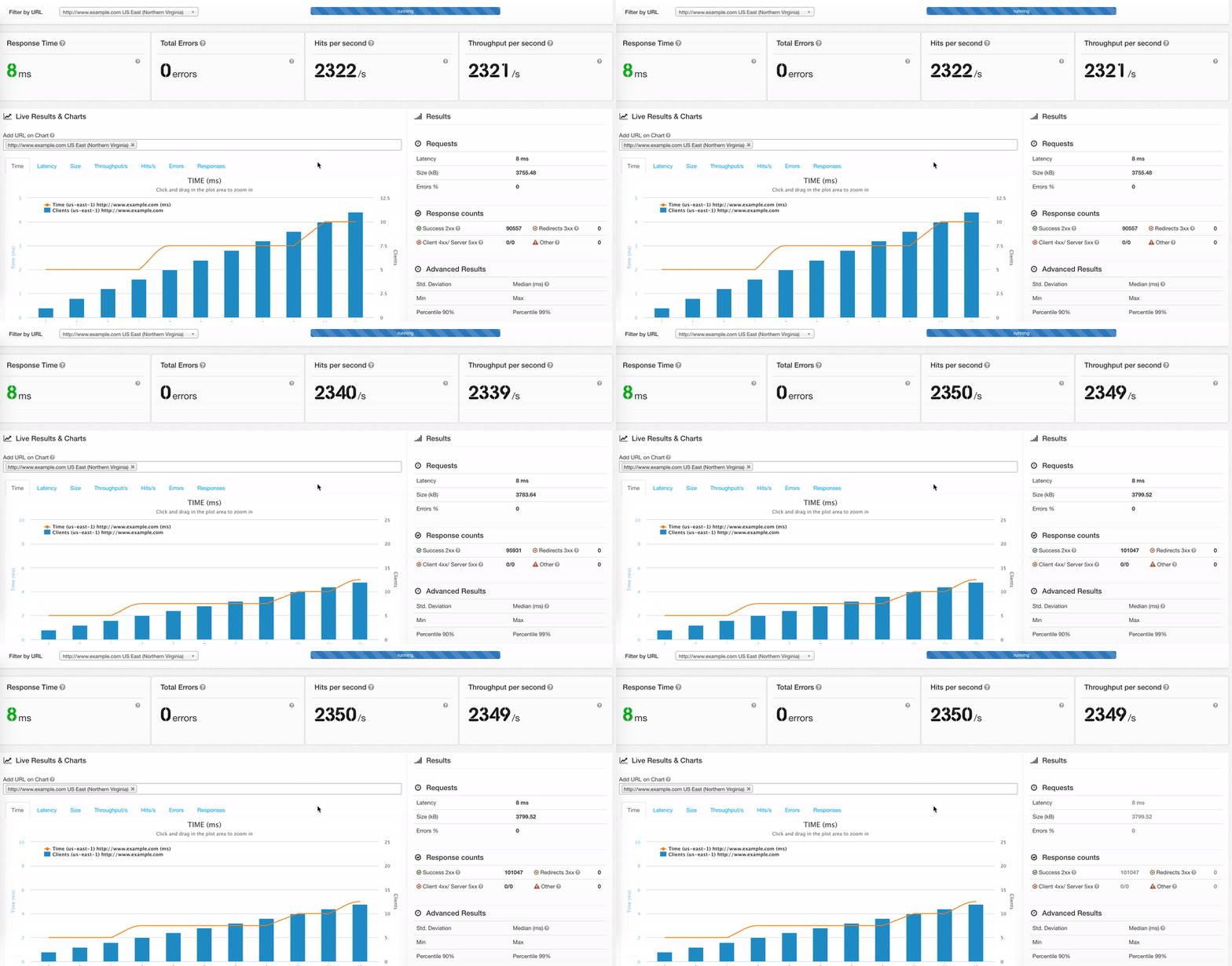
Also, multiple cloud locations are available so you can simulate traffic from different part of the world.
To provide a faster web interface, you can run a free website speed test and discover potential speed improvements for your Cryptocurrency Exchange Service.
For more details on how to get started here click here.
Frequently Asked Questions
What should an exchange load test target?
The order book and the matching engine. Those are where an exchange actually fails, while the marketing pages are the part that survives anything.
Should the load be steady?
No. Trading traffic arrives in bursts, so test spikes. A smooth ramp misses the queueing behaviour that a sudden move produces.
How do I test safely?
Isolated test accounts against a sandbox ledger. A load test that can reach real balances is one configuration mistake away from a very expensive incident.