Key Takeaways
Practical Steps for Effective Performance Budgets in 2026
Performance budgets deliver value when tied to user-focused metrics such as Time to Interactive and First Contentful Paint. For most mobile experiences, aiming for a Time to Interactive under five seconds helps reduce bounce rates and keeps users engaged. For more on these metrics, refer to MDN’s guide to performance budgets.
Set warning and error thresholds to catch slowdowns before they reach production. Automate these checks in your CI pipeline using tools such as Bundlesize. LoadFocus users can streamline this process; see this guide to setting performance benchmarks for practical examples.
Is Your Infrastructure Ready for Global Traffic Spikes?
Unexpected load surges can disrupt your services. With LoadFocus’s cutting-edge Load Testing solutions, simulate real-world traffic from multiple global locations in a single test. Our advanced engine dynamically upscales and downscales virtual users in real time, delivering comprehensive reports that empower you to identify and resolve performance bottlenecks before they affect your users.
Align budgets with business objectives and update them as goals shift. Treat budgets as living guidelines – when teams understand the reasoning behind thresholds, these limits become tools for continuous improvement.
What Performance Budgets Are – and What They’re Not
Performance budgets go beyond resource limits. They are outcome-oriented constraints designed to improve user experience. This approach, established in web industry practice, connects KPIs directly to user interaction speed rather than arbitrary technical ceilings.
Performance Budgets: Outcome-Based, Not Arbitrary Limits
Performance budgets focus on measurable user experience metrics like Time to Interactive and First Contentful Paint. For example, targeting a Time to Interactive under five seconds on mobile aligns with user expectations and supports business outcomes by reducing bounce rates. See MDN’s performance budgets guide for further details.
Think your website can handle a traffic spike?
Fair enough, but why leave it to chance? Uncover your website’s true limits with LoadFocus’s cloud-based Load Testing for Web Apps, Websites, and APIs. Avoid the risk of costly downtimes and missed opportunities—find out before your users do!
| Component | What It Does | Why It Matters |
|---|---|---|
| Time to Interactive | Measures how quickly users can interact with content after page load. | Keeps experiences responsive, reducing abandonment on slower connections. |
| First Contentful Paint | Tracks when the first text or image is rendered. | Improves perceived speed, encouraging users to stay engaged. |
| Total JavaScript Size | Caps the overall JavaScript payload delivered to the browser. | Mitigates performance regressions due to feature bloat or third-party scripts. |
| Warning/Error Thresholds | Flag or block changes exceeding budgeted limits during development. | Helps teams address issues early, before they impact production. |
Performance budgets align technical decisions with user-centric goals, especially in fast-moving web environments. This approach justifies resource allocation in terms of user satisfaction and business KPIs.
Key Insight: Performance budgets are strategic tools that connect technical choices to user experience and business value.
Effective teams treat performance budgets as living commitments. Automated tools enforce constraints, but the real value lies in prioritizing performance. Understanding performance budgets sets the foundation for reliable, user-first improvements.
Why Performance Budgets Matter for Modern Web Applications
Performance budgets have become essential for web teams focused on user experience and business impact. They set clear technical and experiential limits – like Time to Interactive or total JavaScript size – tied to user perception and interaction. Defining these constraints upfront creates a shared contract across teams, protecting user satisfaction and revenue potential.
The connection between performance and business outcomes is widely recognized. Slow-loading sites lose users before they see your value proposition. For instance, a Time to Interactive above five seconds on 3G/4G increases bounce rates. Industry leaders prioritize budgets for metrics like First Contentful Paint, using real-world network simulations to test releases. Tools such as cloud testing and load testing from LoadFocus help enforce constraints and measure changes before production.
LoadFocus is an all-in-one Cloud Testing Platform for Websites and APIs for Load Testing, Apache JMeter Load Testing, Page Speed Monitoring and API Monitoring!
Committing to a performance budget keeps development focused on what impacts users and business. Tying goals to user-centric metrics and business KPIs creates a feedback loop that rewards smart decisions and exposes the cost of shortcuts.
How Budgets Drive Accountability
The strength of performance budgets lies in fostering transparency and shared responsibility throughout the product lifecycle. Agreed thresholds reduce ambiguity about what counts as “good enough.” Automated tooling flags regressions early, clarifying who is responsible for fixing issues and preventing technical debt from accumulating.
This model is similar to performance-based budgeting in the public sector, where spending is justified by measurable results. In web development, the “currency” is user experience and business KPIs. Contributors who ship features without degrading performance are recognized for their impact, encouraging continuous improvement over reactive fixes. For more on organizational impact, see the analysis of emerging cloud testing standards.
Accountability works when budgets are realistic and well-communicated. Understanding what’s at stake and how success is measured makes it easier to prioritize the right work and avoid finger-pointing.
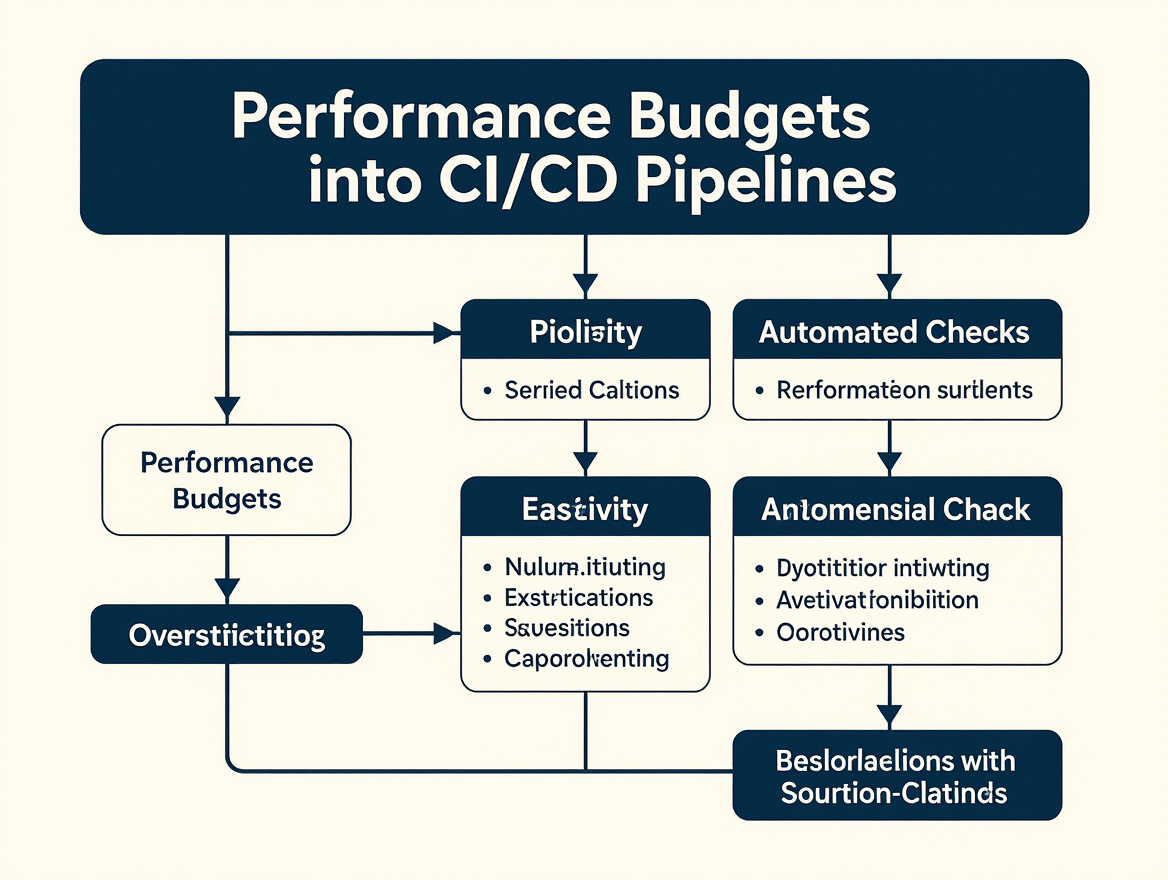
Core Components of a Performance Budget
A performance budget is more than a technical checklist – it’s a system that binds user experience goals to development. Core components include selecting key metrics, defining clear thresholds, and ensuring the scope covers business outcomes. Here’s how each part contributes to effective budgeting.
| KPI | What to Track | Why It Matters |
|---|---|---|
| Time to Interactive (TTI) | Seconds from page load until the app is reliably usable | Directly reflects user frustration levels – a slow TTI means visitors can’t use the app, driving bounce rates up. A common target is under five seconds on 3G/4G connections (MDN: Performance Budgets). |
| First Contentful Paint (FCP) | Time until the first text or image element is painted | Improves perceived speed. Early content display reassures users the site is responsive, crucial for engagement on content-heavy pages. |
| Total JavaScript Size | Combined size of all JS assets loaded initially | Large bundles slow down loading and execution, particularly for users on mobile or with limited bandwidth. This is a common cause of slow Time to Interactive. |
| Resource Count | Number of requests for scripts, images, styles, and fonts | Too many HTTP requests increase page load times and can overwhelm the browser, especially on slower networks. |
| Largest Contentful Paint (LCP) | Time until the largest visible element completes rendering | Correlates with when users see the main page content, a strong predictor of satisfaction on e-commerce and landing pages. |
Choosing the Right Metrics
Start with user-centric metrics that translate technical performance into real user experience. Metrics like Time to Interactive and First Contentful Paint reflect how quickly users can see and use the page. For content-driven sites, prioritize First Contentful Paint so visitors see headlines and images immediately. If your app is interaction-heavy, focus on Time to Interactive and total JavaScript size to avoid sluggish interfaces.
Business context matters: for SaaS dashboards, users expect responsive charts and filter controls, while for news sites, main article content must appear fast. These insights align with MDN’s guidelines on performance budgets and are echoed in applied guides like this LoadFocus performance benchmarks walkthrough for 2026.
Defining Thresholds
Every metric needs two explicit thresholds: a warning level and an error level. Warnings signal the team to investigate before users notice problems. Errors block a deployment or fail a CI check, halting regressions that would hurt conversion or retention. For example, you might set a warning at four seconds for Time to Interactive and an error at five seconds, based on what’s considered acceptable for your user base.
Setting these levels isn’t just a technical exercise – it’s about balancing ideal experience with real-world constraints. Warning thresholds help manage technical debt, giving teams time to fix issues before users are impacted. Error thresholds enforce non-negotiable standards. Tools like webpack or Bundlesize make this practical by surfacing alerts in the build pipeline (MDN: Performance Budgets), while cloud testing platforms such as LoadFocus can validate these budgets under simulated load, catching issues missed by local development. For more on integrating budgets with monitoring, see this guide on monitoring Core Web Vitals.
Scope is also important. Decide whether your performance budgets apply globally, by page, or by resource type. For most teams, a layered approach – global for overall limits, with page- or resource-level overrides – balances ambition with the realities of complex web stacks.
Step-by-Step Process: Setting Performance Budgets in 2026
Gathering Baseline Data
Before setting performance budgets, understand your product’s real-world behavior. Combine cloud-based load testing with user monitoring. Simulate peak traffic and typical scenarios to capture metrics like Time to Interactive and First Contentful Paint. Platforms like LoadFocus’s cloud load testing tool generate traffic patterns for launch days or unexpected spikes. Pair this with real user monitoring to see performance across devices and network conditions. This baseline data distinguishes true regressions from routine variance.
For more on baselining and budget definition, see MDN’s performance budget guide, which offers practical steps for measuring key metrics. Establishing this foundation early prevents confusion if targets are missed or exceeded.
Defining and Documenting Budgets
With baseline metrics, formalize performance budgets for the entire team. Select KPIs that mirror user experience and business priorities. For instance, if mobile retention is a concern, set a Time to Interactive budget for 3G/4G users under five seconds. If your homepage is content-heavy, focus on First Contentful Paint or total image weight.
Include a warning threshold to flag regressions and a stricter error threshold that blocks releases if exceeded. Document decisions in a shared space accessible to engineering, product, and business teams. Be explicit: say “Block deploy if TTI exceeds five seconds on 3G/4G,” not “Keep site fast.” This clarity sets expectations for everyone involved.
| Before | After |
|---|---|
| “Our site should load quickly for users.” | “Set Time to Interactive budget to five seconds or less on 3G/4G connections. Warn at 4.5 seconds, block releases at five seconds. Measured via LoadFocus synthetic tests and real user data.” |
The after version works because it defines what metric to track, how to measure it, and what the consequences are – all in concrete terms that can be enforced and reviewed.
Enforcing Budgets in CI/CD
A performance budget is only as effective as your enforcement process. Integrate budget checks into your build pipeline to evaluate every code change against standards before production. Use tools like webpack’s performance hints or Bundlesize to automate checks. If a new feature increases JavaScript beyond your threshold, the build will warn or fail – catching issues before they escalate.
The process typically looks like this:
- Define thresholds for each KPI (e.g., total JS < 200KB, TTI < five seconds).
- Configure your CI workflow to run budget checks automatically after every commit or pull request.
- If a warning threshold is crossed, alert the team for investigation. If an error threshold is exceeded, block the build or require explicit approval to proceed.
Most teams combine synthetic monitoring tools – like those described in this guide to synthetic monitoring – with budget checks in CI to ensure alignment between automated tests and real-world outcomes. This approach is especially valuable for fast-moving projects, where manual checks can’t keep up with release velocity.
Translating file size budgets into user-facing speed gains isn’t always straightforward. Changes in third-party scripts or API response times can skew results, so review and adjust thresholds based on ongoing data – as emphasized in MDN’s actionable performance budget advice. Periodic reviews, ideally in sprint retrospectives or post-mortems, help keep budgets realistic and relevant as your stack evolves.
By following a structured, transparent process for setting and enforcing performance budgets, you create accountability at every stage – from planning and coding to deployment and monitoring. This focus on measurable, outcome-oriented goals separates teams that consistently deliver a great user experience from those that scramble to patch regressions after the fact.
Before and After: The Impact of Performance Budgets
What Changes When Performance Budgets Are Set?
Introducing performance budgets is rarely just a technical tweak. It’s a cross-team shift in how priorities are set and outcomes are measured. Teams without explicit budgets focus on feature delivery, addressing performance only when problems surface. Setting outcome-focused thresholds forces everyone – developers, designers, product managers – to consider user experience from the start. Mozilla’s performance budget guide outlines how explicit targets for metrics like Time to Interactive or First Contentful Paint reduce ambiguity and help teams catch regressions early.
| Before (No Performance Budgets) | After (Performance Budgets Enforced) |
|---|---|
|
Release cycles prioritize new features. Asset size grows unchecked. Performance issues only flagged in late-stage QA, often resulting in last-minute scrambles or postponed fixes. Example: JavaScript bundle grows substantially over time; load time on 3G stretches beyond typical user expectations. |
Every pull request triggers automated checks. If code pushes the JavaScript bundle past a set threshold or slows Time to Interactive over five seconds on simulated 3G, the build fails. Example: Teams proactively optimize new dependencies. Asset bloat is caught immediately, with fixes before features launch. |
Why the “After” Scenario Works
The difference is accountability and proactive enforcement. With budgets in place, teams develop a shared language around technical debt and user impact. Automated alerts – often integrated with cloud testing platforms like LoadFocus – flag regressions before they reach production. This tight feedback loop prevents pitfalls such as unchecked asset growth, image bloat, or slow initial renders. It also enables more consistent improvements in user experience, since each release is constrained by realistic thresholds that mirror actual network and device conditions.
Organizational and Technical Benefits
Beyond technical wins, performance budgets enable clearer communication between engineering and business stakeholders. Decision-makers can trace specific investments – like optimizing third-party scripts or prioritizing lazy loading – back to measurable outcomes such as reduced bounce rates or improved engagement. Proactive budget enforcement also helps teams avoid firefights and build a culture where performance is everyone’s job, not just the ops team’s responsibility.
Key Insight: Setting and enforcing performance budgets transforms performance from a last-minute scramble to a continuous, measurable priority that aligns technical work with user and business outcomes.
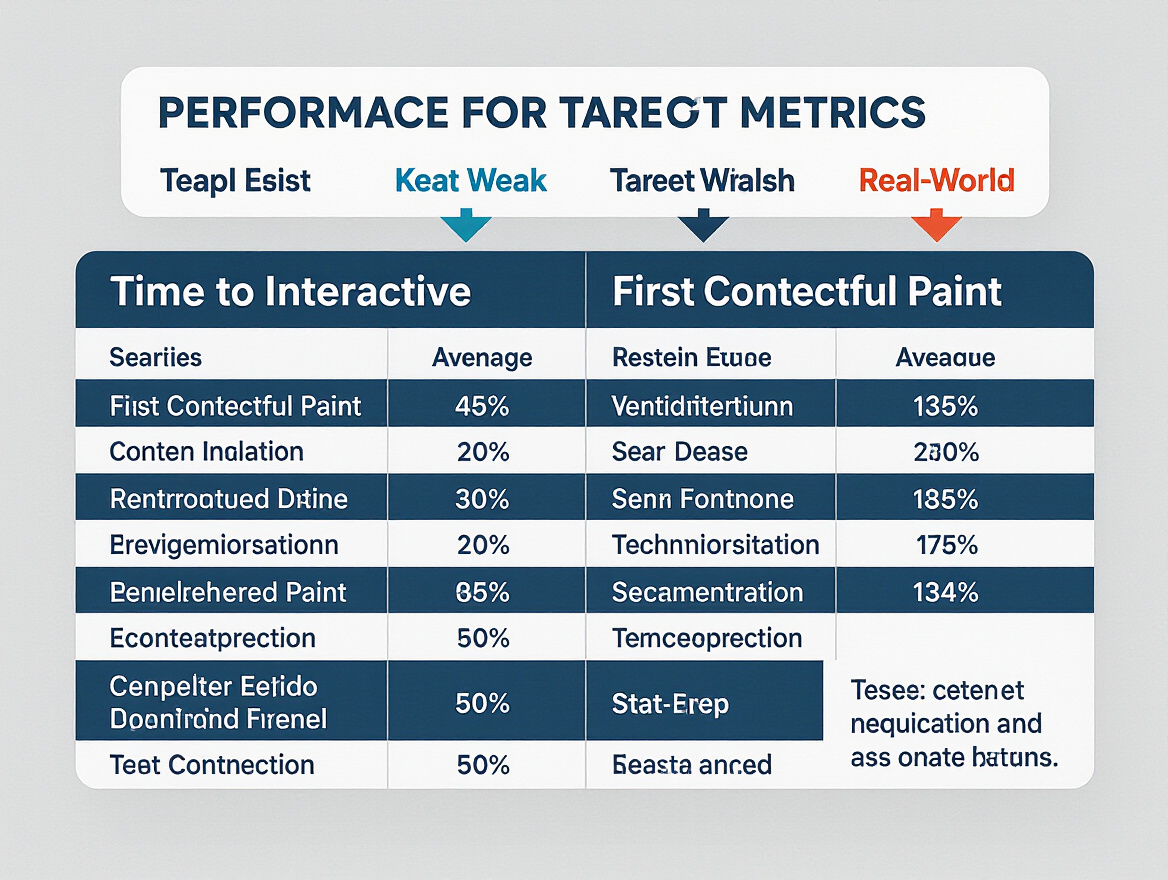
Integrating Performance Budgets with Cloud Testing and Monitoring
Continuous Budget Validation
Integrating performance budgets with cloud-based testing and monitoring is essential in 2026. Teams can’t rely on static checks or sporadic audits. Continuous validation connects budget thresholds for metrics like First Contentful Paint or Time to Interactive to live monitoring tools and alerting systems.
Cloud-based solutions simulate real user conditions at scale, flagging when key KPIs breach warning or error thresholds. For example, integrating a scheduled speed test with a platform like LoadFocus’s website speed test tracks site performance across global locations and device types. If the average Time to Interactive for users on a typical 4G connection exceeds your budget, you receive actionable alerts – before it becomes a business problem.
This approach addresses the challenge of environmental drift. Deployments don’t happen in a vacuum. With synthetic monitoring running 24/7, you catch issues from CDN misconfigurations, third-party script changes, or regional slowdowns that might not show up in pre-release lab tests. For more on synthetic monitoring, see the guide on improving user experience with synthetic monitoring.
- Align monitoring schedules to business-critical hours and user locations.
- Set alert thresholds to match your budget’s warning and error levels for each KPI.
- Automate notifications to bring developers, QA, and product managers into the loop as soon as performance drifts.
The result: performance budgets become living guardrails, enforced not just in code reviews but in real-world production traffic, keeping teams accountable and focused on actual user outcomes.
Automated Regression Detection
The value of modern performance budgets is most apparent when integrated into your cloud testing stack. Automated load testing platforms, like LoadFocus, tie budget thresholds directly to CI/CD pipelines and scheduled performance tests. Any code change, infrastructure tweak, or major content update is tested against predefined limits.
If a regression is detected – such as a spike in JavaScript bundle size pushing Time to Interactive above your max – the system can block the release, trigger rollback workflows, or open priority tickets. For multi-tenant SaaS products, multi-environment testing is key. LoadFocus’s guide to load testing multi-tenant SaaS applications explains enforcing budgets across staging, QA, and production environments, ensuring no tenant suffers from slowdowns.
Continuous, automated regression detection enforces discipline. Developers consider performance from the start, knowing exceeding a budget is an actionable failure. For UI-heavy or API-driven apps, regular load testing and real-time monitoring create a feedback loop supporting lasting performance gains. For practical tips, the performance benchmarks guide outlines setting realistic KPIs and connecting them to cloud testing workflows.
By embedding performance budgets into every stage of the release process – from pre-merge checks to live traffic monitoring – you create a culture where speed and reliability are measured, enforced, and improved with every deploy.
Aligning Performance Budgets with Business Objectives
Too often, performance budgets are set by technical teams without connecting them to business outcomes. When budgets focus solely on page weight or speed metrics, they risk addressing symptoms rather than core goals. To be effective, performance budgets must connect technical targets with the objectives that matter most – whether that’s user retention, conversion rates, or service reliability.
Key Insight: The most effective performance budgets speak the language of business outcomes, not just technical KPIs.
Building a Shared Understanding
The first step is building a shared understanding of why performance budgets exist and what they’re intended to achieve. Stakeholders outside engineering may not appreciate the impact of a slow First Contentful Paint on user satisfaction, or how a few extra kilobytes of JavaScript can erode mobile conversion rates. It’s important to translate these technical details into language that resonates with the broader business context.
Map budget targets to user-centric metrics that leadership already values. For example, if the product team aims to reduce bounce rates, frame your performance budget around achieving a Time to Interactive below a specific threshold – directly tied to engagement. In both public and private sectors, these budgets exist to link resource allocation with measurable improvement, not to reward technical perfection for its own sake.
Involve business and product stakeholders early. Bring them into workshops to review actual user data, walk through bottlenecks, and co-create budgets that reflect both ambition and practical constraints. This collaborative approach increases buy-in and ensures budgets don’t become arbitrary checkboxes that teams work around.
Translating Business Objectives into Technical Targets
The translation process starts with clear, outcome-oriented goals. If the business wants to improve user retention, identify which performance indicators most impact that metric for your audience. For some web apps, reducing Time to Interactive on mid-tier mobile devices can cut abandonment rates. For content-heavy sites, speeding up First Contentful Paint might drive longer session times and higher ad revenue.
Once you’ve identified the right KPIs, set both warning and error thresholds – the first flags potential issues, the second blocks changes that could noticeably harm user experience. This two-tiered approach, as described in MDN’s guidance on performance budgets, helps balance ambition with realism. Use tools like LoadFocus to automate detection of budget breaches and bring real-time insights to stakeholder discussions, especially when justifying why a certain optimization or refactor is worth the investment.
Justifying Choices and Measuring Outcomes
Effective justification goes beyond technical rationale. When you present a budget, tie it directly to expected business impact. For example, “This budget for total JS size is designed to keep load times under three seconds on 4G, which we’ve seen correlate with better user engagement.” Even without hard numbers, qualitative outcomes – like improved UX during peak traffic, as surfaced by recent performance testing – can be compelling.
Finally, treat measurement as a continuous discipline. Regularly review performance data with your stakeholders, not just your developers. When you spot a trend – positive or negative – bring it back to the business context: what changed for your users, and what did it mean for your goals? This approach keeps performance budgets relevant and ensures they drive real progress, not just technical compliance.
Common Mistakes When Setting Performance Budgets
Why “Set It and Forget It” Doesn’t Work
One of the most frequent mistakes with performance budgets is setting arbitrary, one-size-fits-all limits without considering real-world usage patterns. It’s easy to default to round numbers – “let’s keep JavaScript under 300KB” or “First Contentful Paint under two seconds” – but these thresholds often ignore what users actually experience on their devices. Mobile networks, lower-end hardware, and emerging markets introduce variability that static budgets simply don’t capture. As highlighted in the MDN performance budgets guide, budgets should reflect your actual audience and device mix, not generic industry benchmarks.
The Danger of Outdated or Generic Metrics
It’s tempting to stick with the same metrics year after year, but web apps evolve quickly. New frameworks, third-party scripts, and shifting business priorities can all change what matters most for performance. Using outdated KPIs – like focusing solely on page weight or load time – often misses the nuances of today’s user experience. For sites relying on rich interactivity, a laggy Time to Interactive is far more damaging than a few extra kilobytes in assets. Rigid adherence to the wrong indicators can mislead teams and hide regressions, especially when business goals change mid-project.
Data Manipulation and Number-Chasing
Performance budgets introduce accountability, but they also open the door to data manipulation when teams focus on “hitting the numbers” instead of genuine improvement. Organizations sometimes tweak measurements or deprioritize untracked aspects of performance just to meet targets. This tunnel vision can undermine the broader goal: delivering actual speed and reliability to users, not just a green checkmark in a dashboard.
Watch Out for Inflexible Budgets
A common pitfall is treating performance budgets as immovable guardrails. Strict limits that block all changes can stifle necessary iteration, especially for teams experimenting with new features or shifting technology. As outlined in the guide on load testing for progressive web apps, flexibility is essential. Warning thresholds – set below hard stops – help teams manage technical debt and identify regressions early, without shutting down productive work. The best budgets evolve as apps grow, are openly communicated across teams, and get revisited each quarter or after major releases.
Mistakes with performance budgets are rarely about lack of ambition. More often, they stem from losing sight of actual user experience or relying on static, unexamined limits. Effective teams treat budgets as living documents – a tool for progress, not a finish line.
Advanced Strategies: Adapting Budgets for Modern Web Stacks
Managing Third-Party Dependencies
The rise of third-party scripts – from analytics platforms to chat widgets – makes managing performance budgets more complex. These external resources often sit outside your direct control, yet they can easily consume the allocation you set for critical metrics such as Time to Interactive or total JavaScript size. Rather than issuing blanket bans, a more mature approach is to budget explicitly for third parties: allocate a clear slice of your budget to these scripts, and monitor their impact with each release.
For example, you might cap third-party JS at a reasonable size on first load, with a warning if the combined size of analytics and marketing tags creeps above a set level. Automated checks – integrated into your CI pipeline or enforced using tools like Bundlesize – make it possible to catch regressions before they reach production. This discipline is especially vital for progressive web apps and other modern stacks, where even a few extra requests can tip the balance from fast to frustrating.
Adapting Budgets for Mobile and Diverse Network Conditions
Performance budgets in 2026 must reflect real user network conditions and device diversity. Setting targets based on your own high-speed office Wi-Fi is a recipe for missed opportunities. Instead, calibrate budgets to what matters most: time-to-interactive or first-contentful-paint on a mid-range device over a cellular connection. For instance, using a threshold like “Time to Interactive under five seconds on a 3G/4G connection” directly translates to improved bounce rates and engagement, as outlined in the MDN guide on performance budgets.
LoadFocus customers, for example, routinely run synthetic tests simulating slow 4G and throttled CPU profiles to keep their budgets honest across the spectrum of real user conditions. This ensures your optimization work benefits the majority of site visitors, not just your fastest segment. For more on synthetic testing, see the guide on using synthetic monitoring to improve user experience.
Regular Reviews for Evolving Expectations
User expectations and technology stacks never stand still. Every new framework, device class, or browser update can shift the baseline for what “fast enough” means – and what thresholds are realistic. As a result, performance budgets need regular review and recalibration. Schedule checkpoints at least quarterly, or whenever you roll out significant architectural changes. Involve both technical and business stakeholders so your targets remain outcome-focused: are you really optimizing for what matters to your users and your bottom line, or just chasing arbitrary numbers?
| Scenario | Challenge | Budget Adaptation |
|---|---|---|
| Adding a new marketing analytics script | Increased JavaScript payload risks exceeding JS size budget | Allocate a fixed budget for all third-party scripts, and require tradeoff decisions before adding more |
| Launching in a mobile-first emerging market | Users on slow networks and underpowered devices | Set stricter thresholds for critical metrics (e.g., FCP, TTI) under simulated 3G/4G and low-end CPU profiles |
| Framework or infrastructure upgrade | Potential for performance regressions due to new dependencies | Re-baseline all budgets post-upgrade; run parallel load testing to assess new bottlenecks |
| Quarterly business review | Shifting priorities or user expectations | Collaborate with business leads to redefine KPIs and realign budgets with current goals |
There is no permanent finish line with performance budgets. Instead, treat them as a living strategy – one that adapts to the realities of third-party risk, mobile-first performance, and a web ecosystem that evolves every year.
Frequently Asked Questions
What is a performance budget and why does it matter for web applications?
A performance budget sets explicit limits for key metrics that impact the user experience, such as Time to Interactive, First Contentful Paint, or total JavaScript size. Unlike financial budgets, these targets keep teams focused on delivering faster, more reliable web applications by tying technical work to measurable business outcomes. Setting these boundaries motivates accountability and helps developers avoid unintentional performance regressions. For more, see Investopedia’s overview of performance budgets.
Which metrics should I include in my performance budget?
Focus on user-centric metrics that reflect real experience – such as Time to Interactive (TTI), First Contentful Paint (FCP), total page weight, and critical JavaScript size. For example, aiming for TTI under five seconds on a 3G/4G connection is a widely used baseline to reduce bounce rates. If your site is content-heavy, prioritize FCP to improve perceived speed and engagement. Avoid setting targets for every possible metric; pick those most directly tied to your app’s purpose and user needs. For more examples, refer to MDN’s guide to performance budgets.
How do I implement performance budgets in practice?
Start by defining clear, outcome-oriented goals based on user experience. Next, set warning and error thresholds for each chosen metric. Many teams use development tools or integrate plugins – such as webpack’s performance hints or Bundlesize in CI pipelines – to enforce these budgets automatically. This workflow ensures you get immediate feedback when changes risk exceeding your thresholds. If you work in DevOps or want to automate budget enforcement, tools like LoadFocus provide real-time insights and alerting for web app performance.
How should I adjust performance budgets as my application evolves?
Performance budgets are not set-and-forget. Review targets regularly – at least quarterly, or after major releases. Adjust thresholds as user expectations shift, business goals change, or new features add complexity. Use ongoing monitoring and synthetic testing to measure real-world outcomes. When a budget is consistently hit or missed, it’s a signal to reassess priorities or technical strategy. For practical tips, see this LoadFocus guide to load testing progressive web apps.
What are common pitfalls or challenges?
Rigid budgets can stifle innovation if they’re not revisited when business needs evolve. There’s also a risk of teams “gaming” the numbers – optimizing for the metric rather than actual user experience. In public sector and large organizations, disagreements about what to measure and how to allocate resources can slow adoption or reduce the impact of performance budgeting. Always tie budgets to meaningful outcomes and communicate their rationale clearly across teams. Avoid setting arbitrary limits – base targets on user research, analytics, and realistic device/network conditions.
How do performance budgets connect to cloud testing and monitoring?
Performance budgets work best when paired with continuous monitoring and regular load testing. Tools like LoadFocus help teams catch regressions early by alerting you when a new deployment or code change pushes a metric near its limit. By simulating peak traffic or slow connections, you can validate that your budgets reflect real-world usage and aren’t just theoretical. For a broader look at integrating performance goals with testing, this 2026 guide to application performance monitoring tools offers practical context.
What’s the bottom line for 2026?
Performance budgets in 2026 are a proven way to ensure web apps remain fast and responsive as they scale. The most effective teams treat budgets as living agreements – adjusted as the business and technology evolve, enforced with the right tools, and always mapped to user experience, not just technical constraints.
Drafted using PostNext planner