Key Takeaways
5G Networks Are Changing Cloud Testing Fundamentals
5G networks have set a new benchmark for cloud testing by delivering ultra-low latency – down to one millisecond – and throughput that far exceeds 4G. This advancement allows for more realistic, scalable, and efficient tests that closely mirror the experience of users on modern devices. Simulating peak load or real-time analytics now reflects actual user conditions, rather than outdated network assumptions.
Network Slicing Enables Customizable Test Environments
A major breakthrough with 5G is network slicing. Testers can carve out isolated virtual networks, each with its own bandwidth and security profile. This enables validation of applications in diverse, controlled environments – improving test coverage and accuracy, especially for industries like healthcare or autonomous vehicles. For practical guidance on simulating realistic user behavior, see how to simulate real-world user scenarios.
Hybrid Deployments and Real-Time Analytics Require New Strategies
Most organizations still operate in a hybrid world where both 4G and 5G coexist. Cloud testing must account for fluctuating network quality and device capabilities. Test strategies need to adapt to this variability to ensure results align with end-user experience. Real-time analytics and AI-powered testing benefit from 5G’s speed and reliability, as discussed in this analysis of AI performance testing tools.
5G’s capabilities extend beyond speed – they enable a new level of fidelity in validating cloud services and applications, setting the pace for what’s possible in 2026 and beyond.
5G Networks Go Mainstream: Immediate Impact on Cloud Testing
The Global Rollout Arrives – And Testing Teams Feel It First
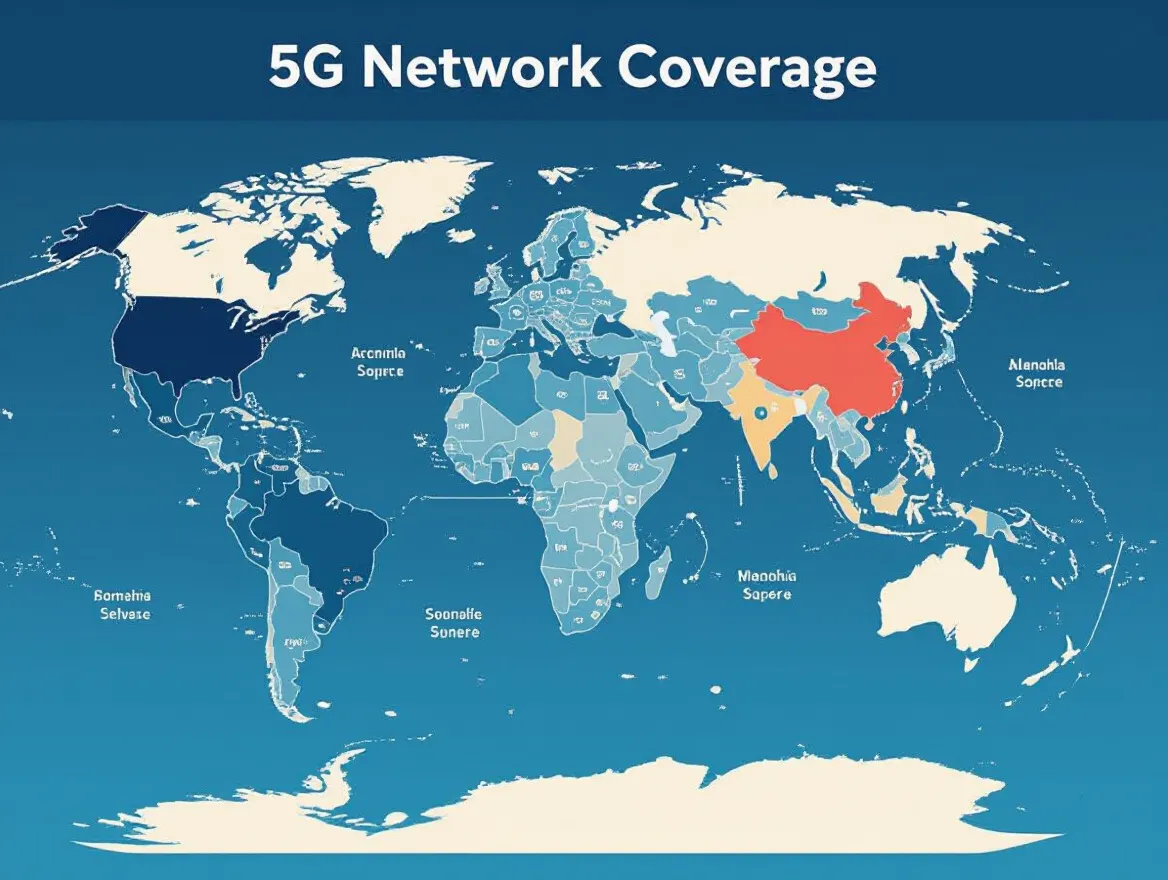
The global expansion of 5G networks is now a reality for anyone involved in cloud testing. With commercial deployments active across North America, Europe, Asia, and parts of Africa, 5G is becoming the expected standard in many developed and emerging markets. This reach has immediate, practical consequences for those building and validating web services at scale.
Under ideal conditions, 5G achieves peak download speeds up to 20 Gbps, with average experiences around 432 Mbps – both significantly faster than typical 4G speeds. More importantly, latency can drop as low as 1 ms. For cloud testing teams, this means a fundamental change in how quickly and accurately they can simulate real-world user scenarios.
| Network Generation | Avg Download Speed (Mbps) | Latency (ms) | Key Benefit for Cloud Testing |
|---|---|---|---|
| 3G | ~2 | 100-500 | Supports only basic mobile web tests; limited for modern cloud simulation |
| 4G LTE | ~42 | ~200 | Enables high-volume data transfer, but latency restricts real-time analytics |
| 5G | ~432 (up to 20,000 under ideal conditions) | 1-10 | Rapid, low-latency test cycles and complex IoT/device simulations |
From Test Runs to Product Launches: Who Benefits?
Cloud testing teams are not the only ones seeing the difference. Network engineers and product teams launching new features on modern 5G infrastructure are also rethinking their release strategies. Faster uploads mean quicker feedback loops, while network slicing lets you carve out dedicated, isolated test environments tailored to unique scenarios. These capabilities are especially relevant for organizations running distributed load tests or simulating bursts of traffic, as highlighted in this recent API latency case study.
Teams using platforms like LoadFocus can now execute more comprehensive cloud tests, covering edge cases that were previously out of reach due to bandwidth or latency constraints. As 5G-compatible devices become standard – many smartphones now support 5G – test results will increasingly reflect the actual user experience, not just theoretical benchmarks. For deeper analysis of how these network conditions impact test accuracy, see our breakdown on network latency and cloud load testing.
The arrival of 5G networks has raised the bar for what’s possible in cloud testing. Teams that adapt quickly will be best positioned to deliver reliable, high-performing applications as user expectations – and infrastructure – continue to evolve.
Why 5G Networks Matter Now for Cloud Testing
The Perfect Storm: 5G Arrives as Cloud Testing Evolves
Cloud-first software and the rapid growth of IoT devices have pushed traditional networks to their limits. 4G simply cannot deliver the speed, reliability, or consistency needed to simulate the real-world usage patterns of today’s apps and devices. In contrast, 5G networks offer average download speeds around 432 Mbps – much faster than 4G – and peak rates up to 20 Gbps. For cloud testing, this translates to faster test execution, reduced wait times, and the ability to model user experiences that are genuinely representative of what customers see on the latest hardware.
But speed is only part of the story. Ultra-low latency – down to one millisecond – enables real-time analytics, AI-driven test orchestration, and instant feedback loops that were previously out of reach. Testing platforms such as LoadFocus have begun to take advantage of these capabilities, supporting complex, distributed, and highly interactive workloads that mirror next-generation app demands. The ability to simulate large numbers of IoT sensors, autonomous vehicles, or healthcare devices in real time is now within reach.
Architectural Shifts: More Than Just Speed
5G’s use of small cells and dense deployment changes how cloud-based load and performance testing can be conducted. By supporting massive device densities and enabling network slicing, 5G allows testers to carve out isolated, application-specific environments on demand. This flexibility is particularly relevant for industries where edge computing intersects with cloud testing, or where regulatory and security requirements dictate bespoke network conditions.
Key Insight: 5G networks are not just faster – they enable fundamentally new types of cloud testing scenarios, from real-time IoT simulation to adaptive network slicing, that 4G cannot support.
As more organizations pursue cloud-first architectures and microservices, aligning testing strategies with 5G’s capabilities is quickly shifting from optional to essential.
Unpacking 5G’s Technical Innovations: What’s New for Testers?
| 5G Feature | Cloud Testing Benefit | Typical Use Case |
|---|---|---|
| Peak Data Rates (up to 20 Gbps) | Enables high-velocity load and performance testing for large-scale apps and APIs | Testing a global e-commerce site’s response to flash sales |
| Ultra-low Latency (as low as 1 ms) | Supports real-time analytics and fine-grained monitoring of test scenarios | Simulating autonomous vehicle command relays |
| Network Slicing | Creates isolated test networks tailored to app, user, or security needs | Running parallel tests for healthcare and smart city IoT deployments |
| Dense Device Support | Enables massive IoT simulations and complex device orchestration | Load testing thousands of connected sensors in a smart factory scenario |
Speed and Throughput Gains
5G networks deliver peak data rates up to 20 Gbps downlink and 10 Gbps uplink under ideal conditions. For cloud testing, this means you can push far more data through your systems in less time, reducing test execution cycles. Realistic load and stress testing no longer need to be throttled by bandwidth constraints. Instead, testers can simulate extreme traffic spikes – such as Black Friday volume or viral product launches – without artificial bottlenecks. On LoadFocus, this enables higher-fidelity performance testing for modern apps that demand instant responsiveness. To see how peak loads are handled in production-like conditions, check out the detailed spike testing guide.
Ultra-Low Latency
The shift from 200 ms latency on 4G to as low as 1 ms on 5G is a game changer for real-time analytics. AI-driven testing and monitoring tools can interact with live apps or microservices without lag, enabling dynamic adjustments and true real-world simulation. This is especially valuable for latency-sensitive domains like autonomous vehicles or remote surgery, where response times must be nearly instantaneous. For testers using cloud platforms, near-zero lag means tighter feedback loops when troubleshooting performance regressions or validating fixes.
Network Slicing and Custom Environments
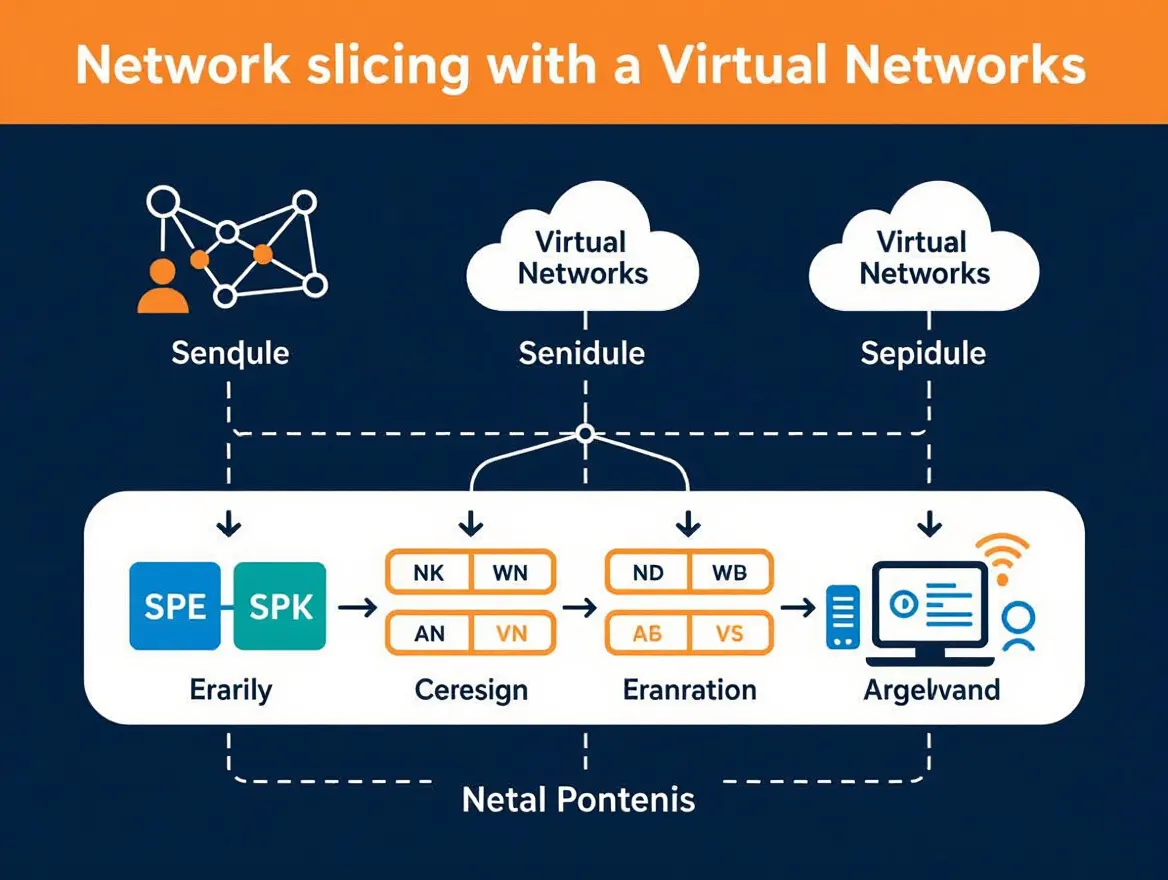
Perhaps the most significant 5G innovation for testers is network slicing. By creating multiple virtual networks within one physical 5G infrastructure, testers can spin up isolated and highly customizable environments specific to each use case – be it a payment gateway, IoT sensor mesh, or regulated healthcare app. This supports parallel test runs under controlled conditions and enhances security and compliance. For complex testing strategies, such as those involving microservices or multi-tenant architectures, network slicing removes the guesswork from test environment design. For advanced approaches, see this practical microservices cloud guide.
By embracing these technical advances, cloud testing teams can create richer, more accurate simulations – and keep pace with the demands of next-generation digital experiences.
Cloud Testing Use Cases Transformed by 5G
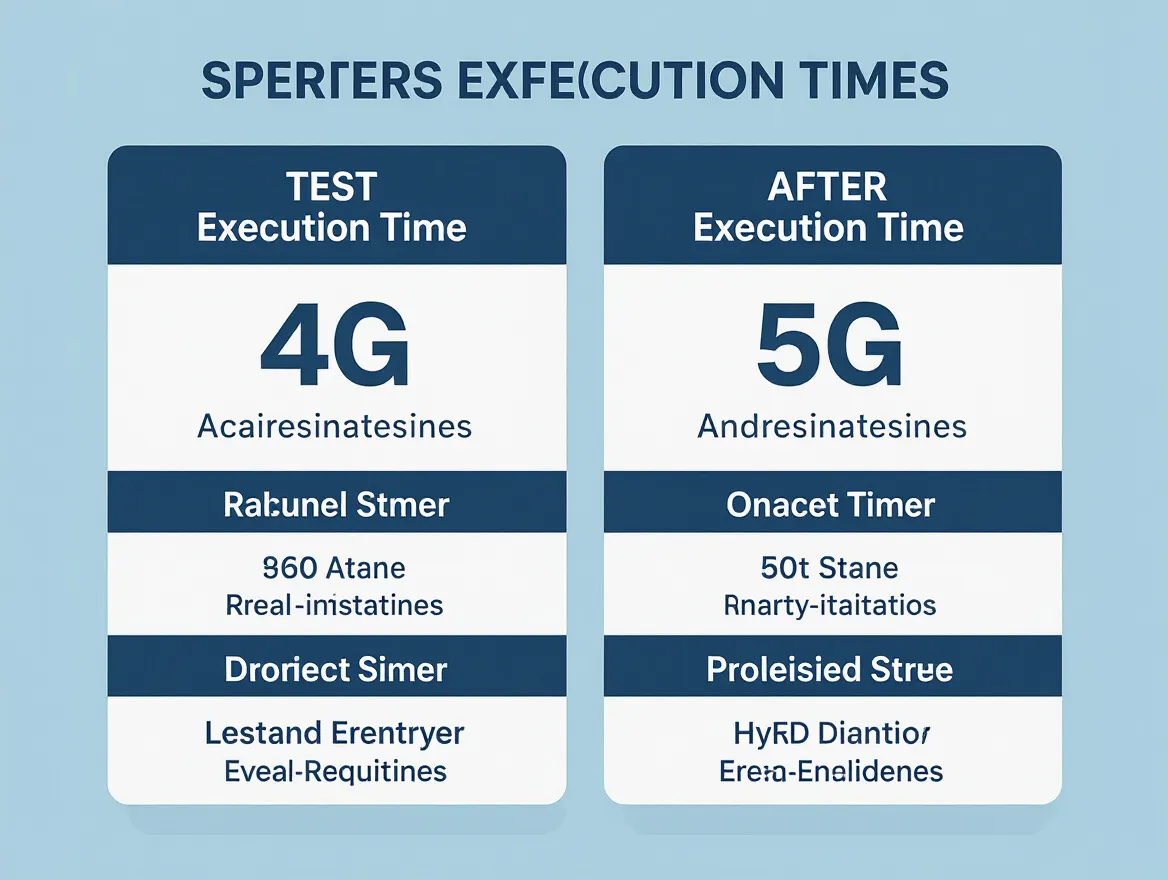
Before vs After: Test Execution Time and Realism
Cloud testing has always depended on simulating realistic user loads and authentic network conditions. With 4G, distributed load testing struggled to scale – latency averaged around 200 milliseconds, and limited bandwidth made it tough to mirror what users actually experienced at scale. Test execution cycles often stretched long hours, especially for scenarios involving millions of simultaneous users or complex mobile workflows.
| Before (4G) | After (5G) | |
|---|---|---|
| Test Execution Time | Distributed load test simulating 1 million users took several hours, often bottlenecked by network throughput and high latency. | Same user volume test runs in significantly less time, with peak download speeds up to 20 Gbps and latency as low as 1 ms. |
| Test Realism | Network conditions lacked fidelity – slow response times and inconsistent packet loss didn’t match real-world 5G experiences. | Realistic emulation of user behavior across high-speed mobile and IoT, supporting precise performance benchmarks for next-gen apps. |
The improved version unlocks several advantages: faster feedback loops, making continuous performance testing viable at scale; and ultra-low latency and bandwidth that let testers simulate how apps behave for real users with 5G devices, not just “best guess” estimates. This is especially relevant for platforms like LoadFocus, which need to model bursts of global traffic with minute-by-minute accuracy.
Massive IoT Device Simulation
5G networks aren’t just about smartphones. Their architecture supports dense deployments of low-power devices – a cornerstone for massive IoT test scenarios. In industrial and smart city projects, testers need to simulate thousands or millions of connected sensors, each transmitting small bursts of data but demanding real-time reliability.
With network slicing and adaptive bandwidth, cloud testing platforms can provision isolated slices for IoT traffic, stress-testing everything from healthcare monitors to smart cars. 4G could not keep up with this scale or granularity. 5G’s capability to create tailored, virtualized test environments means teams now evaluate not just the core application, but how it performs across a mesh of diverse, always-on devices. For perspective on the challenges of testing APIs for mobile and IoT, see this case study on optimizing mobile API performance.
This leap in test realism and efficiency is already influencing how organizations approach real-time monitoring and alerting, as reduced lag and higher data rates make it possible to detect and respond to issues more proactively.
The Role of Network Slicing in Cloud Testing Strategy
Segmenting and Isolating with Network Slicing
In 5G networks, network slicing stands out as a critical enabler for cloud testing teams seeking tighter control and sharper granularity. At its core, network slicing lets you create multiple virtual networks atop a single physical infrastructure. Each “slice” can be precisely tailored – bandwidth, latency, and access restrictions – matching the needs of distinct test environments. This is indispensable when running parallel tests for multi-tenant SaaS, or comparing mobile and desktop app performance side by side.
For example, a testing team validating a healthcare IoT application can dedicate a high-security, low-latency slice to simulate mission-critical use, while allocating another slice to less sensitive, non-critical workload testing. This approach avoids the risks of data contamination and bandwidth contention that often plague traditional shared environments. Slices also provide a clear boundary between different clients’ or teams’ data, supporting compliance and privacy mandates – key for sectors like finance or healthcare.
Granularity, Security, and Differentiated Testing
Fine-grained test data isolation means you can run load tests on one slice without worry that a surge of traffic will spill over and skew results on another. This directly addresses a classic challenge in cloud test labs: maintaining reliable baselines in shared, multi-use infrastructures. The ability to restrict bandwidth and segment access by slice makes it much easier to simulate real-world network conditions. For instance, you can stress-test a critical API under high load while maintaining a separate slice for non-critical endpoints, each with tailored network characteristics. For more on isolating test environments and data, see Cloud Testing Security: Best Practices for Protecting Test Data in 2026.
Key Insight: Network slicing in 5G networks gives testers precise control to run parallel, isolated, and secure cloud testing environments – all on the same physical infrastructure.
As organizations accelerate adoption of cloud testing at scale, network slicing is quickly moving from a theoretical benefit to an operational necessity. Teams no longer have to compromise between test coverage and control – each slice can be customized for the unique demands of modern, distributed applications. For teams focused on high-volume, multi-app testing, this shift is as significant as the jump from 4G to 5G itself.
Challenges and Limitations of 5G in Cloud Testing
Accounting for Hybrid Network Conditions
The move toward 5G networks brings massive improvements in speed and latency, but cloud testing rarely happens in a pure 5G environment. Many real-world environments are hybrid, meaning devices and users switch between 4G and 5G depending on coverage, spectrum band, and device support. This coexistence directly affects the accuracy of test results. As discussed on the LoadFocus blog, network latency can swing dramatically when a device drops from 5G’s single-millisecond response times to 4G’s 200-millisecond average. If your load and performance tests don’t explicitly model these shifts, you risk serious blind spots in reliability and user experience, especially for mobile apps or APIs serving a global base.
Limitations by Device and Spectrum
Even as 5G rolls out worldwide, device compatibility and spectrum allocation still limit its benefits. Many smartphones now support 5G, but a sizable portion of the population remains on older 4G hardware. Spectrum bands add another layer of variability: 5G performance depends heavily on whether a device connects through low-band, mid-band, or high-band frequencies. High-band (mmWave) can deliver very high speeds, yet coverage is limited and penetration is poor – users inside buildings or rural areas may not see those advantages. For testers, this means real-world performance of cloud applications will continue to fluctuate based on device class and local infrastructure. These inconsistencies must be reflected in your testing strategy, particularly for services targeting a broad geographic or demographic footprint.
Deployment Costs, Energy, and Security Concerns
Universal access to high-performance 5G-enabled testing is not without cost. Deployment costs for dense cell networks and supporting infrastructure remain a hurdle, especially outside urban centers. Energy consumption is another factor – while 5G cells use less power per bit, their sheer number increases total usage. On the security front, network slicing introduces flexibility but also new attack surfaces, requiring testers to assess not just performance but the integrity of isolated network segments. Trust in vendors and infrastructure partners is more critical than ever, echoing the ongoing need for strong security validation, as covered in LoadFocus’s security best practices guide. Effective cloud testing on 5G networks demands a nuanced approach – one that balances technical gains with operational, cost, and security realities.
How LoadFocus and Modern Platforms Use 5G for Advanced Cloud Testing
The rise of 5G networks has fundamentally changed what’s possible in cloud testing. Platforms like LoadFocus now deliver real-time performance analytics that are not just faster, but genuinely more actionable. With average download speeds around 432 Mbps and latency dropping to as low as one millisecond, testers can observe real-world behavior at a depth and pace that simply wasn’t feasible with 4G.
AI-powered analysis is one area where 5G’s impact stands out. LoadFocus and similar tools can instantly ingest and process vast test datasets, enabling smarter recommendations about bottlenecks and optimization. The result: You get feedback while a test is still running, not after the fact. This is a major leap for teams working on high-stakes releases where every minute counts. These capabilities are detailed in LoadFocus’s recent discussion on AI performance testing.
Case-in-Point: Load Testing Microservices on 5G
Testing distributed architectures, like microservices, often exposes the limitations of older networks. As discussed in LoadFocus’s 2026 guide to microservices load testing, 5G’s high bandwidth and low latency support truly concurrent simulations – meaning you can spin up hundreds of service instances and see how they interact under load in real time. The platform’s ability to create custom network slices mirrors real production environments, exposing subtle issues that only emerge at scale.
API Monitoring and Real-Time Data Streams
Modern API monitoring relies on rapid feedback loops and high-frequency data streams – precisely where 5G networks excel. As highlighted in LoadFocus’s overview of the best API monitoring tools for 2026, platforms can now track spikes, latency shifts, and error rates with near-zero lag, offering sharp visibility into dynamic cloud applications and IoT integrations. The end result is a level of responsiveness and scale that was previously out of reach.
Industry Trends: Global 5G Adoption, Device Ecosystem, and the Future of Cloud Testing
5G Networks Reshape Global Testing Realities
The rapid spread of 5G networks is more than a technical milestone – it’s a catalyst for how testers approach modern cloud environments. Commercial 5G deployments are now live across Asia, North America, Europe, and Africa, moving far beyond early national rollouts in South Korea or select urban hubs. Major ISPs such as Verizon, AT&T, and Google have brought 5G home and business internet into the mainstream, dramatically expanding high-speed access for testers and developers. Meanwhile, many smartphones in circulation are now 5G-ready, which raises the stakes for test coverage and device compatibility.
| Region | 5G Coverage (%) | Major Use Case | Implication for Testing |
|---|---|---|---|
| South Korea | High | Nationwide high-density urban connectivity | Stress-testing for massive concurrent users and dense IoT deployments |
| United States | Substantial | Streaming, remote work, smart cities | Simulating hybrid 4G/5G scenarios and variable latency conditions |
| Europe (Germany/UK) | Significant | Industrial IoT, autonomous vehicles | Validating ultra-low latency and network slicing for mission-critical applications |
| Africa (South Africa, Nigeria) | Growing | Mobile banking, remote healthcare | Ensuring reliability across uneven coverage and device diversity |
Adapting Cloud Testing for a 5G-Driven Ecosystem
As device and network diversity accelerate, cloud testing must account for heterogeneous connectivity, variable hardware, and evolving use cases. LoadFocus and similar platforms now routinely simulate everything from low-latency urban 5G traffic to congested hybrid networks. This shift makes testing more realistic but also more complex, especially as new IoT, AI, and edge workloads emerge. For a deeper technical perspective, see how edge computing factors in cloud load testing on this analysis.
The next wave of cloud testing innovation will hinge on adapting to the unpredictable pace of 5G evolution. As coverage expands and network technologies mature, expect testers to push boundaries with massive IoT loads, new device classes, and sophisticated network slicing scenarios. The opportunity – and the challenge – will be keeping pace with a future where connectivity is never a bottleneck, but complexity is always rising.
Actionable Takeaways for Testers and Engineers
Integrate 5G into Test Planning
To keep pace with 5G networks, update your test plans to reflect both 5G-specific scenarios and hybrid conditions where 4G and 5G coexist. This means accounting for variations in latency and bandwidth, as average download speeds can reach 432 Mbps, but performance still depends on spectrum bands and device support. For testers working on mobile APIs or IoT simulations, ensure that your test matrix includes real-world device profiles – many smartphones now support 5G.
Maximize Coverage with Network Slicing and Analytics
Take advantage of network slicing by creating isolated, purpose-built test environments. This allows you to simulate unique customer journeys or isolate security-critical workloads. Pair this with real-time analytics to spot bottlenecks or anomalies as they arise. Platforms like LoadFocus already integrate real-time insights, which you can see in action in their case study on AI-powered load testing at scale.
Monitor and Adapt as 5G Evolves
As 5G infrastructure expands globally, continuous monitoring is essential. Keep an eye on actual network performance, not just theoretical peak speeds, since factors like congestion and device capabilities affect outcomes. For additional strategies on real-world monitoring, see this comparison of cloud-based versus on-premise website monitoring. Staying adaptable will help your testing remain relevant as the 5G rollout accelerates and new use cases emerge.
Frequently Asked Questions
How does 5G specifically improve cloud testing compared to 4G?
5G networks deliver peak download speeds up to 20 Gbps and average speeds around 432 Mbps, far surpassing 4G. In cloud testing scenarios, these improvements mean tests run faster, large datasets process in real time, and distributed teams encounter fewer network-related bottlenecks. Ultra-low latency – as little as one millisecond, compared to 200 ms on 4G – makes real-time analytics and AI-driven testing practical for scenarios like IoT, autonomous vehicles, or remote healthcare devices.
What is network slicing and why is it important for testers?
Network slicing allows providers to create multiple virtual networks on a single physical 5G infrastructure, each optimized for specific needs. For cloud testing, this means you can simulate dedicated environments – such as one slice for low-latency IoT traffic and another for bulk data transfer. This flexibility is especially valuable in enterprise contexts where different departments or business units require isolated test scenarios without the need for separate physical networks.
Can cloud testing platforms simulate hybrid 4G/5G environments?
Yes, modern cloud testing platforms can simulate hybrid environments where 4G and 5G coexist. This is crucial for accurately reflecting real-world user experiences, as many devices still operate on both networks. By modeling these conditions, testers can better predict performance across diverse user bases.
Which cloud testing scenarios see the greatest benefit from 5G?
Scenarios involving real-time analytics, IoT simulations, and high-speed data transfers benefit most from 5G. The network’s low latency and high bandwidth enable more accurate and efficient testing of applications that demand rapid responsiveness and large-scale data processing.
Are there security risks introduced by 5G in cloud testing?
While 5G offers advanced features like network slicing, it also introduces new security challenges. The increased complexity and new attack surfaces require strong security measures to protect isolated network segments and ensure data integrity during testing.
How should I update my performance testing strategy for 5G?
Update your strategy to include both 4G and 5G scenarios, reflecting the hybrid nature of current networks. Use network slicing for isolated testing environments and focus on real-time analytics to quickly identify and address performance issues.
What limitations should testers be aware of with current 5G deployments?
Testers should consider device compatibility and spectrum variability, as these factors can affect 5G performance. High-band frequencies offer speed but limited coverage, so tests should account for these inconsistencies to ensure accurate results.
How does device compatibility affect cloud tests on 5G networks?
Device compatibility plays a significant role in cloud testing on 5G networks. Not all devices support 5G, and those that do may experience different performance levels based on their hardware and network capabilities. Tests should reflect this diversity to ensure comprehensive coverage.
Powered by PostNext service