
Correlation in JMeter: Extract and Reuse Dynamic Values
Correlation in JMeter, step by step: find dynamic values, pick the right extractor, reuse tokens and IDs. Tested on JMeter 5.6.3 with and without extractors.
Apache JMeter guides cover the open source load testing tool from install to results. You'll find how to install JMeter and its plugins, run it in non-GUI mode, use extractors, assertions and the WebDriver sampler, raise the heap size, work out how many concurrent users one machine can drive, save results to CSV or XML, and run the same tests distributed in the cloud.

Correlation in JMeter, step by step: find dynamic values, pick the right extractor, reuse tokens and IDs. Tested on JMeter 5.6.3 with and without extractors.

JMeter interview questions with answers checked against the JMeter 5.6.3 manual: thread groups, timers, correlation, CLI mode, distributed runs and 4 scenarios.

JMeter vs LoadRunner compared on licence cost, 180+ protocols vs 10 protocol families, scripting, scaling and OS support, with OpenText's 2026 names and limits.
A scheduled test only helps if it alerts, since nobody reads a passing report. Match frequency to deploy cadence rather than running nightly by default.
Turn a cURL command, HAR file, Postman collection or OpenAPI spec into a runnable k6 script or JMeter test plan, free in your browser, then run it in the cloud.
k6 vs JMeter compared in practice, plus Gatling, Locust and LoadRunner: scripting language, protocols, CI/CD, reporting and what scaling really costs.
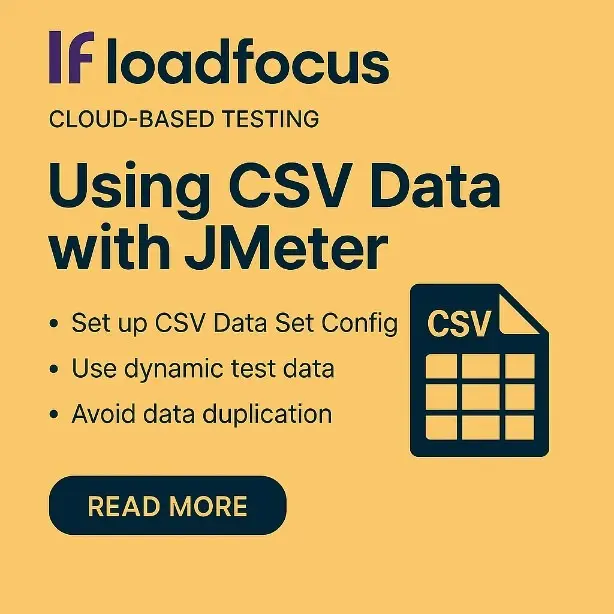
Using CSV data in JMeter tests: plan the file, give every thread its own rows, handle end of file, pick a sharing mode and parameterise logins.

JMeter parameterization replaces hardcoded values with variables. Compare CSV Data Set Config, __P, User Parameters and random functions, run on JMeter 5.6.3.
The JMeter ramp-up period is the time Thread Group takes to start all its threads. Formula, a measured 100-thread example, and why ramp-up is not concurrency.
Run a saved LoadFocus JMeter test from Bitbucket Pipelines and stop the build on a missed threshold. Config checked against Bitbucket docs, plus the CLI traps.

Three ways to generate unique IDs in JMeter test plans: the __UUID function, the Counter config element and __time, with when to use each.

Is a slow JMeter request the server or the load generator? Split elapsed time into connect, latency and download, then fix keep-alive, listeners and the plan.
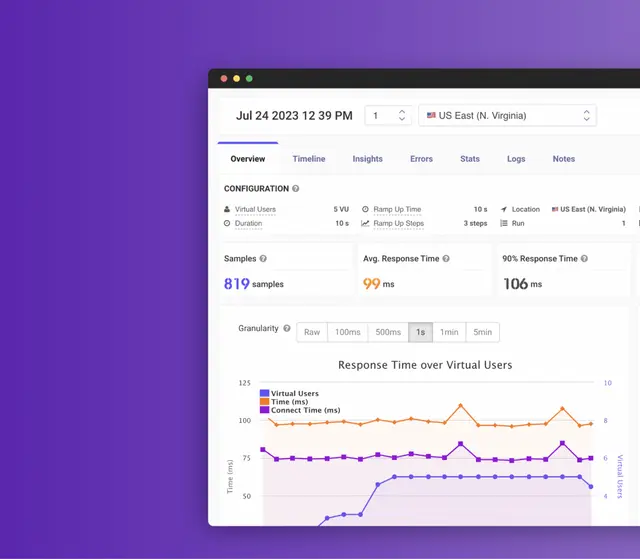
Load test a PHP site with Apache JMeter. PHP scales by process, so the worker pool usually caps you long before the code itself does.
Start with the objective: a target user count and an acceptable response time. Run a small test first to validate the setup, then scale up.

Notes capture why a run looked the way it did, which raw metrics never record. Write the note at the time. The context is gone within a week.
Update the baseline deliberately when performance genuinely improves. Compare full results, not just the summary, since averages hide a worse tail.

Test OAuth-secured APIs in JMeter: fetch the token once, extract it with a JSON extractor, reuse it in a header manager, keep it out of timed samples.
Set up JMeter's CSV Data Set Config step by step: filename, variable names, delimiter, recycle and stop thread on EOF, and sharing mode, with an example.

Create a shell alias that starts Apache JMeter from any Mac terminal: zsh and bash profile files, Homebrew and archive paths, source, and a PATH option.
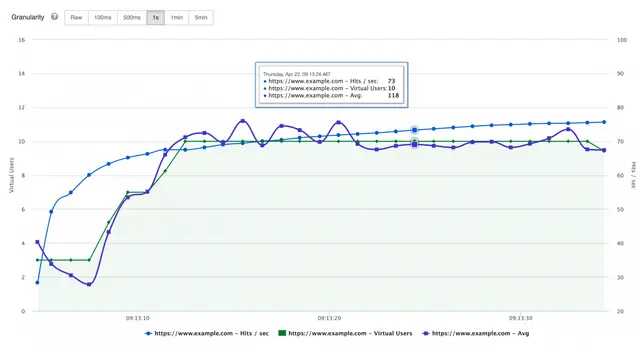
Hits per second counts every request including assets, so it exceeds page views substantially. It shows server workload rather than user activity.
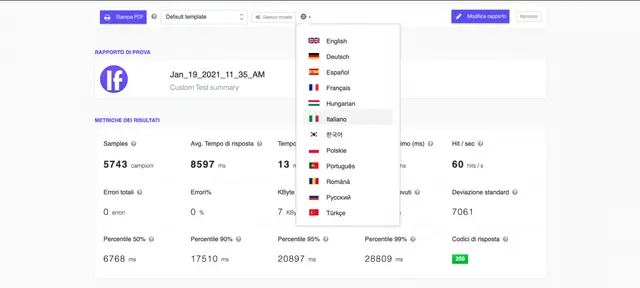
Set the language per report rather than per account when teams are mixed. The numbers are the same either way, so this is about adoption, not accuracy.

Load test a REST API with LoadFocus: set virtual users and ramp-up, add requests with headers and a body, read p95 and errors, and set pass/fail thresholds.

JMeter runs elements in a fixed order: config, pre-processors, timers, samplers, post-processors, assertions, listeners. The rules that trip people up.
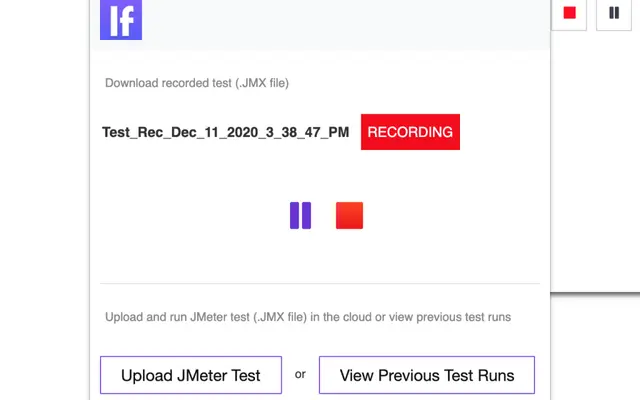
Record a JMeter test in Chrome with the LoadFocus extension, clean up the .jmx file and run it in the cloud. Covers JMeter's own recorder as an alternative.
JMeter is written in Java and needs a JRE. Test plans are XML; in-test scripting uses Groovy (JSR223), Beanshell or JavaScript. What that means for you.
How Apache JMeter works: threads as virtual users, samplers that send real requests, what elapsed time and latency measure, and where results go. Run on 5.6.3.
Homebrew JMeter config files live in $(brew --prefix jmeter)/libexec/bin. Find jmeter.properties and user.properties on Apple Silicon and Intel Macs.
JMeter starts with a 1 GB heap. Raise it with HEAP in bin/setenv.sh or setenv.bat, confirm the new size in jmeter.log, and know when more heap will not help.
The Plugins Manager handles dependencies, which manual jar copying does not. Install it once, then add and update plugins from inside JMeter.
brew install jmeter --with-plugins fails because Homebrew 2.0 removed formula options. Plain brew install jmeter already ships the JMeter Plugins Manager.
Install JMeter 5.6.3 on a Mac with brew install jmeter or the Apache archive, then open it from Terminal. Covers Java, Apple Silicon paths and common errors.

The WebDriver Sampler measures real browser rendering, which HTTP samplers cannot see. Use it to measure front-end timing, not to generate volume.

Two ways to save Apache JMeter results: the -l flag with jmeter.save.saveservice properties for CSV, or XML for the full sample detail. With examples.

How to add User Defined Variables in Apache JMeter, reference them with ${name}, override them from the CLI with -J, and keep environments in one place.

Start Apache JMeter from the command line with -n -t -l -e -o, why GUI mode skews results, and how to run the same JMX at scale in the cloud.

Use JMeter's XPath2 Extractor to pull values from XML and SOAP responses, map namespaces, and see why XPath on HTML returns your default value. Tested on 5.6.3.
JMeter load testing step by step: install JMeter 5.6.3, build a test plan, run it in CLI mode, read the HTML report and scale past one machine to the cloud.
Log each JMeter virtual user in with credentials from a CSV file, extract the token from the login response with a JSON Extractor and send it on later requests.

JMeterPlugins-Extras and ExtrasLibs stopped at 1.4.0 in 2016. Get their graphs, samplers and JSON tools through the JMeter Plugins Manager, plugin by plugin.

JMeter distributed testing step by step: start jmeter-server on each worker, set up the RMI keystore and ports, run with -R and size threads per worker.

JMeter has no fixed thread limit: one machine's ceiling depends on CPU, heap and think time. How to measure yours, what breaks first and when to distribute.

JMeter for beginners: the six stages to learn in order, from test plan basics and a first request with an assertion to CLI runs, results and scaling out.
Don’t miss out on the latest testing tips and tricks, tools and news related to software testing.
Already +20,000 members in the list.
Load test websites and APIs from 25 cloud regions, monitor page speed and uptime, and get AI analysis that explains your results in plain English.