Create a New Alert
How to Create a new alert for a Website Performance Monitor
The purpose of Alerts is to get notified when something goes wrong (in terms of rendering or performance) about your website or web pages.
There are a few ways to create a new alert for an existing monitor:
right after you've created a new monitor, the Alert Configurator popup appears
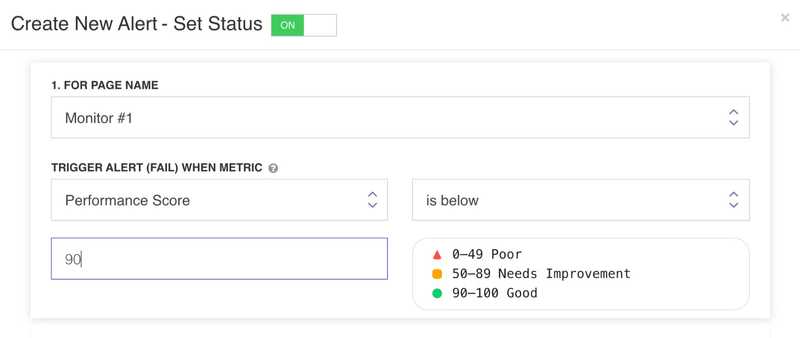
by typing
Akey on your keyboard, by clickingNew Alertbutton from the right-hand side of the Monitors page, or by clickingAdd Alertbutton from the list of tests
go to Alerts page and click the
New Alertbutton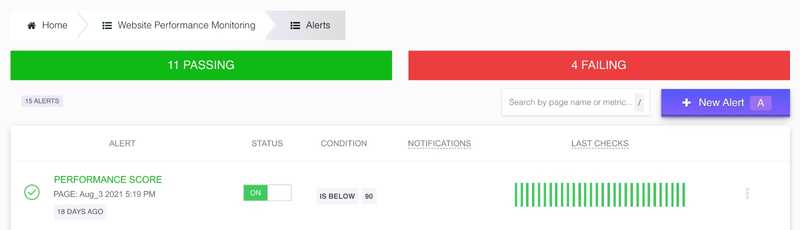

Which Method to Use
- Right when you create a monitor: fastest, since the Alert Configurator is already open and the test is preselected. Good default if you know you want to be notified from day one.
- From the list of tests, using the
Akey or theNew Alertbutton: use this for a monitor you created earlier without an alert, or when you want to add a second alert on a different metric to a monitor that already has one. - From the Alerts page: use this when you're reviewing everything you're watching across monitors at once, or setting up several alerts in a row.
All three open the same Alert Configurator, so the fields you fill in are identical no matter which path you took to get there.
What You Configure Next
Whichever way you opened it, the configurator asks for the same things: whether the alert is Enabled or Disabled, which test it applies to, which metric it should watch (see the full list of alert metrics), when you want to be notified (on first failure, on recovery, or every failing run), and which alert channels (email, Slack, Microsoft Teams) should receive the notification. For the full breakdown of each field, see understanding alert configuration.
Once saved, the alert shows up next to its test in the list of monitors, and you can click through to it any time to see its trigger history.