

Getting Started
Run your first cloud load test against a website or API in two ways: the quick wizard for a simple test, or the full configurator when you need more control. Both send the load from LoadFocus cloud machines, so the target must be reachable from the internet.
Before You Start
Section titled “Before You Start”- Test a website or API you own, or one you have permission to load test. A load test sends real traffic, and many hosts treat a sudden burst from cloud servers as an attack.
- The URL must be a public
http://orhttps://address. Localhost and private IP addresses are not reachable from the cloud. - If a firewall, WAF or bot protection sits in front of the site, allow the LoadFocus IP ranges first. Otherwise the results measure the protection, not your site (see Errors by type).
- On the Free plan a test can use up to 10 virtual users for 60 seconds, and you can start 3 runs in any 24 hours and 10 runs a year in total. See Limits on the Free plan.
Load Test Wizard for a Simple Load Test
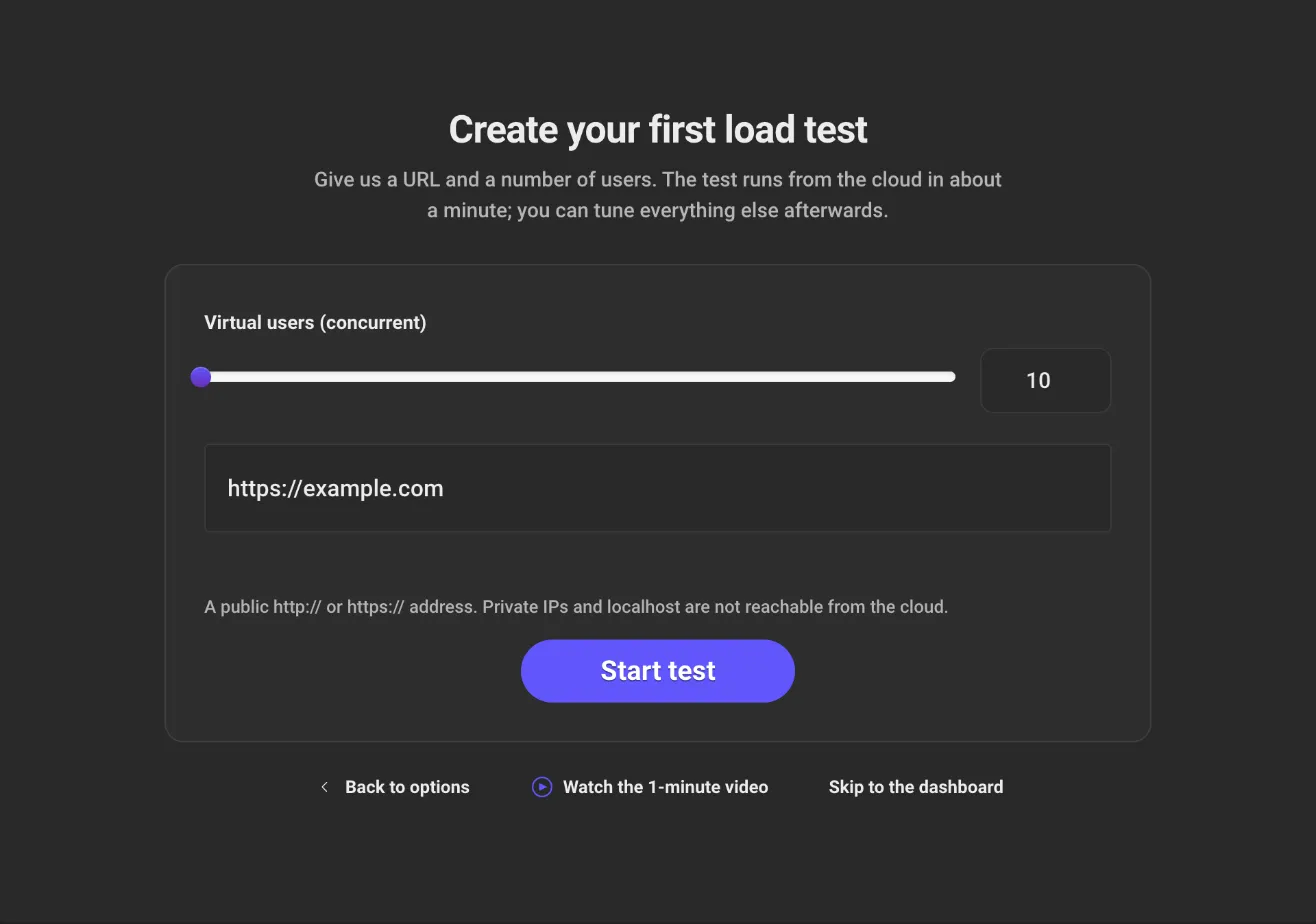
Section titled “Load Test Wizard for a Simple Load Test”The quick load test wizard (Create your first load test) asks for two things:
- The URL of the page or API to test, for example
https://www.example.com. If the address is incomplete, the wizard asks for the full URL before it starts. - Virtual users (concurrent): how many users send requests at the same time. The slider stops at your plan's limit.
Click Start test. The test is named after the website and the current date and time, and it runs from the cloud with default settings for everything else. You can change any of them afterwards and run the test again.
Load Test Configurator for a More Complex Load Test
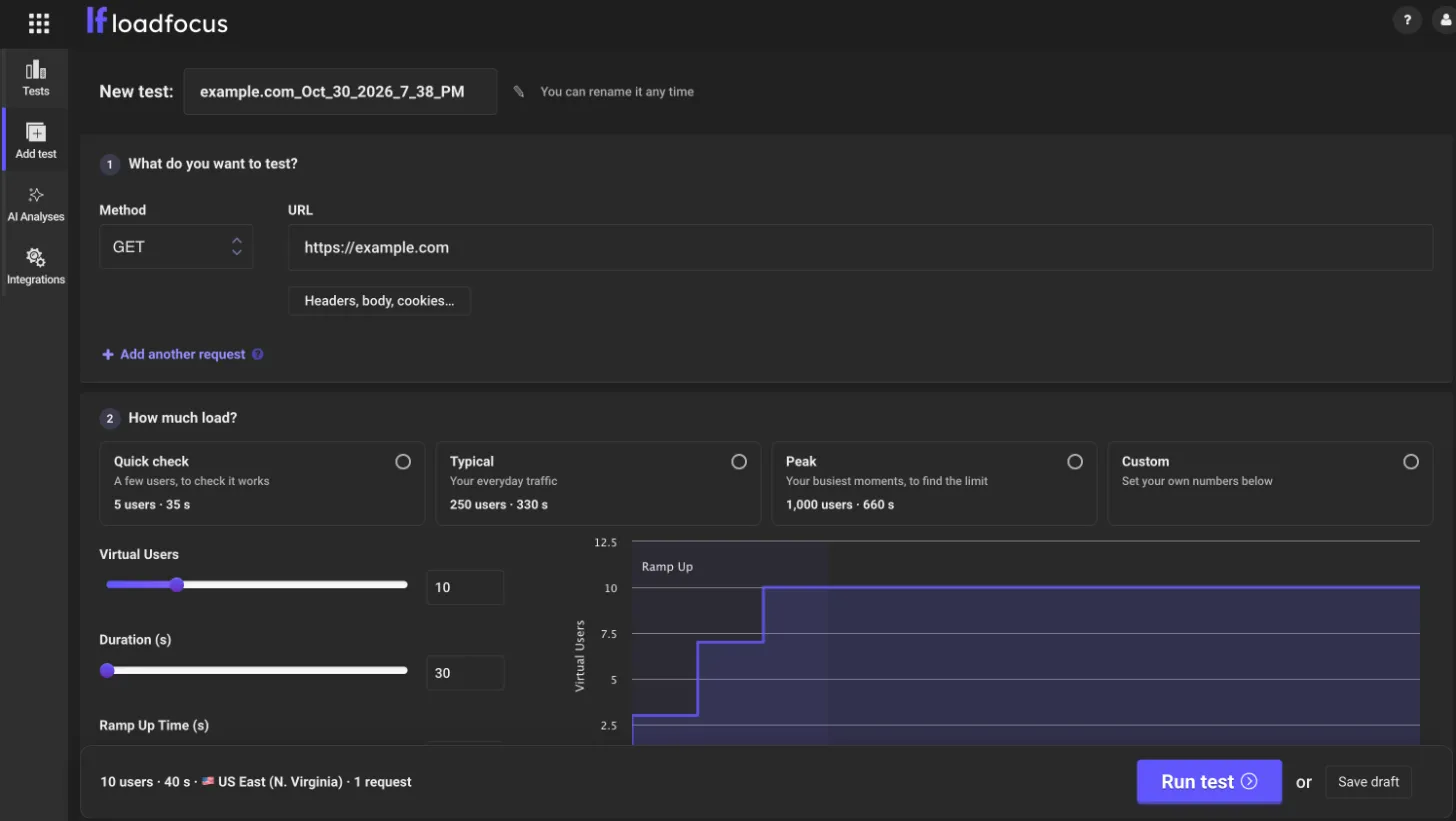
Section titled “Load Test Configurator for a More Complex Load Test”The new load test configurator gives you full control. It has three numbered steps, What do you want to test?, How much load? and Where from?, followed by More options and the Run test button. There you can:
- test several URLs in one run, each with its own method, headers, body, cookies and query parameters;
- start from a load preset (Quick check, Typical, Peak or Custom) or set the virtual users, duration and ramp-up yourself;
- choose the cloud location the load comes from;
- add pass/fail checks, a schedule or an integration.
The full walkthrough is in How to run a new load test.
If you already have a script, run it as it is: upload a JMeter or a k6 test instead.
After the Run
Section titled “After the Run”When the run finishes, its results page shows response times, requests per second and errors over the course of the test. Analyzing load test results explains each chart. From the results page you can re-run the test or edit its configuration, for example to add more users once the first run looks healthy.