
Guide to Load Testing Event-Driven Systems 2026
Load test event-driven systems by injecting events at the producer and measuring at the consumer: end-to-end latency, consumer lag, DLQ rate, duplicates.
Load testing guides explain what a performance test measures and how to read the result. You'll find what response time, throughput, hits per second, percentiles and standard deviation mean, how stress, spike, volume and disaster recovery tests differ, which metrics to watch during a run, and practical fixes such as gzip on NGINX for a site that slows under load.

Load test event-driven systems by injecting events at the producer and measuring at the consumer: end-to-end latency, consumer lag, DLQ rate, duplicates.
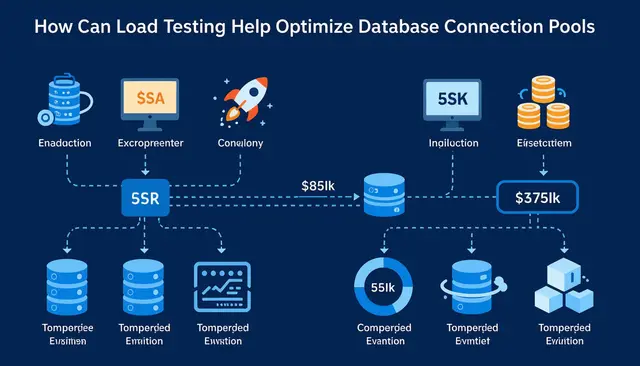
Size a database connection pool from the database's limits, then confirm it with a load test. Defaults and limits from HikariCP, PgBouncer and PostgreSQL docs.

Load test scripts break when APIs, auth, dynamic values or data change. How to detect drift early, keep scripts in git, and what AI can and cannot do.

Learn effective SaaS onboarding testing techniques to create load testing scenarios that enhance user experience and ensure smooth performance.

Learn how to configure OAuth2 load testing for APIs to ensure secure and accurate performance under stress. Improve your API testing process today.

IoT load testing for MQTT and CoAP backends: connections, keepalive, reconnect storms and retained messages, plus the tools that can generate that load.

Cloud or on-premise load testing? Answer five questions in order, then confirm with a two-run pilot. Links the startup, enterprise and monitoring guides.

Load testing multi-tenant SaaS: model the tenant mix, test noisy neighbours and per-tenant rate limits, check data isolation, and read results per tenant.

Design load tests for progressive web apps: what service workers hide from a load test, and how to test cold-cache visits, offline sync bursts and push sending.

How to keep checkout fast at peak load: measure each step, find the slow query or call, and test with a ramp that matches a sale. Includes a k6 sketch.
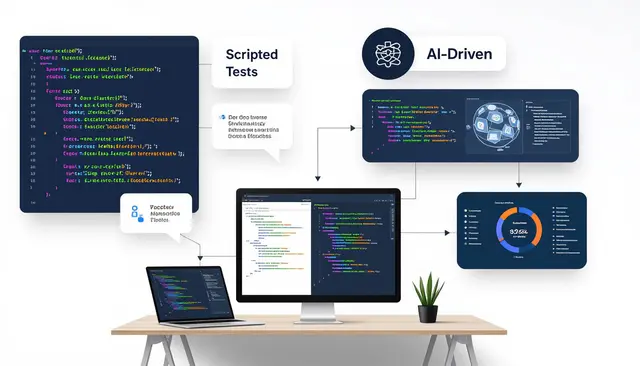
Explore scripted vs AI-driven load testing approaches. Learn strengths, limitations, and decision criteria for 2026 performance optimization.
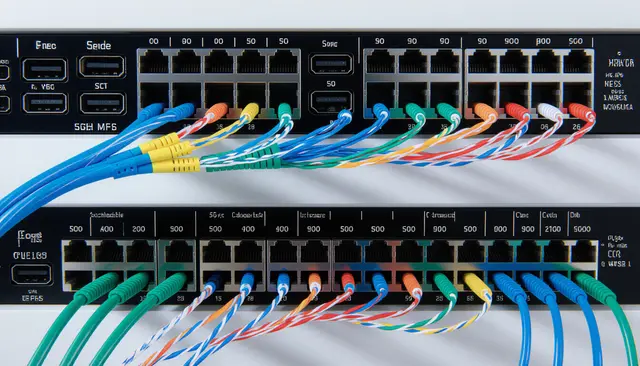
Seven protocols load testers meet in 2026 (HTTP/1.1, HTTP/2, HTTP/3, WebSocket, gRPC, MQTT, SQL), what a test measures for each, and which tools support them.

How to find memory leaks in a load test: hold a steady load for hours, trend the heap left after each GC, diff two heap dumps, fix the reference and re-run.

How to load test a video streaming platform: what to simulate, how to model a live-event audience, a k6 sketch, and how to read the results.

Endurance testing and soak testing are the same practice: normal load held for hours. What it catches, how long to run it, and how to read the trend.
Spike testing applies traffic suddenly instead of ramping. Why autoscaling and cold caches fail in that window, and why recovery is half the test.

Volume testing increases the data a system holds rather than the user count. What it finds, how to run one, and how to read the curve it produces.
Three ways to run k6 at scale: self-hosted k6 with the k6 Operator, Grafana Cloud k6, or a managed platform, with the cost and effort of each.

AI in automated load testing today: drafting scripts, summarising results and where it falls short, plus how to run automated load tests in CI with gates.
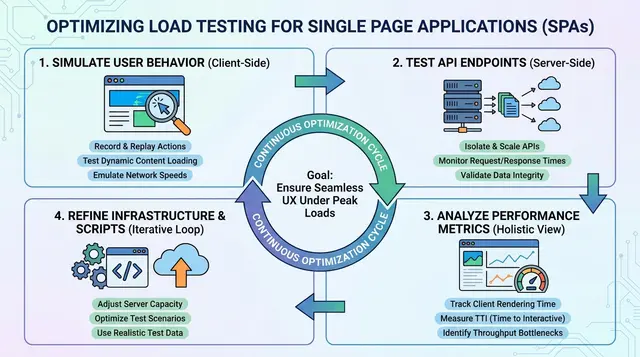
An SPA does its work after the initial HTML, so HTTP-level tests miss most of it. Test the API calls the app makes, weighted the way the app makes them.
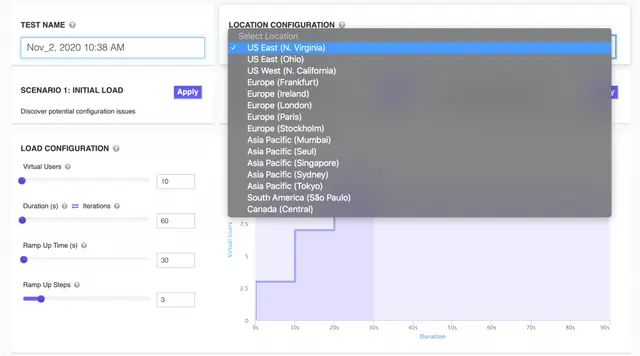
A virtual user simulates one person's session, pauses included. How VUs differ from requests per second, and why think time decides the ratio.

Realistic e-commerce load testing: build the browse, search, cart and checkout mix from your funnel, give each shopper unique data and keep payments safe.
REST Assured is a Java library for functional API tests. Set up 6.2.0 with JUnit 5, run it against a public API, and see why it is no load tool.

An online API tester sends HTTP requests from a browser. See what it does well, where CORS, private networks and secrets limit it, and when to use curl or k6.

Concurrency testing finds races, deadlocks and lost updates when operations overlap. Runnable Python demos with fixes, and how it differs from load testing.

Concurrent, simultaneous and active users are three different numbers, and mixing them invalidates the test.
The hard part is realism: matching real user behaviour, data and think time.

Soak testing finds leaks that a short run cannot, and spike testing finds recovery behaviour. Pick the type from the risk you are trying to retire.

Enterprise testing is dominated by integration and data, not by writing more unit tests.
The biggest wins are usually images, requests and caching, in that order.
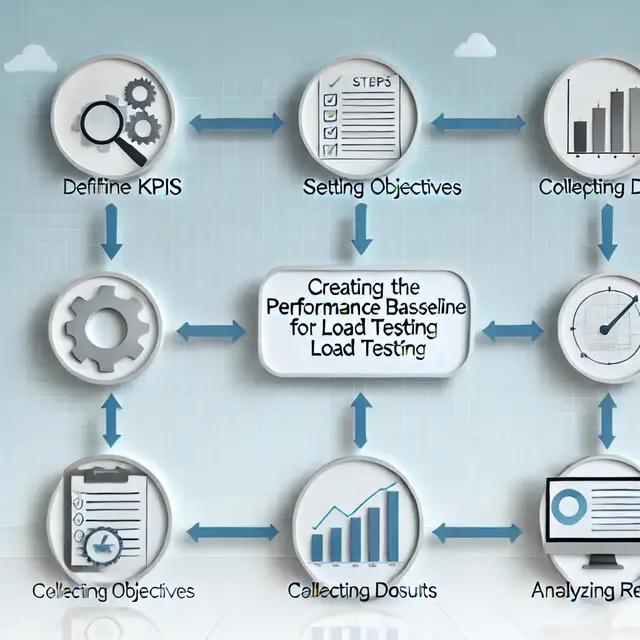
A baseline turns future runs into comparisons instead of isolated numbers. Capture it on a stable build under representative load, then leave it alone.

The recurring obstacles are environment parity, test data and interpreting results. Most of them are planning problems rather than tooling problems.

Most lessons are about realism: data, think time and environment parity. A result nobody acts on is the same as not testing.

Backend metrics can look healthy while the page users see is still slow. Measure on a real device profile. Desktop numbers flatter almost every site.

Throughput and response time diverge under load: throughput plateaus while response time climbs. Report both. Either one alone can be made to look good.

The performance testing metrics worth tracking: response time percentiles, throughput, error rate, concurrency, and CPU, memory, disk, network and DB load.

Users judge speed in the first couple of seconds, and most sites lose them there. Measure before assuming; the obvious culprit is often not the cause.
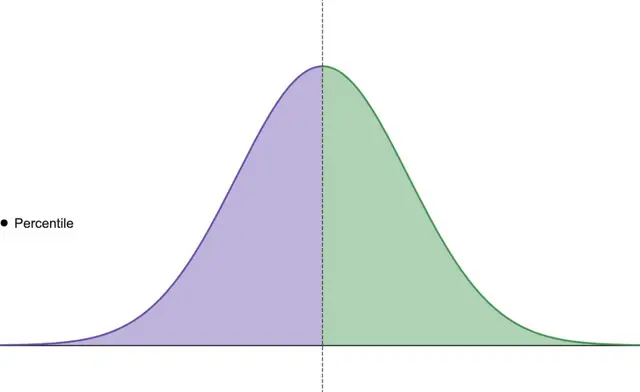
The 90th percentile is the response time 90% of requests stay at or under. Why p90, p95 and p99 beat the average in performance testing, with a worked example.

Two runs with the same mean can behave completely differently, and this is how you tell. Pair it with percentiles rather than reporting either alone.
A recovery plan that has never been executed is an assumption, not a plan. Test the restore, not just the backup; backups fail silently at restore time.

Stress testing pushes past expected load to find the breaking point and the failure mode. How the system recovers matters as much as where it broke.

A campaign delivers its traffic in minutes, which is a spike rather than a load curve.

Why a GET or POST request returns 500 Internal Server Error: a body the server cannot parse, missing headers or cookies, exhausted pools, and how to debug it.

gzip on NGINX is a few lines of config and usually the cheapest bandwidth win available.

Decide what you are measuring and why before configuring anything. Choose the metrics up front, or you will report whatever looks best afterwards.

Combine a large HTTP load with a small number of real browser sessions. Watch client-side metrics, since the server can be fast while the page is not.

Throughput in performance testing is the number of requests a system completes per second. How to measure it in JMeter and k6, and read it with response time.
Response time testing explained: what response time is, how to measure it, why p95 beats the average, and what a good response time is.
Don’t miss out on the latest testing tips and tricks, tools and news related to software testing.
Already +20,000 members in the list.
Load test websites and APIs from 25 cloud regions, monitor page speed and uptime, and get AI analysis that explains your results in plain English.