AI Reshapes Automated Load Testing: What’s Different in 2026?
AI’s Breakthrough Moment in Load Testing
Automated load testing has reached a turning point in 2026. Artificial intelligence, once a gradual addition, now drives a clear shift in how organizations validate performance. Industry reports project a 15% compound annual growth rate (CAGR) for AI in software testing from 2023 to 2026, underscoring the urgency to modernize testing practices and keep up with rapid development cycles.
Immediate Impact: More Realistic, Adaptive, and Insightful Testing
AI-driven load testing tools now simulate real user behavior rather than relying solely on synthetic traffic. Machine learning models analyze past test runs, learn traffic patterns, and adapt scenarios in real time. For example, a cloud testing provider can automatically adjust stress tests based on recent peak traffic, ensuring scenarios remain relevant as usage evolves. This adaptability was rare in legacy load testing environments.
Is Your Infrastructure Ready for Global Traffic Spikes?
Unexpected load surges can disrupt your services. With LoadFocus’s cutting-edge Load Testing solutions, simulate real-world traffic from multiple global locations in a single test. Our advanced engine dynamically upscales and downscales virtual users in real time, delivering comprehensive reports that empower you to identify and resolve performance bottlenecks before they affect your users.
Beyond data collection, AI delivers actionable insights. Predictive analytics flag potential system failures and bottlenecks before they reach production, allowing teams to catch issues early, streamline release cycles, and reduce post-launch firefighting.
Industry Shifts and the New Competitive Baseline
The adoption of AI-powered load testing is gaining momentum, driven by the rise of continuous integration and deployment. Manual or static testing methods can’t keep pace with today’s release velocity. If a competitor can identify a scaling flaw in minutes using AI, while your team waits on lengthy scripted tests, the performance gap widens quickly.
This momentum is prompting even risk-averse teams to reconsider their tools. Early adopters report faster test setup and greater confidence in release quality, though results depend on organizational context. What’s clear: static test scripts alone no longer meet the demands of modern delivery cycles.
Think your website can handle a traffic spike?
Fair enough, but why leave it to chance? Uncover your website’s true limits with LoadFocus’s cloud-based Load Testing for Web Apps, Websites, and APIs. Avoid the risk of costly downtimes and missed opportunities—find out before your users do!
Preparing for the Next Phase
As AI becomes foundational in automated load testing, the immediate improvements in speed, accuracy, and predictive power are only the start. The real challenge – and opportunity – lies in how teams adapt their processes to fully capitalize on these new capabilities for long-term resilience.
From Manual Scripts to Machine Intelligence: The Evolution of Automated Load Testing
Automated load testing has changed dramatically by 2026. Early approaches were manual – testers wrote scripts by hand and set up physical infrastructure to simulate user traffic. These methods were slow and often failed to keep up with the pace of modern software development. Even as rule-based automation tools emerged, teams quickly hit limits: simulations were rigid, and scenarios rarely reflected the unpredictable nature of real-world traffic.
The rise of continuous integration and deployment (CI/CD) pipelines forced a shift. When code ships dozens of times a day, yesterday’s manual or rules-driven load tests can’t keep up. The result: performance problems slipping into production and frustrated teams dealing with outages during peak traffic.
By 2026, AI-powered automation is addressing these gaps. Modern tools simulate realistic usage patterns, adapt tests in real time, analyze results for subtle anomalies, and even predict where the next bottleneck might emerge. This marks a significant leap from static scripts. The projected 15% CAGR for AI in software testing from 2023 to 2026 signals widespread adoption as organizations seek to stay competitive.
LoadFocus is an all-in-one Cloud Testing Platform for Websites and APIs for Load Testing, Apache JMeter Load Testing, Page Speed Monitoring and API Monitoring!
Key Milestones in Automated Load Testing: Timeline of Advancements to 2026
| Year | Milestone | Key Advancement | Impact |
|---|---|---|---|
| 2000s | Script-Based Automation | Basic scripting tools for load generation | Reduced manual effort, limited flexibility |
| 2010 – 2015 | Cloud Testing Emerges | First cloud-based platforms for scalable load tests | Expanded accessibility, still largely rule-based |
| 2016 – 2019 | CI/CD Integration | Load testing tools integrate with automated pipelines | Faster feedback loops, scenarios remain static |
| 2020 – 2022 | AI Enters the Scene | Initial AI models analyze load test results for anomalies | Early predictive insights, limited test generation |
| 2023 – 2025 | AI-Driven Scenario Modeling | AI learns from production traffic to generate realistic test cases | Tests adapt to real-world usage, fewer blind spots |
| 2026 | End-to-End AI Automation | Automated detection, simulation, and optimization powered by advanced AI | Proactive prevention of outages, near real-time optimization |
2026 marks a tipping point: AI is now the backbone of how performance tests are conceived, executed, and analyzed. This shift goes beyond technical capability, setting a new industry baseline where proactive, data-driven testing is expected – not exceptional.
Core Capabilities: How AI Enhances Automated Load Testing
Smarter Script Generation: Automating Complex Scenarios
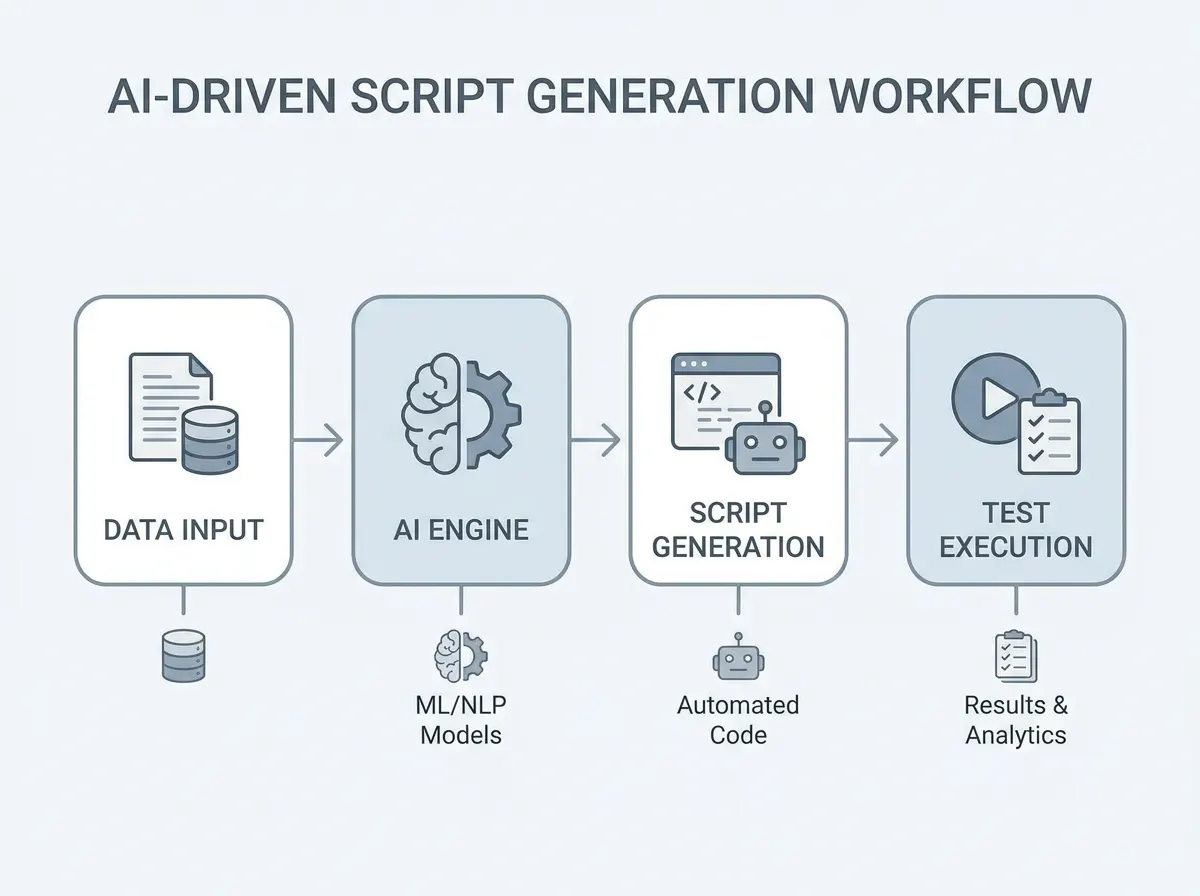
Creating realistic load test scripts has long been a challenge. Traditional platforms required engineers to manually script each scenario, making it difficult to keep up with application complexity. In 2026, AI-driven script generation changes the equation. By analyzing historical traffic patterns, usage logs, and production API traces, machine learning models generate test scripts that mimic real user journeys – including edge cases and unpredictable behaviors.
For example, AI-powered tools can identify critical user flows by mining thousands of sessions, then assemble scripts that reflect true usage spikes and corner-case interactions. Instead of relying solely on a QA engineer’s imagination, teams can point the tool at production logs and receive test cases tailored to their actual user base.
The result: significant time savings and more accurate test coverage. Teams spend less time maintaining brittle scripts as the AI adapts automatically to application changes and new user behaviors. Human oversight remains important – especially for sensitive workflows or new features – but for routine load testing, the efficiency gains are substantial.
AI-Based Anomaly Detection: Surfacing Issues Rule-Based Systems Miss
Classic load testing tools rely on static thresholds – such as alerting if response time exceeds a set value. However, performance anomalies can be subtle, appearing as gradual degradation or resource leaks that escape notice during brief test windows. AI-based anomaly detection excels in these scenarios.
Modern platforms baseline normal system behavior across metrics like CPU usage, memory consumption, API latency, and error rates. Machine learning algorithms flag outliers that don’t match historical patterns, catching deviations that static rules ignore. For instance, an AI-powered system can alert teams to a gradual increase in memory usage during peak load, even if it remains within traditional limits, because it recognizes the trend as unusual.
The impact: faster detection of subtle regressions and prevention of costly outages. AI systems can also prioritize alerts based on the likelihood and severity of the underlying issue, reducing noise and helping teams focus on what matters. However, these systems depend on representative training data; ongoing monitoring and periodic review are essential.
| AI Feature | Traditional Approach | AI-Enhanced Approach | Impact |
|---|---|---|---|
| Test Script Generation | Manual scripting based on documentation and limited user flows | Automated scenario creation using real-world usage data and ML | Reduces script creation time; higher scenario fidelity |
| Anomaly Detection | Static thresholds and basic rule-based alerts | Dynamic baselining and outlier detection across multidimensional data | Detects subtle issues early; decreases false negatives and alert fatigue |
| Optimization Recommendations | Manual analysis of reports; reliance on team expertise | Automated insights and actionable suggestions derived from test outcomes | Shortens feedback cycles; supports data-driven performance tuning |
| CI/CD Integration | Manual test insertion in pipelines | AI auto-tunes test scenarios for each deployment context | Speeds up release cycles; ensures relevant coverage in every build |
The integration of AI features in automated load testing platforms is a direct response to the scale and complexity of cloud-native systems. As these tools evolve, expect tighter feedback loops and richer optimization insights, driving smarter and more resilient digital infrastructure.

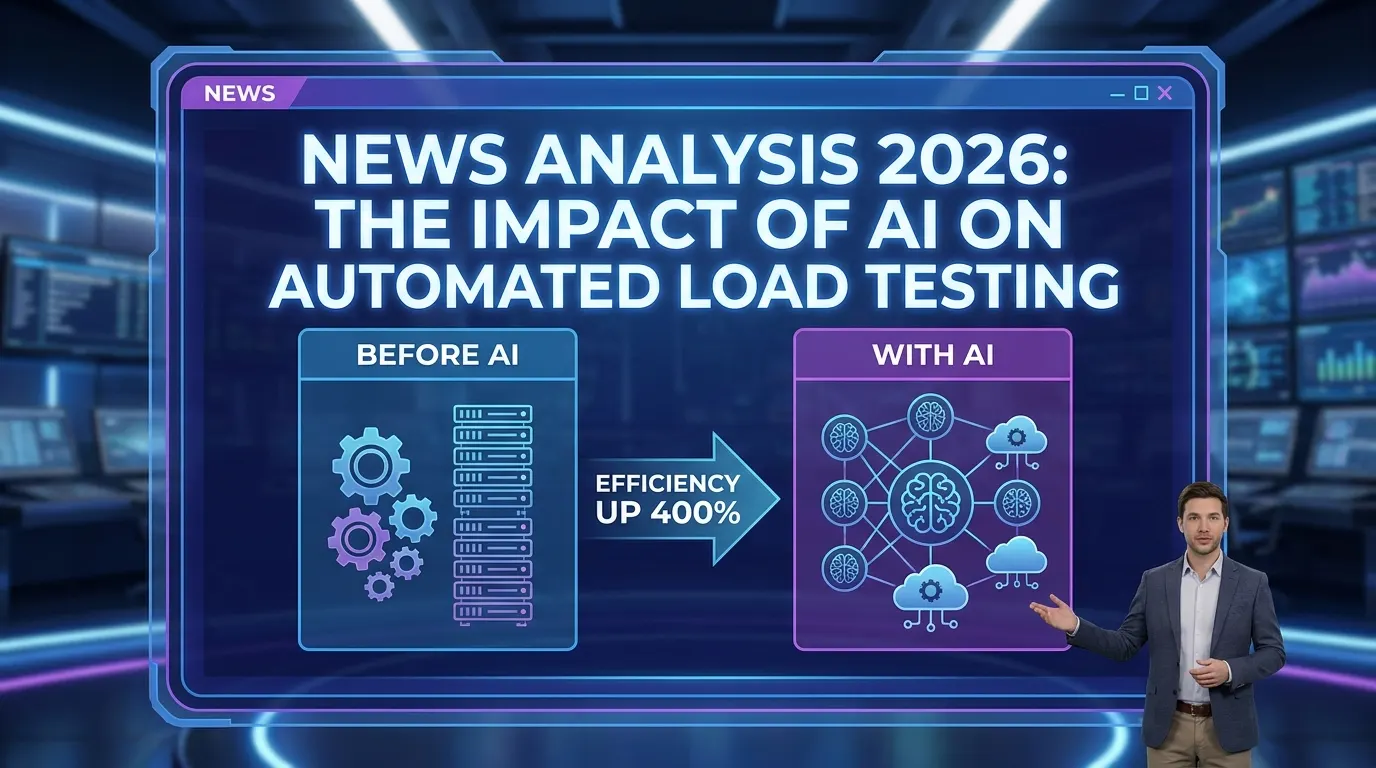
Before and After AI: Tangible Improvements in Automated Load Testing
Efficiency, Accuracy, and Insight: A New Baseline
Until recently, automated load testing was hampered by repetitive scripts, static data, and a flood of noisy results. Test engineers spent too much time filtering false positives or rerunning suites to catch missed bottlenecks. With AI-driven approaches, the shift is clear – especially in accuracy, speed of detection, and test coverage.
| Before AI Integration | After AI Integration | |
|---|---|---|
| False Positives & Missed Issues | Manual triage required for many alerts; critical bottlenecks often slipped through when load patterns changed. | AI models filter redundant alerts and highlight anomalies, reducing manual review time and surfacing edge-case failures that static rules missed. |
| Speed of Bottleneck Detection | Identifying a performance bottleneck could take hours, often requiring multiple test iterations as root causes were masked by generic errors. | Pattern-recognition algorithms flag likely causes within minutes, correlating spikes with code changes or traffic events. Teams resolve incidents faster and with less guesswork. |
| Test Coverage & Scenario Complexity | Testing was limited to predefined user flows and fixed data sets, often missing real-world concurrency or traffic spikes. | AI synthesizes diverse, adaptive user behaviors – testing edge cases, sudden surges, and rare failure states. This exposes reliability gaps traditional scripts missed. |
Before/After Example: Scenario Complexity
| Before | After |
|---|---|
| “Test simulates 500 users logging in and placing an order, using identical data and a single workflow. Failures only detected when server response time exceeds 2 seconds.” | “Test dynamically generates thousands of unique user sessions, mixes order types, simulates intermittent connectivity, and adapts test paths in real time. AI flags a bottleneck when a rare product search results in deadlocks – an issue traditional tests never exposed.” |
The after scenario reflects real-world complexity. AI-driven tests adjust to emerging patterns, uncovering hidden reliability risks that cookie-cutter scripts ignore. Teams can address vulnerabilities before they impact production, rather than reacting after an incident.
Predictive Analytics and Proactive Optimization: AI’s New Testing Frontier
From Reactive to Proactive: Anticipating Issues Before They Escalate
For years, performance testing was a reactive process. Teams waited for user complaints, ran manual tests, and scrambled to fix bottlenecks already affecting production. The arrival of AI-powered predictive analytics is changing this approach. Modern automated load testing tools now anticipate issues – often before end-users notice a slowdown.
Machine learning models, trained on historical performance tests, surface patterns that signal impending failures. For example, a sudden uptick in API response times under certain load profiles, previously dismissed as noise, might be recognized as an early symptom of a scaling bottleneck. AI-driven platforms are leveraging these capabilities to flag anomalies long before they cascade into outages.
Beyond alerting, predictive analytics enables proactive optimization. Instead of waiting for a major incident, teams can adjust capacity, tweak configurations, or rewrite code based on forecasted system stress. This shift toward foresight has become essential as release cycles accelerate and user expectations rise.
How AI Anticipates Bottlenecks and System Failures
Current AI-integrated automated load testing tools analyze both historical test runs and live monitoring data. This dual focus allows them to spot subtle trends – such as gradual memory leaks or inconsistent latency spikes – that might escape detection in traditional test cycles.
These systems simulate a wide array of real-world scenarios: flash sales, regional traffic surges, or API abuse. By ingesting actual production and test data, AI models learn to predict when and where bottlenecks are likely to occur. For instance, a tool may forecast that with the next significant increase in user load, a database connection pool will max out, risking degraded response times or failures.
This predictive power means teams get contextual, risk-based warnings and concrete recommendations – such as scaling services or revising rate limits – tailored to the predicted root cause.
Continuous Integration, Continuous Deployment, and AI: The Triple Advantage
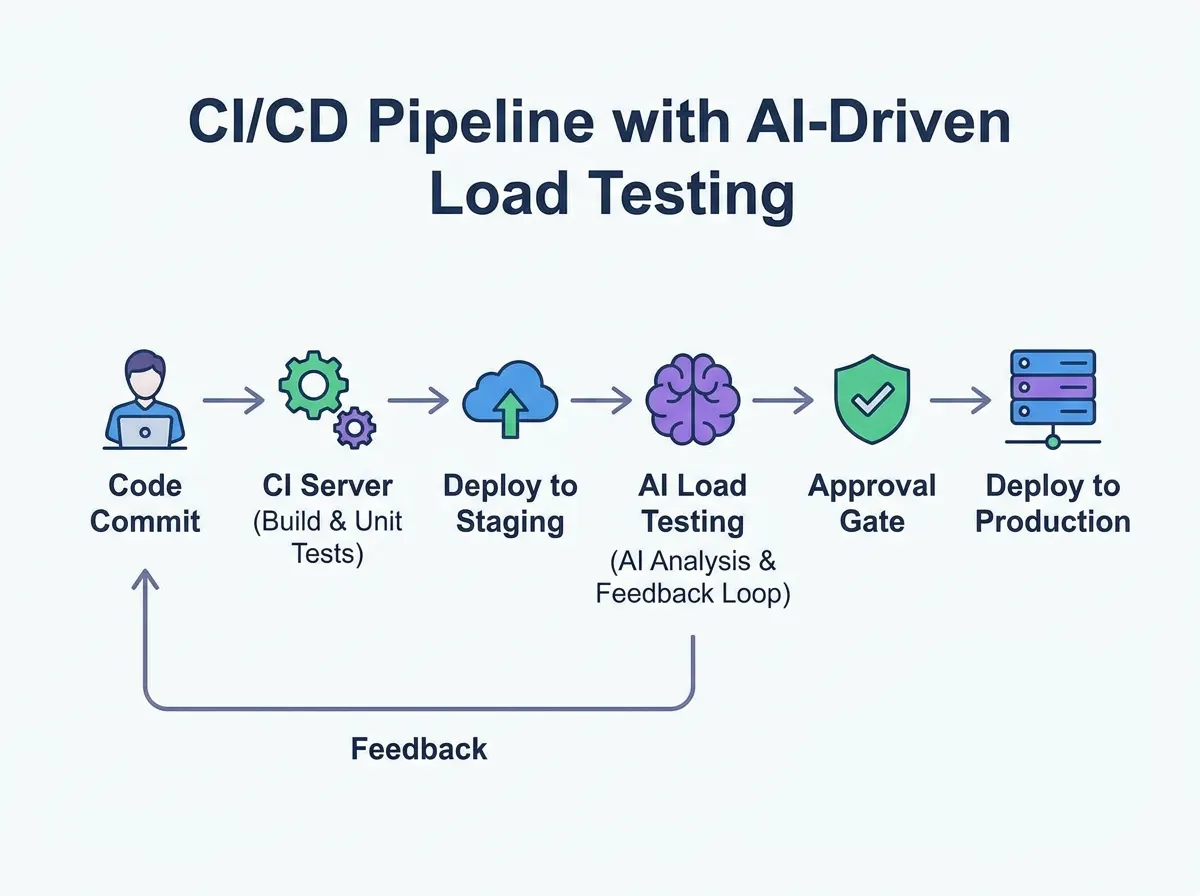
The need to deliver features and fixes faster has never been higher. Continuous integration and deployment (CI/CD) pipelines are the backbone of modern software delivery, but they also introduce new performance risks. AI-powered automated load testing fundamentally changes how teams approach speed, accuracy, and deployment confidence.
AI-driven load testing solutions have matured rapidly, driven by the volume and velocity of releases. The projected 15% CAGR for AI in software testing from 2023 to 2026 reflects the urgency to keep up with development cycles. For DevOps teams, integrating AI-based tests into every pipeline means less time spent chasing elusive bugs and more time shipping stable code.
Platforms like LoadFocus offer cloud-based, AI-enhanced tests that fit directly into CI/CD workflows. This integration doesn’t just save engineering hours – it raises the bar for what counts as a thorough performance test. With AI, load scenarios adapt automatically based on previous test outcomes, and predictive analytics flag bottlenecks before they affect users. The result is a level of deployment confidence that manual testing can’t match, especially in cloud environments where usage patterns shift quickly.
Key Integration Points for Automated Load Testing
The value of AI-powered automated load testing is most apparent at specific stages of the CI/CD pipeline:
| Pipeline Stage | Testing Challenge | AI Enhancement | Benefit |
|---|---|---|---|
| Code Commit | Early detection of performance regressions | AI analyzes code changes and correlates them with historical load data | Faster feedback on risky commits |
| Build | Identifying resource bottlenecks before deployment | Predictive models simulate peak traffic using prior build results | Prevents bottleneck surprises in production |
| Test Automation | Manual test scenario creation is time-consuming | Machine learning generates and updates load scenarios based on recent usage | Test coverage stays relevant as user behavior evolves |
| Pre-Production Deployment | Difficult to predict real-world user spikes | AI simulates complex, unpredictable traffic patterns using external data | Confidence in go-live decisions with realistic stress tests |
| Production Monitoring | Detecting subtle performance degradation post-release | Anomaly detection flags abnormal API response times in real time | Proactive issue resolution reduces risk of outages |
This integration with CI/CD pipelines gives teams an operational advantage – not just by automating tedious work, but by surfacing issues that traditional testing would miss. Especially in cloud environments, these AI-driven enhancements are quickly becoming the standard.

Challenges and Limitations: Where AI in Load Testing Falls Short
Despite the progress in automated load testing, integrating AI introduces new challenges.
Over-Reliance on AI: The Human Factor
One persistent risk is reduced human oversight. With AI handling anomaly detection and scenario optimization, it’s tempting to let the system take over. This can dull a team’s instinct for cross-checking results with real-world context. For example, if an AI-driven tool recommends eliminating certain test scenarios due to “low probability,” rare but critical edge cases might be missed. Automated load testing is only as reliable as the attention paid to outliers, not just averages.
AI-Induced Errors: Practical Limitations
AI sometimes gets it wrong. For instance, a financial services team using an AI-powered tool to simulate user spikes during earnings reports found the system underestimated the intensity of traffic surges, as it was trained primarily on quieter periods. Similarly, a travel booking platform’s AI failed to account for regional traffic bursts during a major holiday sale, missing context-specific patterns due to gaps in its training data. These examples highlight the risk of bias in training data and the need for ongoing human review.
Cost and Complexity Barriers
Deploying sophisticated AI models requires investment and expertise. For smaller organizations, the up-front expense and learning curve can be significant. While industry growth is strong, not every company is positioned to benefit equally. As technology becomes more accessible, these barriers are expected to decrease, but they remain real in 2026.
Ultimately, AI has redefined what’s possible in automated load testing, but it is not a silver bullet. Teams must balance machine intelligence with human scrutiny, ensuring context and oversight remain central to reliable performance testing.
Expert Perspectives: Balancing AI and Human Judgment
AI-driven automated load testing is attracting attention from industry leaders, but the consensus is clear: it’s a powerful tool, not a replacement for expertise. Experts highlight the gains in accuracy and speed but agree that interpreting results still requires experienced engineers who understand both the systems under test and the context of the findings.
Most practitioners see AI as an augmentation layer that speeds up established workflows, not a substitute for human judgment. Predictive analytics can surface likely failure points, but only a skilled team can decide which risks matter most for their applications. The most successful teams treat AI as an advisor – not an authority – striking a balance between automation and expertise.

How to Select an AI-Driven Automated Load Testing Tool
Choosing the right automated load testing platform in 2026 means looking beyond flashy AI claims. Advances in machine learning-based anomaly detection and scenario learning have created real differentiation between vendors. The best solutions offer meaningful predictive analytics, integrate smoothly with CI/CD environments, and provide transparent support when issues arise. Here’s what to evaluate as you narrow your options.
Core Features to Prioritize
Start with AI capabilities. Look for platforms that go beyond basic script automation and offer intelligent scenario generation – tools that learn from previous tests, adapt to changing usage patterns, and proactively highlight likely bottlenecks. ML-powered anomaly detection should flag performance degradations that slip past traditional monitoring. Integration is equally important: the tool must connect with your CI/CD pipeline and cloud infrastructure for repeatable, hands-off testing. Vendor transparency and responsive support are also essential, especially as automated load testing grows more complex.
Reference Table: Leading AI-Driven Automated Load Testing Tools
| Tool | AI Capabilities | Integration Options | Pricing | Best For |
|---|---|---|---|---|
| LoadFocus | ML-based anomaly detection, scenario learning, real-time AI analytics | CI/CD (Jenkins, GitHub Actions), AWS, Azure, Google Cloud | SaaS, tiered by test volume; free trial | Cloud-native teams needing fast web/API testing and actionable insights |
| Tricentis NeoLoad | AI-driven test scenario optimization, anomaly detection | Jenkins, Bamboo, Azure DevOps, major cloud providers | Enterprise licenses; custom quotes | Large enterprises, complex microservices architectures |
| SmartBear LoadNinja | Intelligent user simulation, auto-bottleneck identification | CI/CD (Jenkins, TeamCity), cloud APIs | Per-user SaaS pricing | QA teams looking for browser-level load tests |
| BlazeMeter | Predictive analytics, auto-scaling scenarios | Jenkins, Travis CI, public cloud integrations | SaaS, usage-based | DevOps teams automating frequent performance tests |
Checklist: Questions to Ask Before You Buy
- How does the tool’s AI actually work? Does it offer true machine learning for scenario adaptation, or just basic automation with an “AI” label?
- Can it integrate natively with your current CI/CD tools (such as Jenkins, GitHub Actions, or Azure DevOps) without custom scripting?
- What cloud environments does it support? Will it run tests where your production infrastructure lives?
- How transparent is the vendor about their AI models – training data, limitations, and failure modes?
- What is the quality of support? Is there live assistance available, or only ticket-based help? Are there detailed docs for troubleshooting AI-driven results?
- Is pricing predictable and scalable? Will increasing your tests or users lead to a sudden spike in costs, or is there a clear upgrade path?
- Does the tool provide actionable, explainable insights? Will your team understand why a test failed, or will you be left deciphering opaque AI outputs?
Automated load testing is now a critical practice, and the wrong tool can hold back your release pipeline. Assess each platform’s real-world AI strengths, integration fit, and vendor transparency to ensure your team is ready for the future.
Actionable Takeaways: Maximizing AI in Automated Load Testing
Invest in Team Training on AI-Powered Testing Tools
The sophistication of AI-driven automated load testing depends on the expertise of its users. Comprehensive user training is essential. Teams should understand how AI algorithms interpret historical data, highlight anomalies, and generate predictive insights. Training should cover interpreting AI-generated results, recognizing when human review is needed, and understanding the limits of automation.
Validate AI Outputs with Human Judgment
While AI brings automation and speed, continuous validation by experienced professionals remains crucial. Algorithms can misinterpret novel traffic patterns or miss context that only a human expert would catch. Establish regular review cycles where engineers scrutinize recommended optimizations and flagged anomalies. This back-and-forth builds trust in AI outputs and prevents over-dependence on automation.
Iterate and Adapt Processes for Ongoing Improvement
With the market for AI in testing growing rapidly, organizations should treat process adjustment as an ongoing task. Integrate AI-powered testing into your CI/CD pipelines and refine workflows based on real-world feedback. After each release cycle, assess which AI-generated recommendations delivered measurable improvements and adjust your test parameters or escalation procedures accordingly.
- Encourage cross-functional learning between QA engineers, developers, and DevOps to maximize the value of AI insights.
- Document key findings and lessons learned from AI-driven tests to create a feedback repository for future improvements.
- Stay alert to data quality issues – inaccurate or incomplete training data can skew results, so periodic audits of test datasets are essential.
Maximizing the value of AI in automated load testing requires ongoing learning, rigorous validation, and adaptable processes. Teams that invest in these areas will deliver high-performing, reliable software while maintaining speed.
Frequently Asked Questions
What is automated load testing and why is AI important?
Automated load testing simulates large numbers of virtual users to evaluate how a web application or API performs under stress. AI enhances this process by creating more realistic user behavior models and identifying bottlenecks before they impact production, allowing organizations to address scaling issues early.
How does AI improve automated load testing accuracy?
AI-powered tools analyze historical test data and learn from past patterns, enabling more precise scenario creation. Instead of simply ramping up traffic, AI algorithms can mimic real-world spikes – like a flash sale – based on previous analytics. Predictive analytics also flag potential failures for proactive remediation.
Can AI-driven load testing integrate with CI/CD pipelines?
Yes. Most modern solutions are designed to integrate into CI/CD workflows, automating performance checks every time code is deployed. This supports rapid release cycles and ensures performance keeps pace with development.
What should teams look for when selecting an AI-enabled load testing tool?
- Support for machine learning-based anomaly detection and predictive analytics
- Cloud-based scalability for simulating large user loads
- Compatibility with your tech stack and CI/CD tools
- Detailed, actionable reports – not just raw data
Platforms like LoadFocus provide real-time insights and adapt to your application’s unique traffic patterns, making it easier to identify performance risks before release.
Are there drawbacks to relying on AI in load testing?
While AI offers significant benefits, it is not infallible. Algorithms require quality data to provide meaningful insights. If historical test data is limited or biased, the AI may miss edge cases. Human oversight remains critical – review test results, question anomalies, and interpret AI recommendations within your business context.
How can teams maximize the value of AI in automated load testing?
Invest in team training, validate AI outputs with human review, and continuously refine processes. Encourage collaboration across QA, development, and DevOps, and document lessons learned to build institutional knowledge.
Generated with PostNext