What is Calibre App?
Calibre is a web performance monitoring platform that combines three data sources: scheduled Lighthouse tests, real user monitoring (RUM) from your own visitors, and Google's CrUX field data. It tracks Core Web Vitals over time, alerts on regressions, and reviews pull requests against the live site. Calibre Analytics was founded in 2017, is based in Melbourne, Australia, and runs as an independent, bootstrapped company.
Calibre is positioned for engineering teams who want a clean, opinionated UI focused exclusively on page-speed metrics. Lighthouse scores, First Contentful Paint, Largest Contentful Paint, Cumulative Layout Shift, Total Blocking Time. Every plan includes unlimited sites and URLs; pricing starts at $75/mo (Starter) and scales with the number of synthetic tests, RUM sessions and seats, not with the number of monitored pages.
When Calibre is the right tool
Calibre fits these workflows well:
- Continuous front-end monitoring. Scheduled Lighthouse tests, RUM and CrUX in one product, with a UI built around Core Web Vitals.
- Marketing page performance tracking. Trend graphs and budgets work well for public-facing pages where regressions need fast detection.
- Slack/email regression alerts. Built-in integrations push notifications when scores degrade past thresholds.
- Profile-based throttling. Test the same URL across multiple device/network profiles and compare side-by-side.
If your only concern is "is our Lighthouse score stable over time", Calibre delivers focused tooling.
Where Calibre stops being enough
Calibre's narrow focus on Lighthouse becomes a limit when you need to test more than rendering speed:
- No load testing. Calibre measures page load for one user. It cannot simulate concurrent users hitting your site under traffic, for capacity planning or stress testing, you'll need a separate tool.
- No API monitoring. Backend HTTP/REST endpoints (login, checkout, third-party integrations) need separate validation. Calibre only tests page rendering.
- Front-end lens. Calibre measures what the browser experiences. It does not test how your servers cope with traffic or whether your APIs respond correctly.
- Page speed only, from $75/mo. URLs are unlimited, but the entry plan is $75/mo and covers page speed alone, so teams that also need load testing or API monitoring typically end up with several SaaS subscriptions.
LoadFocus vs Calibre App: feature comparison
The table below compares LoadFocus against Calibre's standard plan. Pricing from Calibre's pricing page, checked October 2026.
| Feature | LoadFocus | Calibre App |
|---|---|---|
| Cost | Free tier; page speed from $39/mo ($29/mo billed yearly) | From $75/mo (Starter, unlimited URLs); Team $150/mo, Company $1,500/mo billed yearly |
| Page speed monitoring | Yes | Yes (specialty) |
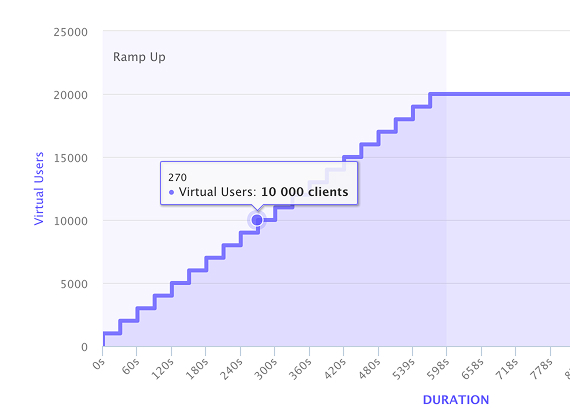
| Load testing | Yes (up to 20,000 VUs on Enterprise) | No |
| API monitoring | Yes | No |
| Lighthouse-based scoring | Yes | Yes (specialty) |
| Test locations | 25 cloud regions | 17 locations (one per site) |
| Scheduled monitoring frequency | Hourly to weekly | Daily/hourly |
| Real Chromium browser | Yes | Yes |
| Core Web Vitals tracking | Yes | Yes |
| Real User Monitoring (RUM) | No RUM script of its own; Google CrUX field data with alerts | Yes (RUM sessions in every plan) |
| Slack/Email alerts | Yes | Yes |
| CI/CD integration | Load tests: CLI, GitHub Action, Jenkins plugins | CLI, Node.js API and GitHub pull request reviews |
| Budget alerts | Yes | Yes |
| Combined platform (load + speed + API) | Yes | Page speed only |
When LoadFocus is the right upgrade from Calibre
The decision usually comes down to whether you need page speed alone or need to combine it with load and API monitoring on a single platform.
You need load testing alongside page speed
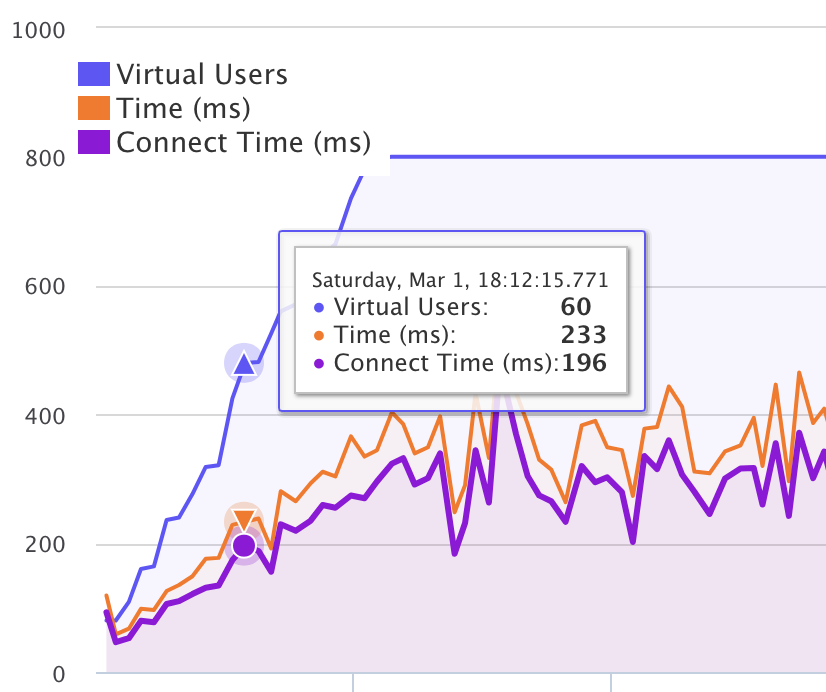
Calibre tells you how fast a page loads for one user. It can't tell you what happens when 1,000 users hit the site simultaneously. LoadFocus does both, and the combination matters for incident investigation, since page speed regressions often only manifest under load.
You need API monitoring
If your application has backend APIs, Calibre won't help. LoadFocus monitors HTTP/REST endpoints with assertions, scheduled checks, and alerting, same dashboard as page speed.
You want broader geographic coverage
Calibre tests each site from one of 17 locations. LoadFocus page speed monitoring runs from 25 cloud regions, including Cape Town, Tel Aviv, Jakarta and São Paulo, so you can match the test location to where your visitors are.
You want consolidated billing
Many teams using Calibre also pay separately for load testing (k6 Cloud, BlazeMeter) and API monitoring (Postman, Checkly). LoadFocus consolidates the three on one platform with one subscription.
Migration from Calibre
- Sign up at loadfocus.com/signup.
- Add the URLs you currently monitor in Calibre to LoadFocus's page speed monitoring.
- Replicate your Calibre schedule (LoadFocus schedules run from hourly to weekly).
- Set Web Vitals budgets matching the thresholds you used in Calibre.
- Optionally extend with load testing or API monitoring on the same account.
Run both tools in parallel for a week to verify metric agreement before fully cutting over.
FAQ: LoadFocus vs Calibre App
Are LoadFocus and Calibre scores comparable?
Not exactly. Both run Lighthouse, but scores depend on the device profile, network throttling and test location each tool uses, so the same page can score differently in each. Compare trends within one tool rather than numbers across the two.
Can LoadFocus replicate Calibre's trend-line UI?
Yes. LoadFocus's page speed monitoring shows historical trend graphs of all CWV metrics, with the ability to filter by location, device profile, and date range.
Does LoadFocus support multiple device/network profiles?
LoadFocus runs Lighthouse with desktop or mobile emulation and Lighthouse's standard throttling. Calibre lets you define your own device and network profiles, which is more flexible if you need to test a specific connection speed.
Can I use both tools in parallel?
Yes. Calibre is good at focused page-speed-only workflows, while LoadFocus extends to load testing and API monitoring on the same platform. Many teams run both during transition.
How does pricing compare?
Calibre starts at $75/month (Starter) with unlimited URLs, and its price scales with synthetic tests, RUM sessions and seats rather than per URL. LoadFocus page speed monitoring starts at $39/month ($29/month billed yearly) for 300 tests a month, and the same account covers load testing and API monitoring. The total cost depends on how many of those you need.
Who owns Calibre?
Calibre Analytics, the company that builds it. It was founded in 2017, is based in Melbourne, Australia, and describes itself as bootstrapped and independent. It is not part of SpeedCurve.
Try LoadFocus free
If you're using Calibre today and want to add load testing or API checks without managing multiple vendors, LoadFocus consolidates the toolchain. Sign up for a free tier at loadfocus.com/signup, no credit card, and run your first page speed test alongside your existing Calibre setup. Decide after.