





What is Instatus?
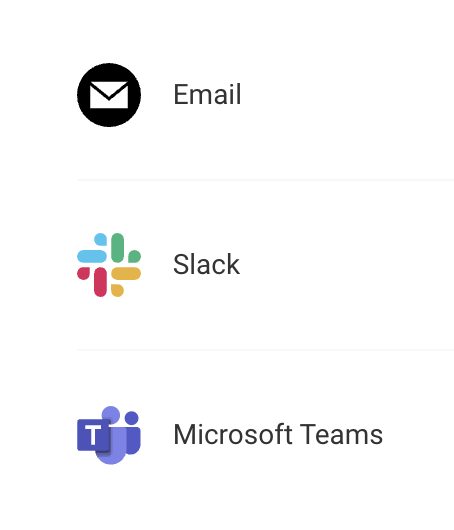
Instatus (instatus.com) is a modern status-page tool. It is known for fast, clean, good-looking public and private status pages built on a Jamstack architecture that loads quickly, and for developer-friendly pricing. You organise your services into components, post incidents and scheduled maintenance from templates, and notify subscribers through email, SMS, Slack, Microsoft Teams and webhooks. Instatus also includes uptime monitoring (monitor counts that scale by plan, with a few check regions) and connects to 10+ external monitoring services such as UptimeRobot, Pingdom, Datadog, Checkly and Better Stack to drive status automatically.
The thing to understand is that Instatus is, at its core, a status-page product. Its built-in monitoring is uptime-focused: HTTP and ping checks from a few regions, with a monitor count that scales by plan, designed mainly to feed the status page. The free Starter plan includes 5 team members, caps subscribers (around 200) and offers no custom domain; the Pro plan ($20/month) adds a custom domain, 50 team members and up to 5,000 subscribers, while private (non-public) pages are Business-only, with the Business plan around $300/month for larger subscriber counts and SAML SSO. Prices from the Instatus pricing page, checked October 2026.
When Instatus is the right tool
Instatus is a strong choice when a polished status page is the main thing you need:
- Beautiful, fast public pages. Instatus consistently ranks among the best-looking status pages, and its Jamstack pages load very quickly under traffic spikes.
- Cheap, generous subscriber tiers. Up to 5,000 subscribers and 50 team members on the $20/month Pro plan, with larger subscriber counts on Business, make it easy to communicate at scale without a steep bill.
- Broad notification channels. Email, SMS, Slack, Microsoft Teams and webhook subscribers are supported, plus an embeddable status widget.
- You already have monitoring. If you run UptimeRobot, Pingdom, Datadog or similar, Instatus connects to them and turns their results into a clean public page.
Where Instatus stops being enough
- Monitoring is uptime-focused. Instatus runs HTTP and ping checks from a few regions; deeper, multi-region API monitoring is not its focus, so API-heavy teams often pair it with a dedicated tool.
- No multi-step API checks. Multi-step API flows, response assertions and validation across many regions are outside its scope, so API uptime usually lives in another product.
- It is another subscription. A custom domain means moving to a paid plan on top of whatever monitoring tool you already pay for.
- No load testing or page-speed monitoring. Instatus is focused on status pages, so performance testing and Core Web Vitals tracking live in other tools and bills.
LoadFocus vs Instatus: feature comparison
| Feature | LoadFocus | Instatus |
|---|---|---|
| Built-in API and uptime monitoring | Full API and uptime, 25+ regions | Uptime-focused, fewer regions |
| Status page driven automatically by your monitors | Yes | Yes (own uptime checks or integrations) |
| Check regions for built-in monitoring | 25+ regions | A few regions |
| Multi-step API checks with assertions | Yes (paid plans) | Limited |
| 90-day uptime from real check data | Yes | Yes (from connected data) |
| Incidents and scheduled maintenance | Yes | Yes |
| Subscriber channels | Email, SMS, Slack, Teams, webhook | |
| Custom domain with automatic HTTPS | Paid plans, certificate included | Paid plans (Pro and up) |
| Load testing and page-speed monitoring in the same tool | Yes | No |
| Free tier | Yes | Yes (200 subscribers, no custom domain) |
When LoadFocus is the right alternative to Instatus
You want the monitoring and the status page in one tool
With LoadFocus API monitoring, the checks are not an add-on or a third-party connection: they are the product. Your status page is driven by the same monitors you run for alerting, component status and 90-day uptime reflect real results from 25+ regions automatically, and there is nothing to wire together.
You need real API monitoring, not just status display
If you depend on multi-step API checks, response assertions and validation across many regions, LoadFocus runs that natively and surfaces it on the page. Instatus can display a green or red dot, but the depth of checking usually comes from a separate tool.
You want one bill, not two
Instead of a monitoring tool plus a separate status-page subscription, LoadFocus bundles monitoring and the public status page together, with a free tier to start and a custom domain plus auto-renewing HTTPS on paid plans.
You also need load and performance testing
The same account covers cloud load testing, JMeter testing and page-speed monitoring, so performance and status live in one place rather than across several tools.
Reading your status page programmatically
Instatus answers /api/v2/summary.json, but with its own shape rather than the Statuspage one (checked 26 August 2026), so code written for that schema does not read it. Whatever you are moving from, the integrations you build next matter. Every LoadFocus status page serves a Statuspage-compatible JSON API at /api/v2/summary.json and /api/v2/status.json: an overall indicator, a components array, plus incidents and scheduled_maintenances.
That schema matters beyond Atlassian. It is the de-facto shape for status data, so a dashboard, Slack bot, wallboard or uptime aggregator written against it works here without modification. Incident history is also served as RSS and Atom, and there is an SVG status badge for READMEs. Full response shapes are in the Status Page API reference. You can see the result on LoadFocus's own status page, which runs on exactly this.
Migration from Instatus
Moving is straightforward: recreate your components in the LoadFocus status-page editor, map each one to the monitors that power it (status then flows automatically from real checks), add your incidents and maintenance templates, and point your status. subdomain at LoadFocus with the two DNS records shown in the editor. HTTPS is issued and renewed for you. See the Status Pages guide to get started.
FAQ: LoadFocus vs Instatus
Can LoadFocus replace Instatus?
For teams that want a public status page driven by their own real monitoring, yes, and you get the monitoring, load testing and page-speed checks in the same account. If you specifically need SMS, Slack and Teams subscribers or the very large subscriber tiers Instatus offers, Instatus remains more specialised on the communication side.
Does Instatus do full uptime and API monitoring?
Instatus includes uptime monitoring (HTTP and ping checks, with monitor counts that scale by plan) and connects to external monitoring tools; multi-step API checks with assertions across many regions are not its focus. For deeper API monitoring with multi-step checks and assertions across many regions, that work usually still happens in a dedicated tool. LoadFocus includes that monitoring and drives the page from it.
How does pricing compare?
Instatus is affordably priced, with a free plan (around 200 subscribers, no custom domain) and a Pro plan at $20/month that adds a custom domain and up to 5,000 subscribers. LoadFocus offers a free public status page and bundles a custom domain into paid plans alongside the monitoring, load testing and page-speed checks you would otherwise buy separately.
Will my status page update automatically?
Yes. LoadFocus components are mapped to your monitors, so live status and 90-day uptime update from real check results without manual edits.
Can I use my own domain?
Yes, on paid plans, serve the page at status.yourcompany.com with an automatically issued, auto-renewing HTTPS certificate. Instatus also offers custom domains on its paid tiers.
Can I use both tools together?
Yes. Some teams keep Instatus for its polished customer-facing page and multi-channel subscribers while using LoadFocus for the actual monitoring, load testing and page-speed tracking. Many teams consolidate onto one tool over time.
Try LoadFocus free
Turn your monitors into a public status page in minutes. Start free, no credit card required.