





What is Uptrends API Monitoring?
Uptrends API Monitoring is the dedicated synthetic API testing product from Uptrends (now part of ITRS Group). It runs scheduled HTTP/REST checks against your API endpoints, supports multi-step transaction monitors that chain requests with response data, and offers global execution from 230+ checkpoints. The product is positioned as part of Uptrends' broader monitoring suite alongside website monitoring, server monitoring, and infrastructure visibility.
Uptrends has a strong reputation in the synthetic monitoring space, with mature alerting (SMS, email, integrations to PagerDuty, Slack, etc.), customizable dashboards, and granular check configuration. The product is well-suited to ops and SRE teams running production API monitoring at scale.
When Uptrends API Monitoring is the right tool
Uptrends API Monitoring is genuinely strong when these conditions match:
- You need very high checkpoint counts. 230+ global checkpoints exceed what most competitors offer; useful for hyper-localized latency monitoring.
- You're already in the Uptrends ecosystem. Existing website monitoring, server checks, and dashboards extend naturally to API monitoring.
- You need mature ops alerting. Uptrends' alerting is enterprise-grade, escalation policies, schedules, integrations to incident management.
- Compliance requires specific data residency. Uptrends offers regional data centers and configurable storage locations.
If API monitoring is a focused need and you have ops budget for it, Uptrends is a defensible choice.
Where Uptrends API Monitoring leaves gaps
Uptrends API Monitoring is single-purpose. Teams running modern web applications usually need more than API monitoring alone:
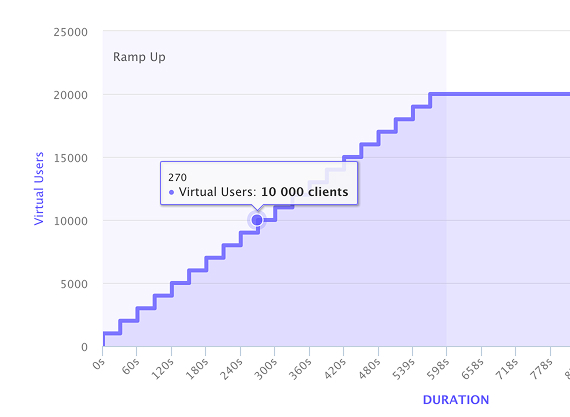
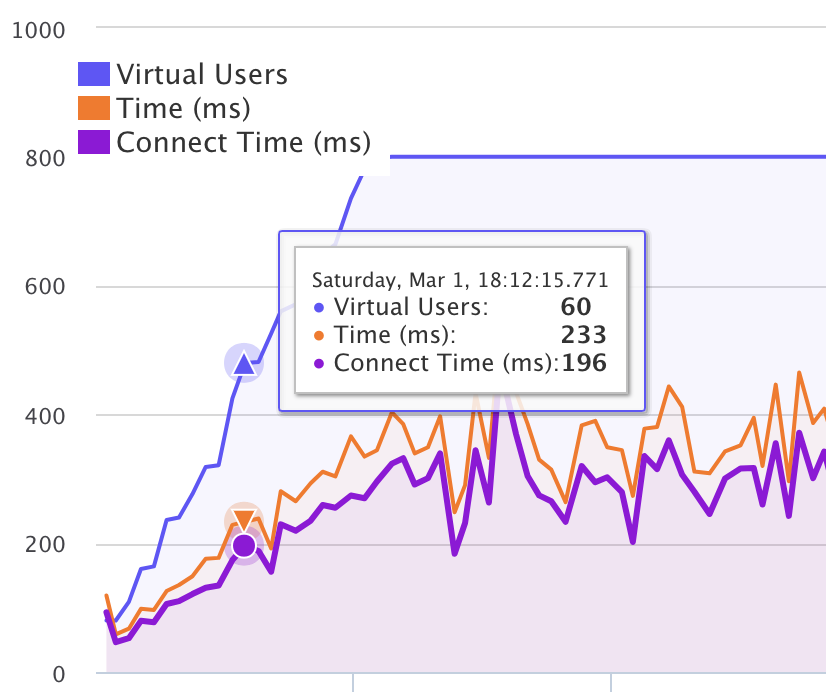
- No load testing. Uptrends measures API health under normal scheduled checks. It cannot simulate concurrent users to test how your API behaves under traffic spikes.
- No page speed monitoring on the same product. Uptrends has separate website monitoring; API monitoring is its own product line.
- Pricing scales with monitor count. Each API check is a billable monitor; large API surfaces (microservices, hundreds of endpoints) get expensive quickly.
- Multi-tool experience. If you also want load testing or page speed, that's separate vendors or separate Uptrends products.
- Limited test scripting flexibility. Multi-step transaction monitors are configured via UI; complex assertion logic or dynamic data extraction is more limited than scripted load testers.
LoadFocus vs Uptrends API Monitoring: feature comparison
The table below compares LoadFocus against Uptrends API Monitoring. Pricing accurate as of April 2026.
| Feature | LoadFocus | Uptrends API Monitoring |
|---|---|---|
| Cost | Free tier; API monitoring from $33/mo | Plans typically from $204/mo |
| API monitoring (scheduled checks) | Yes | Yes (specialty) |
| Load testing | Yes (up to 12,500 VUs) | No |
| Page speed monitoring | Yes (Lighthouse-based) | Separate Uptrends product |
| Multi-step transactions | Yes | Yes |
| Checkpoint count | 25+ regions | 230+ checkpoints |
| Response assertions (status, body, headers) | Yes | Yes |
| Dynamic data extraction (chaining) | Yes | Yes |
| Authentication (Basic, Bearer, OAuth) | Yes | Yes |
| Alerting (email, SMS, webhook) | Yes | Yes (mature) |
| PagerDuty / Slack integration | Yes | Yes (extensive) |
| SLA reports | Yes | Yes |
| Combined platform (API + load + speed) | Yes (single bill) | No (separate products) |
| Free tier | Yes | Trial only |
| AI-generated analysis | Yes (all plans) | No |
When LoadFocus is the right move from Uptrends
You also need load testing on your APIs
API monitoring tells you whether the endpoint responds correctly under normal scheduled checks. Load testing tells you what happens at 1,000 concurrent users. Both are needed for production API confidence. LoadFocus does both natively; Uptrends API Monitoring does only the first.
You also monitor page speed
If your application has both APIs and front-end pages, monitoring them on the same platform with shared alerting and dashboards is operationally simpler. LoadFocus combines API monitoring with Lighthouse-based page speed monitoring on the same account.
Per-monitor pricing is becoming expensive
Uptrends prices per monitor; large API surfaces (50+ endpoints) get expensive. LoadFocus pricing is plan-based with a defined number of API checks included, more predictable for growing API surfaces.
You want a free tier for evaluation
Uptrends offers a trial. LoadFocus has a permanent free tier you can run alongside existing monitoring without budget conversations.
You want AI explanations for stakeholders
Uptrends produces metrics; you read them. LoadFocus includes an AI-generated narrative summary alongside the metrics, useful when sharing test or monitoring results with non-engineers.
Migration from Uptrends API Monitoring
- Sign up at loadfocus.com/signup.
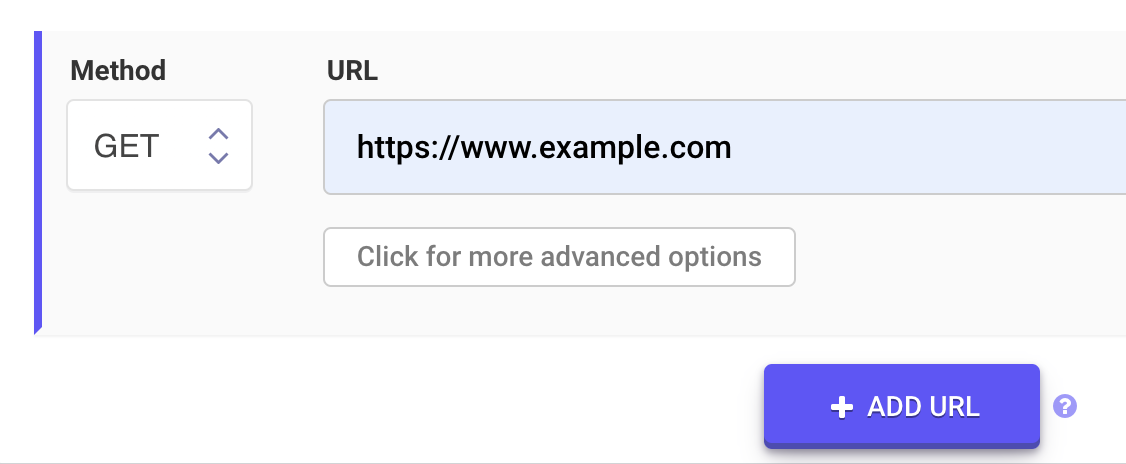
- For each Uptrends monitor, create an equivalent API check in LoadFocus: URL, method, headers, expected response.
- Translate Uptrends multi-step transactions into LoadFocus multi-step API checks (URL chains with response data extraction).
- Configure alerting (email/Slack/webhook) to match your existing escalation policies.
- Optionally add load testing and page speed monitoring on the same account.
Run both tools in parallel for a week to verify alert and metric agreement before fully cutting over.
FAQ: LoadFocus vs Uptrends API Monitoring
Does LoadFocus offer 230+ checkpoints like Uptrends?
No. LoadFocus runs from 25+ cloud regions. For most API monitoring needs (covering major user geographies and CDN edges), 25+ is more than sufficient. For hyper-localized monitoring needs (e.g., monitoring from specific tier-3 cities), Uptrends' 230+ checkpoints is broader.
Can LoadFocus replicate Uptrends' multi-step transactions?
Yes. LoadFocus supports multi-step API checks where one request's response data feeds into subsequent requests (token chains, ID extraction). The configuration is comparable.
How does alerting depth compare?
Uptrends has more mature alerting features (escalation schedules, on-call rotations, advanced notification logic). LoadFocus covers the core alerting needs (email, SMS, webhook, Slack, PagerDuty) but with less granular escalation control. For most teams, the LoadFocus alerting is sufficient; for large ops orgs with complex escalation requirements, Uptrends has the edge.
What about Uptrends' non-API products (website monitoring, server monitoring)?
LoadFocus covers website page speed monitoring (similar to Uptrends' Lighthouse-based website monitoring) and HTTP API monitoring. LoadFocus does not cover server/infrastructure monitoring (CPU, disk, etc.): that remains separate tools (Datadog, New Relic, etc.).
How does pricing compare?
Uptrends API Monitoring plans typically start at ~$204/month. LoadFocus API monitoring starts at $33/month with a free tier underneath. Total cost depends on monitor count and combined-product needs (LoadFocus bundles API + load + page speed; Uptrends prices each separately).
Can both tools coexist during transition?
Yes, running both for a week or two to verify alert and metric agreement is the recommended migration approach. The free LoadFocus tier supports basic checks during evaluation.
Try LoadFocus free
If you're using Uptrends API Monitoring today and want to consolidate API monitoring, load testing, and page speed onto one platform, LoadFocus offers a free tier to evaluate without budget conversations. Sign up at loadfocus.com/signup and replicate one of your Uptrends monitors as a LoadFocus check, see metric and alert parity before committing.