What is Micro Focus Performance Center?
Micro Focus Performance Center is the enterprise load testing platform inherited from HP's LoadRunner lineage. Micro Focus renamed it LoadRunner Enterprise in 2020, and OpenText, which acquired Micro Focus in 2023, now sells it as OpenText Enterprise Performance Engineering (as of October 2026). It bundles LoadRunner's test execution engine with centralized test management, asset versioning, role-based access control, and analytics, designed for large QA organizations with formal performance engineering practices.
The product supports a wide range of protocols beyond HTTP (Citrix, SAP, Oracle, Web Services, JMS, etc.), runs in on-premises or hybrid-SaaS deployments, and is typically licensed per concurrent virtual user with significant enterprise pricing. Its strength is depth: scriptable VuGen scripts, controller-based test orchestration, and the ability to integrate with broader OpenText ALM tooling.
LoadRunner vs Performance Center: what is the difference?
Both run the same VuGen scripts on the same load generators. The difference is who uses them and how:
- LoadRunner (now OpenText Professional Performance Engineering) is a desktop setup: one engineer designs a scenario in the Controller on a Windows machine and runs it against the load generators that machine can reach.
- Performance Center (later LoadRunner Enterprise, now OpenText Enterprise Performance Engineering) puts that on a shared web server. Several teams book load generators from a common pool, schedule tests in timeslots, keep scripts and results in one repository and control who can do what.
So the question is usually team size, not features: one performance engineer works fine with LoadRunner, while a central QA group serving many projects is what Performance Center was built for. The hosted version of the same family is Core Performance Engineering (formerly StormRunner Load); for the desktop tool, see LoadRunner alternatives.
When Performance Center is the right tool
Performance Center is genuinely well-suited for these scenarios:
- You have existing LoadRunner investment. VuGen scripts, established performance engineering teams, controller-based workflows. Performance Center continues those investments natively.
- You need exotic protocol support. Citrix, SAP GUI, Oracle Forms, mainframe protocols, these are LoadRunner's domain and aren't served well by HTTP-focused tools.
- You operate in a regulated or air-gapped enterprise. On-prem deployment with role-based access control fits compliance requirements that public-cloud SaaS may not meet.
- Centralized test asset management matters. Versioned test plans, formal review workflows, audit trails. Performance Center treats load tests as enterprise assets.
If your organization already runs LoadRunner and Performance Center, the upgrade question is rarely "should we move?", it's "is the new pricing still worth the depth?"
Where Performance Center is overkill
For teams without legacy LoadRunner investment or exotic protocol needs, Performance Center brings overhead that's often disproportionate:
- Quoted licensing. OpenText publishes no prices; licences are sized by virtual users and protocols and quoted by sales. It is not built for solo developers, startups or small teams.
- Complex installation and ongoing operations. Controller, load generators, MI Listener, license server, multiple components to install, configure, and maintain.
- Steep learning curve. VuGen scripting and controller workflow take weeks to learn. Hiring for performance-engineering depth on this stack is harder than for modern OSS tools.
- HTTP-only teams pay for protocol coverage they don't use. Most modern web apps live on HTTP/HTTPS. Paying for Citrix/SAP/Oracle protocol support you don't need is common.
- Pipelines need plugins and a server. OpenText ships CI plugins for Jenkins, GitHub, GitLab, Azure DevOps and others, but each one talks to your Performance Center server, which has to be running and reachable from the pipeline.
LoadFocus vs Micro Focus Performance Center: feature comparison
The table below compares LoadFocus against Performance Center for HTTP-focused load testing. OpenText details from its product documentation, checked October 2026.
| Feature | LoadFocus | Performance Center |
|---|---|---|
| Cost | Free tier; paid from $29/mo ($19/mo billed yearly) | Quoted by sales (no public prices, checked October 2026) |
| Setup time | Sign up, run first test in minutes | Days to weeks (controller, agents, license server) |
| Deployment model | SaaS (cloud-hosted) | On-prem / hybrid SaaS |
| Cloud regions | 25+ globally | Your own load generators, on-premises, in Docker or in AWS and Google Cloud accounts |
| Scripting | UI builder + JMeter (.jmx) + k6 (JS) | VuGen, TruClient and DevWeb, plus JMeter scripts |
| HTTP protocol support | HTTP/1.1, HTTP/2 | HTTP/1.1, HTTP/2 |
| Non-HTTP protocols (Citrix, SAP, Oracle) | No | Yes (extensive) |
| Build-failing CI assertions | Load tests: CLI, GitHub Action, Jenkins plugins | Plugins for Jenkins, GitHub, GitLab, Azure DevOps, Bamboo, TeamCity and Harness |
| Live monitoring during test | Yes | Yes (controller dashboards) |
| Shareable result URLs | Yes | Asset management system access |
| Page speed monitoring | Yes (Lighthouse-based) | No |
| API monitoring (scheduled checks) | Yes | No (separate OpenText product) |
| AI-generated test analysis | Yes (all plans) | Yes (Aviator for Analysis, a paid add-on) |
| Free tier | Yes | No (commercial trial only) |
When LoadFocus is the right move from Performance Center
Your testing is HTTP-focused
If you're paying enterprise pricing for Citrix/SAP/Oracle protocol support but only running HTTP load tests, the value is misaligned. LoadFocus covers HTTP/HTTPS comprehensively at a fraction of Performance Center's cost.
You want faster onboarding for new team members
VuGen and controller workflows take weeks to learn. JMeter and k6 are widely-known industry standards, new hires usually arrive with at least familiarity. LoadFocus runs both formats, so your team's skill investment compounds across jobs.
You want load tests in the pipeline without running a server
With LoadFocus, a GitHub Action, the Jenkins plugins or the CLI start the test in the cloud and fail the build when response times or error rates miss your thresholds, and the docs include a workflow step that posts the results as a pull request comment. There is no controller or load generator pool to keep running for it. See JMeter load testing and k6 load testing.
You want page speed and API monitoring on the same platform
Performance Center is load testing only. Page speed and API monitoring are separate OpenText products. LoadFocus combines all three on one account, one bill, one dashboard.
Your organization is moving away from on-prem
Performance Center has SaaS options but its heritage is on-prem. If your direction is "everything in SaaS", LoadFocus is cloud-native by design.
Migration from Performance Center
If you're moving HTTP load testing to LoadFocus, sign up for a free account at loadfocus.com/signup first, then follow the migration path below based on your current scripts:
- HTTP-only VuGen scripts: re-implement as JMeter
.jmxor k6 JavaScript. Most HTTP scripts translate cleanly; the structural concepts (transactions, controllers, parameters, correlations) map to JMeter equivalents. - Existing JMeter scripts in your org: upload directly to LoadFocus and run unchanged.
- Non-HTTP protocols: if you depend on Citrix/SAP/Oracle protocol testing, LoadFocus won't cover that. Performance Center remains the right tool for those specific tests; LoadFocus complements it for HTTP work.
FAQ: LoadFocus vs Performance Center
Can LoadFocus replace Performance Center for HTTP load testing?
Yes, for HTTP/HTTPS workloads. The combination of JMeter and k6 script support, multi-region cloud execution, and CI integration covers what most HTTP-focused performance teams use Performance Center for. Non-HTTP protocols (Citrix, SAP, Oracle) require Performance Center.
How does pricing compare for a small team?
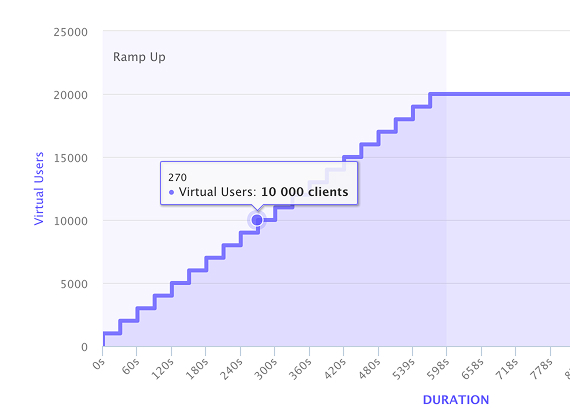
OpenText publishes no Performance Center prices; licences are quoted by sales. LoadFocus prices are on its pricing page: load testing starts at $29/month ($19/month billed yearly), with a free tier, and Enterprise goes up to 20,000 virtual users.
What happens to existing VuGen scripts?
VuGen scripts are LoadRunner-specific and won't run on LoadFocus. The migration path is re-implementation in JMeter or k6, usually faster than expected for HTTP-focused tests since the structural patterns map cleanly.
Can LoadFocus integrate with OpenText ALM?
Not natively. LoadFocus has a results API that returns a run's summary and metrics as JSON, so a script can copy results into ALM or another test management tool.
Is LoadFocus suitable for regulated environments?
LoadFocus is SaaS-only, test data and results live in LoadFocus's cloud. For air-gapped environments or strict on-prem requirements, Performance Center remains the better fit. For most cloud-comfortable enterprises, SaaS is acceptable.
Can LoadFocus run 100,000+ VU tests?
No. LoadFocus plans go up to 20,000 virtual users on Enterprise, spread across cloud regions. For tests at 100,000 users and above, Performance Center with your own load generator pool, or a vendor sized for that scale, is the better fit.
Try LoadFocus free
If you're evaluating whether HTTP load testing on Performance Center is still worth its enterprise price, LoadFocus offers a free tier to compare directly. Sign up at loadfocus.com/signup, upload a JMX file or write a quick k6 script, and compare cloud-native execution against your current Performance Center workflow.