Key Takeaways
What Decision-Makers and Testers Must Know
Testing solely from centralized cloud regions conceals the latency and bottlenecks that users actually experience, especially for global and mobile audiences. Integrating edge locations into your load testing strategy is now essential for any application where user experience depends on responsiveness. As detailed in this analysis, latency drops significantly when content is served from edge instead of core cloud regions – a critical factor for streaming and real-time apps.
Relying exclusively on core cloud regions leads to misleading performance metrics and overlooked pain points in key markets. With over 75% of enterprise-generated data expected to be created outside traditional data centers by 2025, edge-aware load strategies have become the standard for accurate, actionable results. Hybrid architectures also require that both load generation and monitoring be localized to reflect true distributed usage patterns (cloud vs. local testing comparison).
Is Your Infrastructure Ready for Global Traffic Spikes?
Unexpected load surges can disrupt your services. With LoadFocus’s cutting-edge Load Testing solutions, simulate real-world traffic from multiple global locations in a single test. Our advanced engine dynamically upscales and downscales virtual users in real time, delivering comprehensive reports that empower you to identify and resolve performance bottlenecks before they affect your users.
Overlooking edge-centric usage creates blind spots in your performance data and increases the risk of degraded user experience in critical regions. As distributed architectures become the norm, teams that adapt their testing to include edge locations will be best positioned to deliver reliable, high-performance applications globally.
Edge Locations: The Cloud Testing Blind Spot You Can’t Ignore in 2026
Why Centralized-Only Testing Falls Short
If your performance testing still runs exclusively from centralized cloud regions, you’re missing how global apps actually operate in 2026. The rapid expansion of edge locations by AWS, Azure, and Google Cloud is a direct response to the need for better user experience, compliance, and efficiency beyond traditional cloud regions.
Key Insight: Ignoring edge locations in your cloud testing strategy leaves critical user experience and business risks invisible – and unaddressed.
Why Teams Default to Centralized Regions
Centralized cloud regions remain popular largely due to convenience. Cloud vendors have made it straightforward to deploy resources in a handful of large data centers. However, applications today are global, and most enterprise-generated data is now created and processed outside traditional data centers. Testing only from the center means missing what your global users actually experience – especially in latency-sensitive sectors like streaming, gaming, IoT, and fintech.
Think your website can handle a traffic spike?
Fair enough, but why leave it to chance? Uncover your website’s true limits with LoadFocus’s cloud-based Load Testing for Web Apps, Websites, and APIs. Avoid the risk of costly downtimes and missed opportunities—find out before your users do!
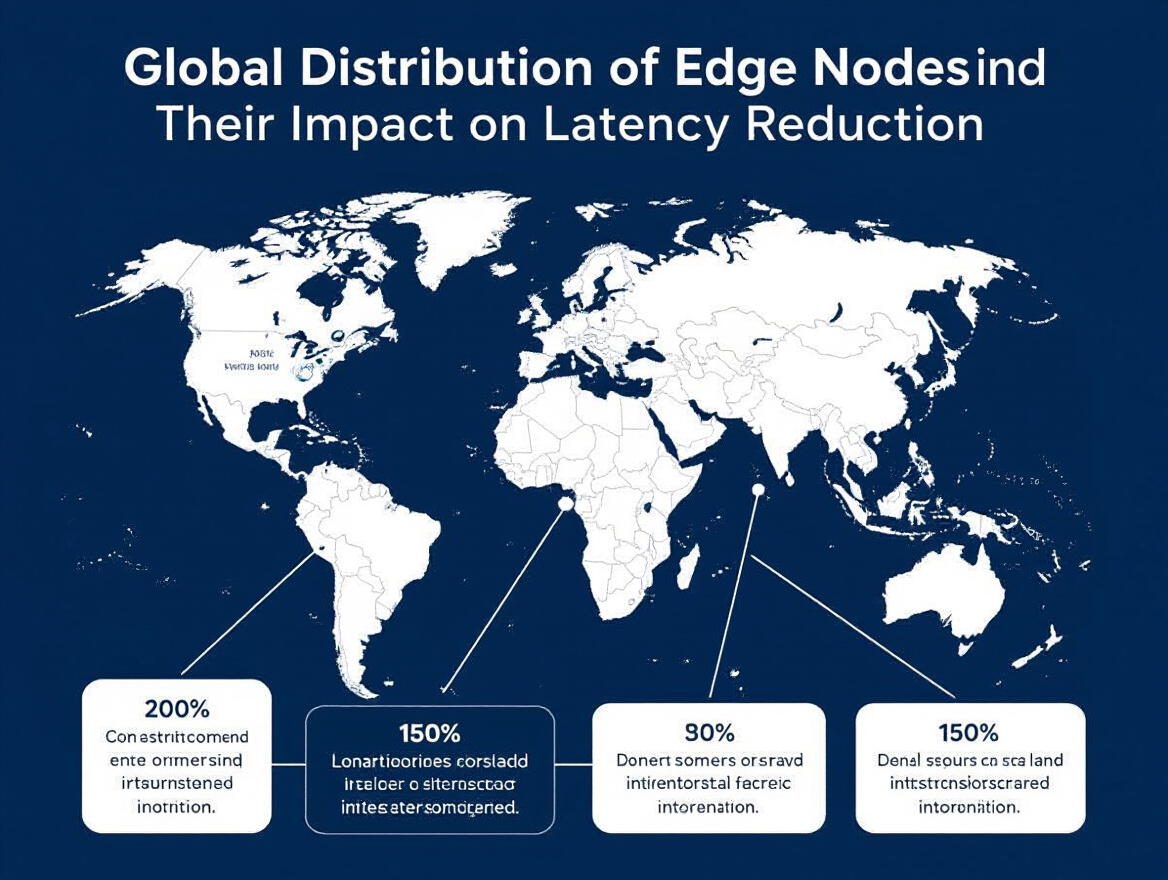
The scale of edge expansion tells the real story. The major cloud providers have added thousands of new edge nodes worldwide to support 5G, AI workloads, and compliance with data sovereignty laws. For a detailed look at how this shift is changing cloud load testing, see this analysis.
The Consequences: More Than Just Latency
Overlooking edge locations in your performance tests means missing more than a few milliseconds on a speed test. It exposes your business to user experience gaps that only surface in real-world scenarios – slow page loads in one country, compliance issues in another, or unexpected bandwidth costs. Optimization opportunities often become visible only when traffic patterns reach those distributed nodes.
Cloud strategists and CTOs emphasize this shift: testing without edge coverage in 2026 is like load testing with blinders on. For practical data on this, this deep dive lays out the impact of network latency on cloud load testing accuracy.
Edge locations are now a strategic imperative. Treating them as optional leaves teams scrambling to address issues that others have already anticipated and solved.
LoadFocus is an all-in-one Cloud Testing Platform for Websites and APIs for Load Testing, Apache JMeter Load Testing, Page Speed Monitoring and API Monitoring!
What Are Edge Locations? More Than Just Mini Data Centers
Defining Edge Locations: Beyond the Buzzword
Edge locations are data facilities positioned close to where users live and work. Unlike traditional cloud regions – large, centralized campuses often far from end users – edge locations are physically distributed and optimized for proximity. For example, a CDN node in an ISP’s facility in Berlin or a micro data center in a smart factory both qualify as edge locations.
Their primary purpose is to minimize round-trip latency, keep critical data and computation near the source, and serve real-time, bandwidth-sensitive workloads that centralized clouds can’t efficiently handle. As streaming, IoT, and interactive services grow, these edge sites are becoming essential.
Types of Edge Locations and Their Roles
Edge locations span a range of deployment models. The table below outlines several key types, their typical use cases, and the kind of latency improvement they deliver.
| Type of Edge Location | Typical Use Case | Latency Benefit |
|---|---|---|
| CDN Node (Content Delivery Network) | Speeding up static and streaming content for end users | Latency can drop significantly compared to centralized clouds (see research) |
| On-Prem Edge Cluster | Industrial IoT, video analytics, smart manufacturing | Enables real-time processing with minimal local delay |
| Telecom Edge Facility | 5G-enabled low-latency apps, AR/VR streaming | Near-instant response for mobile and connected experiences |
| Retail In-Store Edge Appliance | Personalized offers, inventory sensors, fraud detection | Milliseconds response, critical for in-store decision-making |
Physical Proximity: Why It Matters
Physical distance between user and compute is more important than ever. When data must cross continents to reach a centralized region, every extra mile adds waiting time – sometimes enough to frustrate users or break real-time applications. Edge locations cut this distance dramatically. For example, a CDN edge in Frankfurt can deliver video to a German viewer with much lower latency than serving it from a London cloud region. As research confirms, even tens of milliseconds shaved off latency can make a tangible difference for web and API performance.
Architectural Roles: Hybrid and Cloud-Native
Edge locations are now critical building blocks in both hybrid cloud and cloud-native architectures. In hybrid deployments, organizations keep some data at the edge for compliance or speed, while heavy-duty processing remains in core cloud regions. In cloud-native designs, microservices and containers can run at the edge to support dynamic scaling and bursty traffic. This approach is especially relevant for performance testing, where simulating real user conditions often means distributing test traffic across many edge sites – as explored in this analysis.
The takeaway: “edge” is not just a new term for small data centers. These locations are engineered to keep applications fast, resilient, and compliant in a distributed world, fundamentally changing how cloud services are delivered and tested.
Why Performance Testing Must Include Edge Locations
Key Insight: Testing from edge locations is now fundamental to understanding and optimizing real user experience, especially for latency-sensitive and distributed workloads.
Edge Locations and the New Performance Baseline
Performance expectations have shifted. With the explosive growth of edge locations, users now expect web and API responses to be fast regardless of location. When content is served from the edge, latency drops significantly compared to traditional cloud regions. What was once considered excellent performance from a central cloud is now average – or even subpar – when measured against the edge-enabled baseline.
This is especially critical for IoT deployments and real-time apps. For example, a logistics platform tracking thousands of delivery vehicles in real time, or a smart city sensor network acting on environmental data every second, cannot tolerate the round-trip delay to a distant data center. Edge locations have become the infrastructure standard for these scenarios. As recent analysis argues, the edge is now the default for any workload where latency and regional compliance matter.
Cloud strategist Jane Doe notes that incorporating edge is “crucial for delivering high-performance experiences, especially as applications become more latency-sensitive.” CTO John Smith highlights that edge is enabling entirely new use cases – applications that were previously impossible due to latency and bandwidth constraints.
Comparing Centralized vs. Edge-Centric Test Results
Many performance testing strategies fall short by running load tests only from central cloud regions, painting an incomplete – and often misleading – picture. The 2026 LoadFocus write-up comparing cloud load testing versus local testing for enterprises demonstrates how edge-based testing uncovers bottlenecks and latency spikes that central-region tests miss entirely. For distributed users, the difference between a 100ms and a 200ms round-trip time can mean the difference between a fluid experience and a perceptible lag.
Edge-centric test results often expose issues like cache misses, regional ISP slowdowns, and edge node failovers – problems that only manifest when users are closer to the edge than to a core data center. For IoT and real-time scenarios, running tests from edge locations is the only way to validate that service-level agreements can be met for users spread across cities or continents. Enterprises that rely on centralized-only testing risk underestimating the true variability and challenges of real-world usage.
The broader trend is clear: by 2025, over 75% of enterprise-generated data will be created and processed outside traditional data centers. As hybrid and edge-centric models become the norm, performance testing must reflect this operational reality. For a detailed breakdown of how network latency impacts test accuracy, see this deep dive.
Edge locations are redefining what users expect from cloud services. Testing strategies that fail to include edge are testing for a world that no longer exists.
Key Drivers for Adopting Edge Locations in Cloud Load Testing
The Forces Changing Cloud Load Testing Strategies
The move toward edge locations in cloud load testing responds directly to concrete changes in technology, business requirements, and user expectations. Enterprises are adapting to 5G rollouts, AI workloads, regulatory complexity, and content delivery demands simultaneously. Testing only at central cloud regions no longer reflects the reality of modern distributed usage patterns.
5G, AI, and Streaming: The Push for Edge-First Testing
As 5G becomes mainstream and AI-powered features proliferate, cloud load testing must move closer to where users actually are. Major providers have responded by expanding their edge location footprint for streaming, gaming, and real-time apps. Latency reduction is a clear benefit – serving content from edge locations can cut end-user latency significantly, which is a critical factor in performance accuracy.
But it’s not just about speed. As CTO John Smith notes, “Edge computing is not just about speed; it’s about enabling new use cases that were previously impossible due to latency and bandwidth constraints.” Load testing in these locations ensures your platform is ready for these new, demanding scenarios.
Compliance, Localization, and Data Sovereignty
Global businesses now face a patchwork of regulations about where and how user data is stored and processed. Testing from edge locations is increasingly a regulatory requirement in many regions. Keeping data local to its region of origin helps organizations align with evolving data sovereignty and privacy laws, as discussed in recent cloud testing standards discussions.
Content localization is another practical reason for edge-centric load testing. When streaming services or SaaS apps serve customized content by geography, only edge-based tests can reveal real-world performance and user experience.
Reducing Bandwidth and Backhaul Costs
A further driver is the potential for cost savings by minimizing backhaul traffic. When data travels from a user to a distant central region and back, bandwidth costs multiply. Testing at edge locations helps quantify and optimize these flows, providing insight into how much can be saved by localizing heavy traffic. For organizations with large IoT deployments or streaming workloads, these savings can be substantial.
| Driver | Impact on Testing | Strategic Implication |
|---|---|---|
| 5G Network Expansion | Requires real-world simulation of ultra-low latency, high concurrency environments | Testing must extend to edge locations to reflect actual mobile user conditions and demand spikes |
| AI & Real-Time Analytics | Increases need for high-throughput, low-latency data pipelines | Edge-first testing uncovers bottlenecks before they impact autonomous or predictive features |
| Regulatory Compliance & Data Sovereignty | Necessitates region-specific tests to validate storage and processing boundaries | Mitigates legal risk by proving compliance with local data laws |
| Content Localization | Demands geo-targeted performance validation | Ensures tailored content is delivered with optimal speed and accuracy to local audiences |
| Bandwidth & Backhaul Constraints | Highlights impact of network topology on application throughput | Reveals cost optimization opportunities by reducing central cloud dependency |
Key Insight: The shift to edge locations in load testing is driven by a convergence of real-world needs – performance, compliance, and cost – all demanding that testing happens where users and data really are.
Edge locations now play a central role not just in technical performance, but in regulatory compliance, content strategy, and cost management. Organizations able to adapt their testing strategies to these realities will deliver faster, safer, and more relevant digital experiences to an increasingly distributed user base.
Before and After: Testing Without vs. With Edge Locations
What Changes When You Add Edge Locations?
Integrating edge locations into your load testing strategy fundamentally changes how you identify and address real user experience. Before edge, performance bottlenecks in regional markets often remain invisible, masked by averages from centralized test regions. Distributed edge testing brings these issues to light. Latency and bandwidth problems that impact users in Southeast Asia or South America, for example, become visible – and actionable.
| Metric | Without Edge | With Edge |
|---|---|---|
| API Latency (ms) | Higher and more variable, with regional spikes | Lower and more consistent, with fewer spikes |
| Error Rate (%) | Higher in some regions under load | Lower and more stable across regions |
| Bandwidth Utilization | Centralized; frequent congestion during peaks | Distributed; reduced choke points, smoother traffic |
| User Throughput (req/sec) | Inconsistent across regions, limited peak capacity | Higher and more sustained throughput in key markets |
| Bottleneck Detection | Masked by global averages; local issues missed | Regional issues clearly exposed and quantifiable |
A practical example: A global SaaS provider ran centralized tests showing “acceptable” average latencies, but once they distributed load tests across multiple edge locations, they found severe slowdowns in some regions. By routing traffic through local edge nodes, median response times in these regions dropped significantly, and regional error rates improved. This directly correlated with better user satisfaction and fewer support tickets. More details are available in the full case study.
Before/After: From Blind Spots to Clarity
| Before | After |
|---|---|
| “Our average API latency is under 200ms, so performance looks healthy overall.” | “When we tested with edge locations, we discovered regional latencies significantly higher in key growth markets. Edge reduced these spikes substantially.” |
| Test results show flat graphs, masking brief but severe slowdowns in specific geographies. | Test results highlight clear, location-specific trends and expose burst errors during regional peak demand. |
The “before” statements reflect a false sense of security – averages hide pain points that frustrate end users. The “after” perspective is data-driven and regionally aware, surfacing actionable insights.
Edge locations don’t just reduce response times. They reveal hidden friction in your delivery chain and offer a path to consistent, global user experience. For more on the technical reasons behind location-based performance gaps, see this network latency analysis.
Common Objections and Where They Fall Short
Edge Orchestration: Complexity, but Not a Dealbreaker
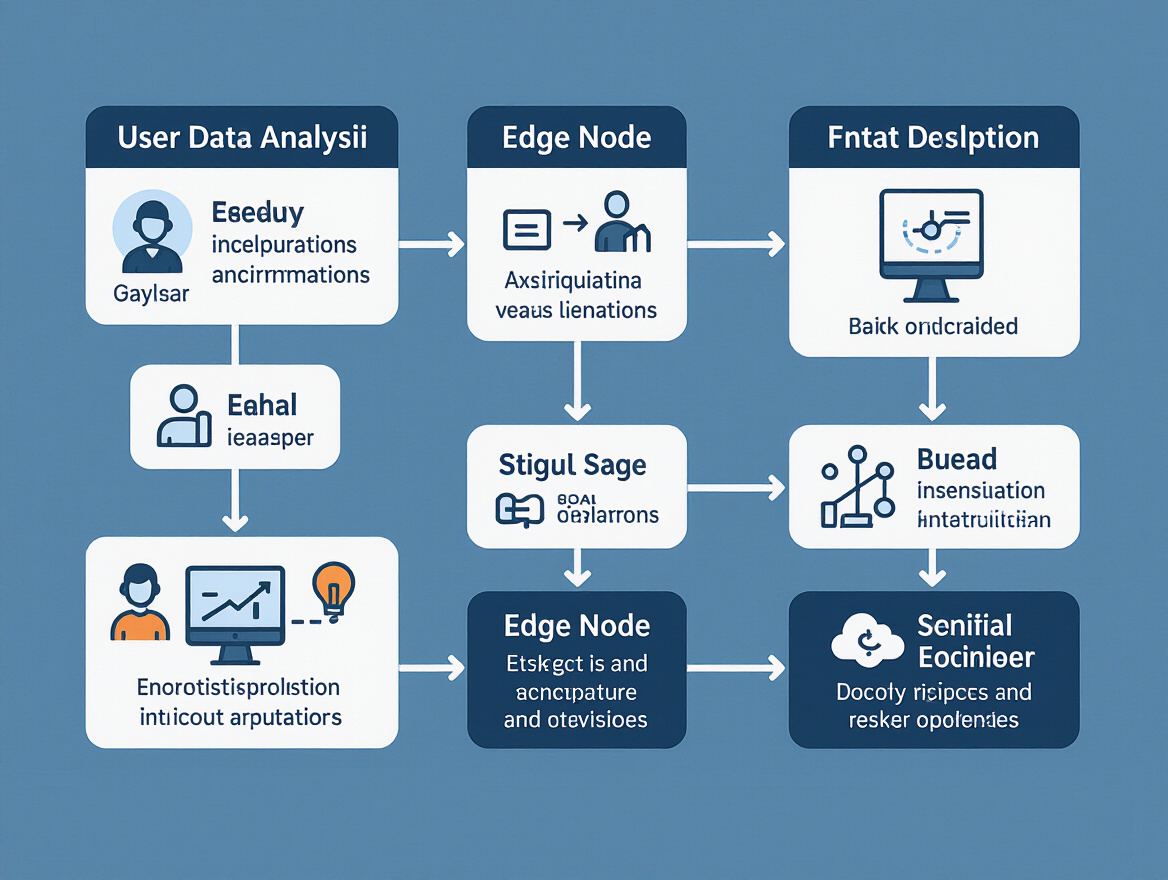
A frequent concern about adopting edge locations is increased management complexity. Spreading workloads across many distributed nodes does introduce new operational demands. However, automation and monitoring platforms are evolving rapidly, with vendors and open-source projects now offering features to provision, monitor, and auto-scale edge nodes efficiently. The operational overhead that once made edge seem out of reach is shrinking. For more, see this news analysis.
“We Don’t Need Edge” – True for Some, But Not Most
Not all workloads benefit from edge. Batch processing or heavy back-end computation can often remain in centralized cloud regions. But many user-facing, latency-sensitive applications – such as e-commerce, SaaS platforms, streaming, or real-time APIs – see measurable gains. As Jane Doe notes, incorporating edge locations is “crucial for delivering high-performance experiences as applications become more latency-sensitive.” Testing research in 2026 confirms that serving content from edge locations can cut latency significantly for end users. If your business depends on fast, reliable response times, ignoring edge is a risk. For more on how network latency shapes real-world performance data, see this LoadFocus analysis.
Security Concerns: Real, but Addressable
Distributing infrastructure brings valid security challenges. The attack surface widens, and traditional perimeter defenses lose some effectiveness. However, edge-specific security solutions – such as localized threat detection, encrypted inter-node communication, and automated patch management – are maturing. The conversation has shifted from “is it secure?” to “how do we adapt our security strategy for distributed environments?” For teams already running hybrid or multi-cloud workloads, extending these practices to edge deployments is a logical progression.
Operational nuance still matters. Not every workload justifies the extra effort, and edge orchestration isn’t a cure-all. But for many organizations with public-facing apps, ignoring edge locations means falling behind on performance, user experience, and regulatory compliance. As more data and applications move to the edge, the strongest objections continue to erode.
How to Integrate Edge Locations Into Your Cloud Load Testing Strategy
Mapping User Geography to Edge Node Selection
Integrating edge locations into your cloud load testing strategy starts with understanding where your users are and how they interact with your application. Audit your user base: use analytics to identify high-traffic regions, peak activity windows, and latency-sensitive geographies. For example, if your SaaS platform sees spikes in Southeast Asia and Western Europe, those are prime candidates for edge node deployment.
It’s not enough to know where users log in. Distinguish latency-sensitive use cases – such as live video, IoT telemetry, or real-time marketplaces – from those that tolerate some lag. Map user hotspots to available edge nodes from your cloud provider. Major providers have expanded their edge networks globally to support low-latency workloads. For compliance-sensitive workloads, consider data residency laws: localized edge processing can help meet these requirements and improve user trust.
For more on how edge strategies intersect with modern architectures, see the Guide to Load Testing Microservices Architectures in Cloud Environments (2026 Edition).
Automating Test Deployment Across Edges
Once you’ve identified your target edge locations, orchestrate distributed load tests that reflect your actual user distribution. Manual test setup is impractical at scale. Modern cloud load testing platforms, including LoadFocus, provide automated tools for running tests simultaneously in multiple regions. This mirrors real-world user traffic and reveals how your service performs under genuine geographic load patterns.
Configure your test orchestration to match your user base ratios. Your test should reflect the distribution of your users across edge nodes. Automation speeds up deployment and ensures consistency – each test run uses the same scripts and parameters, reducing human error. The orchestration layer should also handle resource cleanup and cost management, minimizing overhead.
If you’re evaluating cloud-based versus local testing, or want to understand distributed orchestration, compare perspectives in Cloud vs On-Premise Load Testing: 2026 Guide.
Interpreting Distributed Load Test Results
Running distributed tests is just the start. The real value comes from interpreting the results – not just aggregate averages, but performance variations across edge locations. Visualizing results by region can quickly uncover hotspots where latency spikes or error rates climb under load. Look for patterns: Is a particular API endpoint slow only for users routed through a specific edge node? Do certain edge regions struggle during peak hours?
Cloud testing platforms, including LoadFocus, typically provide dashboards that break down performance by node. Use these insights to prioritize infrastructure improvements, reroute traffic, or add redundancy. The goal is to guarantee consistent quality of experience for users in every geography. In some cases, central regions handle load well, while edge nodes reveal bottlenecks not visible in a centralized test.
Distributed testing also surfaces operational trade-offs. You may need to balance test frequency against monitoring costs or interpret results in the context of regional infrastructure differences. For more analysis on how network latency impacts load testing accuracy, review The Impact of Network Latency on Cloud Load Testing Accuracy: Why It Matters in 2026.
Integrating edge locations into your cloud load testing strategy isn’t just about chasing lower latency scores. It’s about building the operational awareness – and tooling – to deliver a reliable experience everywhere your users live and work.
Limitations and Strategic Trade-offs of Edge-Centric Testing
Operational Overhead: Distributed Complexity by Design
Running performance tests from edge locations introduces unique operational demands. Each edge site acts as a smaller, semi-autonomous environment – requiring new layers of monitoring, deployment pipelines, and troubleshooting. The more distributed your testing infrastructure, the more time you spend managing orchestration and addressing subtle differences between nodes. Teams used to central cloud regions must invest in automation tools and clear visibility across all sites. LoadFocus customers have benefited from centralized dashboards, but these require tuning to reflect edge-specific anomalies. For a deeper dive, see this case study.
Data Consistency and Synchronization Challenges
Testing from multiple edge locations can create data consistency concerns. Edge nodes may have varying states, cached data, or access to regionally restricted resources, making it harder to ensure comparable results across geographies. Inconsistent data can surface as false positives or negatives – masking genuine bottlenecks or overemphasizing minor glitches. Teams seeking high-precision results need to architect for synchronization or use repeatable, isolated test scenarios to limit noise, especially for workloads sensitive to regional regulations or data residency constraints.
Not Every Workload Needs the Edge
Edge-centric strategies excel for real-time apps, IoT, and latency-sensitive services, but not every workload benefits. For batch processing or infrequent, non-interactive jobs, central cloud regions are often sufficient. Edge introduces expense and management overhead that may not be justified for these cases. As noted in the cloud vs on-premise load testing guide, it’s important to map your testing footprint to your end users and the responsiveness your application requires.
Hybrid Approaches: Where Central and Edge Meet
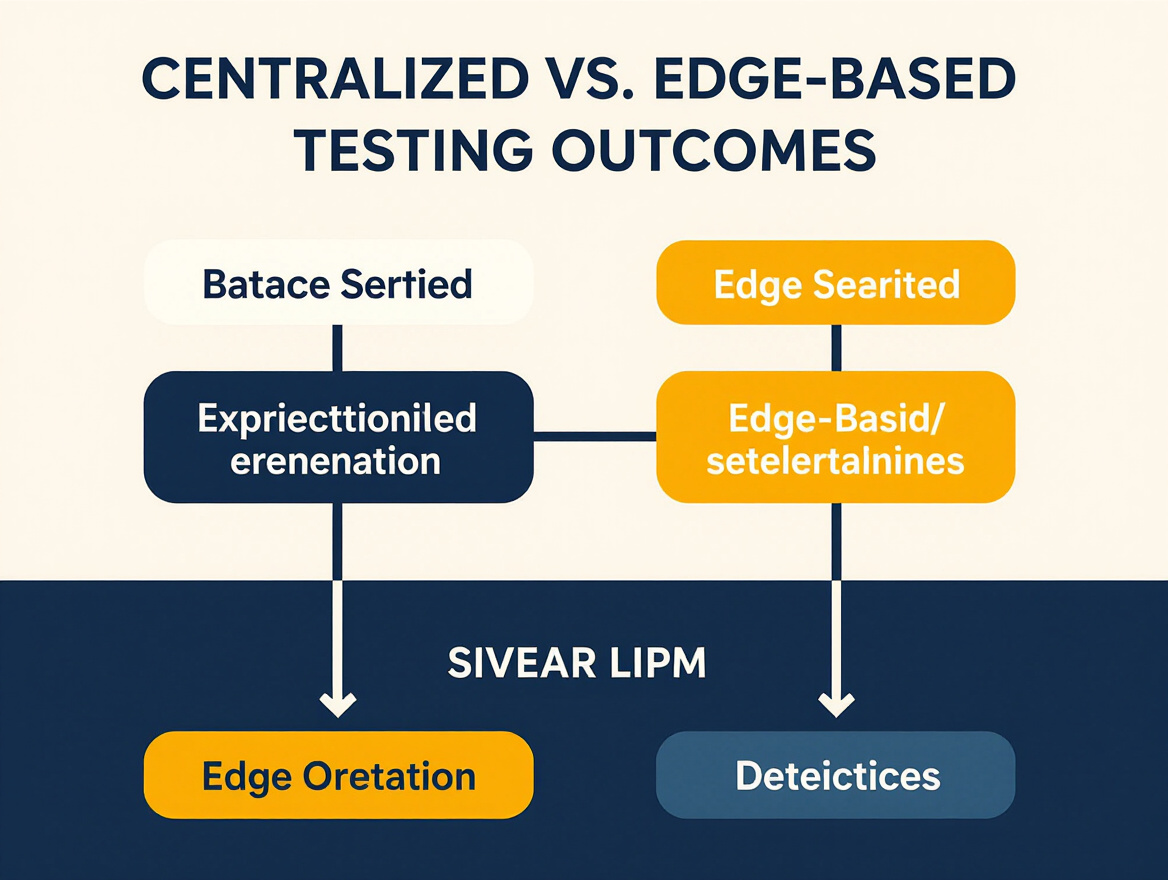
A pure edge-centric approach can be costly and complex. Many organizations benefit from a hybrid strategy, blending central cloud with targeted edge locations. This allows critical user flows to be tested under real-world conditions, while less latency-sensitive components remain in the core cloud. For example, a global e-commerce platform might test its checkout workflow from edge sites near its largest markets, but rely on central regions for nightly inventory batch runs. Hybrid models provide geographic realism for key transactions without ballooning your testing budget or administrative load. More on how hybrid architectures are reshaping performance practices can be found in this news analysis.
In summary, integrating edge locations into your testing strategy is essential for modern, latency-critical applications, but it’s not a one-size-fits-all solution. The technical and operational trade-offs require a thoughtful, workload-driven approach – and a willingness to adapt as real-world results reveal where the edge truly adds value.
Strategic Implications: The Future of Cloud Load Testing
Edge as the New Default for Latency-Critical Workloads
Over the next year, edge locations will shift from being a tactical optimization to a foundational requirement for any service with global reach or low-latency expectations. By 2027, it will be unusual for performance-critical platforms to run exclusively from centralized regions. The surge of IoT and real-time services is already driving this change, with over 75% of enterprise data projected to be created and processed outside traditional data centers by 2025 (News Analysis). Major cloud providers have responded by deploying thousands of new edge nodes, enabling CDN-like speed for not just static assets but also APIs and dynamic workloads.
This move to the edge is about more than reducing milliseconds off round-trip times. It’s about delivering consistent user experience – regardless of where your end users are. For SaaS, gaming, e-commerce, and financial platforms, performance is now a global quality metric. Teams that fail to test from the edge risk missing regional bottlenecks, compliance pitfalls, and bugs that only surface under distributed load.
Testing Tools Will Prioritize Edge Orchestration and Analytics
As edge locations proliferate, cloud load testing platforms must evolve. First, orchestrating tests across many edge nodes will become standard. Simulating traffic from a handful of regions will no longer suffice – test orchestration must reflect the actual topology of modern cloud deployments. Second, analytics must adapt: it’s not just raw response times that matter, but variance across geographies, edge locations, and network hops.
Platforms like LoadFocus are already prioritizing latency analytics and distributed scenario modeling. The next step is integrating real-time, AI-powered anomaly detection that can pinpoint issues unique to specific edge zones, helping teams detect subtle performance regressions before they reach production.
Competitive Advantage: Optimizing for the Distributed User
By 2027, the competitive advantage will belong to teams that treat edge as a core part of their performance culture. Success is no longer about “can we handle 10,000 concurrent users?”, but “can we deliver a uniform, high-quality experience to 10,000 users hitting us from 100 locations at once?”
The shift to edge-first load testing introduces complexity – more moving parts, more data, more orchestration challenges. But it also enables precise optimization, regional regulatory compliance, and a more resilient global infrastructure. Teams that master this distributed approach will set the quality bar for digital services in 2027 and beyond.
Conclusion: The New Non-Negotiable for Performance Testers
Edge locations have moved from a niche advantage to an essential part of every modern cloud load testing strategy. They are no longer optional; they are now the baseline. With significant latency reductions when serving content from the edge, and over 75% of enterprise-generated data expected to originate outside traditional data centers by 2025, distributed performance is the new normal.
Testers who ignore edge locations risk delivering experiences that feel sluggish or unacceptable to users expecting real-time responsiveness. As major cloud providers expand global edge networks for 5G, AI, and streaming, sticking with a purely centralized testing approach is increasingly risky. Those who dismiss edge-centric strategies are already falling behind in user-centric performance testing.
Distributed workloads, real-time apps, and compliance requirements are driving the need for edge-aware cloud load testing. To stay competitive, you need to adapt your strategies now. This means not only recognizing the value of edge, but actively integrating it into your testing workflows – using platforms that let you simulate real-world, geo-distributed load conditions. For practical advice, the recent overview of cloud testing tools is a solid starting point.
LoadFocus offers a straightforward way to put these principles into action. With its cloud platform, you can run real-world load tests from multiple edge locations, analyze live results, and optimize performance for the users who matter most. If you haven’t already, now is the time to see what edge-aware testing looks like in practice. Adopt edge – or risk being left behind.
Frequently Asked Questions
What exactly is an edge location in cloud load testing?
An edge location is a data center positioned closer to end users, designed to process and deliver content or services with minimal latency. Unlike traditional cloud regions, edge locations sit at the network’s periphery, enabling faster response times and improved user experience – especially for time-sensitive applications.
Why do edge locations matter for performance and load testing?
Testing only from centralized regions misses real-world latency and bottlenecks experienced by distributed users. By incorporating edge locations into your cloud load testing plan, you can uncover performance gaps that would otherwise go undetected. Serving content from edge locations can reduce latency significantly, as demonstrated in recent research.
How do major cloud providers support edge locations?
AWS, Azure, and Google Cloud have rapidly expanded their edge networks, deploying thousands of edge nodes worldwide. These investments support needs like 5G, AI, and streaming, and make it easier to test workloads as close to the user as possible. This expansion aligns with the hybrid cloud trend, where workloads are split between centralized clouds and edge sites for optimal results (read more here).
When should you use edge locations for load testing?
Edge locations are essential when your users are geographically distributed, latency-sensitive, or rely on real-time applications. Examples include IoT platforms, multiplayer gaming, and live-streaming services. If your workload mostly serves one region, centralized cloud testing might suffice, but most modern platforms benefit from strategic edge-based tests.
Are there drawbacks to testing from edge locations?
While edge-based testing delivers realistic performance insights, it adds complexity in orchestration and monitoring. Managing distributed tests requires automation, and security at the edge needs careful attention to protect sensitive assets. Some workloads, especially those less sensitive to latency, may not need edge coverage. A hybrid approach often delivers the best balance of cost and accuracy (compare with centralized cloud testing here).
Can edge locations help with compliance and data sovereignty?
Yes. Processing and storing data locally at the edge helps organizations comply with regional data laws and data sovereignty requirements. By keeping sensitive data closer to its origin, you reduce legal risk and control where information is processed.
How do I get started with edge-centric load testing?
Begin by assessing your user distribution and workload sensitivity to latency. Use a cloud testing platform like LoadFocus to configure tests from multiple edge locations, analyze results, and iterate on bottlenecks. Prioritize automation for managing distributed test runs, and review detailed insights to drive continuous performance improvements.
Article created using PostNext