Key Takeaways
What Every Performance Tester Must Remember About Cache Invalidation
Neglecting cache invalidation during performance testing can lead to misleading results. Without realistic invalidation, tests may present an inaccurate sense of speed and scalability, masking bottlenecks that only emerge under real-world traffic. Systems that perform well in synthetic benchmarks may struggle when caches serve stale or inconsistent data in production.
Your invalidation strategy shapes the realism and reliability of your tests. Relying solely on simple time-to-live (TTL) expiration can overlook edge cases and sudden data changes, leaving critical scenarios untested. In practice, many platforms combine TTL with event-based or selective invalidation to better reflect real-world behavior (Sanity’s distributed cache approach is one example).
Is Your Infrastructure Ready for Global Traffic Spikes?
Unexpected load surges can disrupt your services. With LoadFocus’s cutting-edge Load Testing solutions, simulate real-world traffic from multiple global locations in a single test. Our advanced engine dynamically upscales and downscales virtual users in real time, delivering comprehensive reports that empower you to identify and resolve performance bottlenecks before they affect your users.
Avoid extremes. Overly aggressive invalidation reduces caching benefits, turning every request into a cache miss. On the other hand, lax policies allow stale data to persist, undermining the credibility of your test data. Effective teams monitor cache hit ratios and adjust invalidation policies as usage patterns shift. For more on performance testing pitfalls, see common mistakes in the field.
Ultimately, cache invalidation is not a one-time configuration. It requires ongoing tuning as your application and traffic evolve. Reliable performance under real-world load depends on getting this right.
Cache Invalidation: The Overlooked Bottleneck in Modern Performance Testing
Why the Cache Layer Deserves More Attention
Many teams focus on server metrics, database tuning, or code efficiency when searching for bottlenecks in performance tests. Yet, the cache layer can quietly undermine test validity. When performance tests run against a warm cache, results may appear more favorable than what actually occurs in production.
Think your website can handle a traffic spike?
Fair enough, but why leave it to chance? Uncover your website’s true limits with LoadFocus’s cloud-based Load Testing for Web Apps, Websites, and APIs. Avoid the risk of costly downtimes and missed opportunities—find out before your users do!
Key Insight: The authenticity of performance tests often hinges on how cache invalidation is handled, making it a critical variable in modern testing.
How Caches Distort Load Scenarios
It’s easy to underestimate the impact of cache invalidation on test accuracy. Caches absorb latency and smooth out spikes, but unless cache state is actively managed, tests risk measuring cache speed rather than true system behavior. Even sophisticated load scenarios can yield synthetic metrics if the cache serves stale or previously fetched data. Cache invalidation can mask bottlenecks, hide resource contention, and obscure data staleness.
Cloud testing platforms frequently encounter this issue when benchmarking websites and APIs. High-concurrency simulations may yield numbers that don’t match production incidents, often because caches were not properly invalidated between test runs. As a result, performance testing can drift from reality – test reports become less relevant as real users generate unpredictable, cache-busting patterns. For more on the pitfalls of incomplete test scenarios, see common performance testing challenges and their solutions.
Looking Forward: Cache Invalidation Takes Center Stage
As distributed systems scale and architectures grow more complex, cache invalidation is becoming a higher priority for cloud testing teams. Accurate performance testing now depends on simulating realistic cache churn – invalidating, refreshing, and reloading under real application flows. Teams must reconsider what they are actually measuring: user experience or just cache behavior.
Cloud testing leaders are increasingly emphasizing cache invalidation patterns in tooling, guidance, and reporting. Performance test authenticity is now judged by how well caches are handled, not just by the number of virtual users simulated. If tests run against perpetually warm caches, they may not reflect real-world conditions. For a deeper exploration of testing’s evolving priorities, review how cloud testing is shaping software reliability.
LoadFocus is an all-in-one Cloud Testing Platform for Websites and APIs for Load Testing, Apache JMeter Load Testing, Page Speed Monitoring and API Monitoring!
Defining Cache Invalidation in Performance Testing
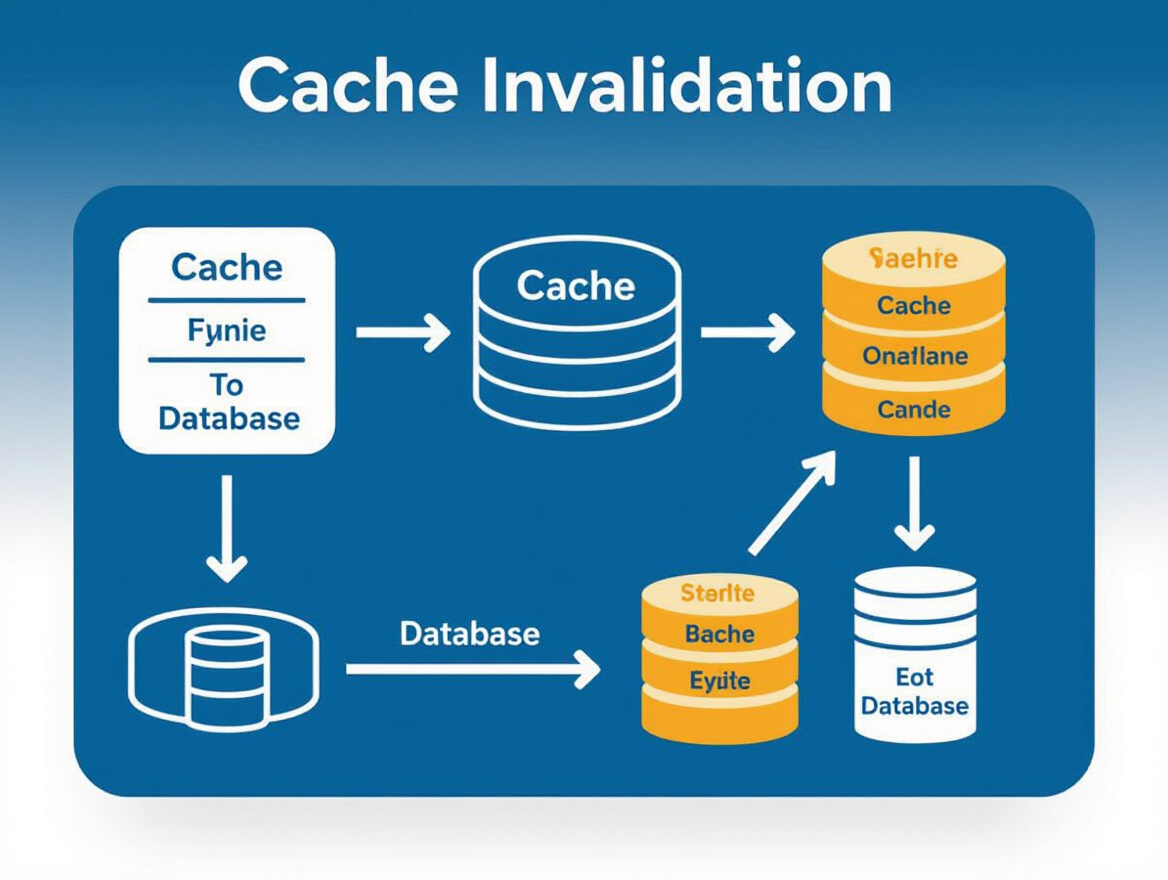
Cache invalidation is the process of updating or removing data from a cache when the underlying source changes. In load and performance testing, this is more than housekeeping – it safeguards against misleading results. Without proper invalidation, tests may measure how well a cache serves repeat requests, not how the system performs under real data-changing workloads. If caches return outdated states, performance validation is based on stale, unrealistic conditions.
When running load tests on platforms like LoadFocus, it’s important to understand how the application behaves when data is actively updated, not just how efficiently it delivers cached responses. Cache invalidation is central to both test scope and reliability. The goal is to ensure cached data reflects current reality – not a snapshot from minutes or hours ago. Otherwise, tests favor artificial cache hit rates over genuine throughput and consistency.
Distinguishing Invalidation from Expiration
It’s common to confuse cache invalidation with cache expiration, but these are distinct. Invalidation is typically event-driven and explicit: when data changes – a product price update, a new order placed – the application signals the cache to remove or update the affected entry, ensuring accuracy immediately after a change. In contrast, expiration relies on time-based rules. Cached data becomes stale after a set interval (TTL), regardless of whether the original data has changed. This approach is simpler but less precise: updates may go unreflected until the next expiration triggers a refresh.
Modern systems often combine both strategies. For volatile data – such as e-commerce inventory – event-driven invalidation maintains user experience consistency. For more static resources, like documentation or blog content, time-based expiration is usually sufficient. Selecting and tuning these approaches is a core part of realistic performance testing best practices, especially for distributed applications.
Cache invalidation, when done properly, ensures you’re testing the system as users experience it – not just its ability to serve old data quickly. For more on subtle testing pitfalls, see common performance testing mistakes and how to avoid them.
Why Cache Invalidation Matters: Accuracy, Consistency, and Realism
Cache invalidation is a core driver of accuracy, consistency, and realism in performance testing. When your testing environment fails to replicate how production handles cache updates, you’re no longer measuring the right things. Here’s why proper cache invalidation is foundational for meaningful, reliable performance results.
| Dimension | Impact of Poor Invalidation | Impact of Effective Invalidation |
|---|---|---|
| Test Result Accuracy | Stale data from cache can produce false positives (tests seem faster than reality), or false negatives (missed bottlenecks) | Performance metrics reflect real user experience, uncovering true latency and bottlenecks |
| Data Consistency | Inconsistent data between cache and source leads to test flakiness and unpredictable failures | Test outcomes are repeatable and meaningful, tying directly to production conditions |
| Environmental Realism | Unrealistic cache behavior makes the test environment diverge from production, hiding edge cases | Deliberate invalidation aligns cache with real-world usage patterns and update rates |
| Resource Utilization | Uncontrolled cache reloads or excessive staleness waste resources or degrade performance | Cache refreshes only when needed, balancing system load and data freshness |
Test Results With and Without Proper Invalidation: A Concrete Example
| Before | After |
|---|---|
|
A team runs API load tests against a product catalog. The cache is cleared at test start, then left untouched. Early requests are slow, but soon all calls hit the cache. The test reports strong throughput and low response times, suggesting good scaling. |
The same team switches to event-driven cache invalidation, mirroring production: when products update, the cache is refreshed. During the test, real-world update patterns trigger invalidation, causing periodic cache misses. The test now exposes latency spikes and highlights a backend bottleneck under realistic load. |
Why is the second approach stronger? The initial setup, where cache is only cleared once, produces optimistic results. It masks the real impact of data changes and never simulates the load created by cache churn. By integrating event-driven invalidation, the test environment more accurately surfaces the effects of cache misses and data volatility – key insights that may be invisible in an “always-warm” cache scenario. This approach helps uncover issues that might otherwise only appear in production, as discussed in Redis’s discussion of cache invalidation and fast app reliability.
Three Core Dimensions: Accuracy, Consistency, Realism
Accurate performance testing requires caches to mimic production behavior, not the idealized, always-hit pattern convenient for benchmarks. Overlooking cache invalidation can lead to false positives – tests that “pass” but wouldn’t under real load – a common pitfall noted in system design literature and real-world testing failures.
Data consistency suffers when caches serve stale records, causing “flaky” test failures – sometimes passing, sometimes failing depending on cached data. This complicates root cause analysis and reduces trust in performance trends.
Finally, environmental realism requires context-aware invalidation policies. Different platforms have unique cache churn patterns. If tests don’t reflect production invalidation timing, subtle edge cases may be missed. For more, see LoadFocus’s analysis of media streaming performance testing scenarios.
No single cache invalidation method fits all needs. The best test suites combine event-driven invalidation for volatile data and time-based expiration for static content, tuning policies to business logic. Overly aggressive invalidation wastes resources and negates caching benefits; lax policies hide important problems. Striking the right balance is crucial for test validity and operational insight, as further discussed in LoadFocus’s API performance testing challenges guide.
Done well, cache invalidation elevates performance testing from a routine task to a rigorous, production-grade quality gate.
Evaluating Cache Invalidation Strategies for Performance Testing
Time-Based Expiration (TTL): Simplicity and Its Pitfalls
Time-based expiration, or TTL (Time-To-Live), is a straightforward cache invalidation strategy. Each cached item has an expiration interval – such as 60 seconds – after which it is purged or refreshed. TTL is easy to implement, widely supported, and requires no awareness of data changes.
However, TTL has trade-offs. If the TTL is too long, stale data remains in cache, skewing user experience and test results. If too short, frequent evictions and reloads can negate caching benefits and distort load scenarios. TTL works well for relatively static data – such as product catalogs updated nightly or blog content with infrequent edits – but can miss latency and throughput impacts for high-churn data.
Because TTL is agnostic to actual data changes, it may fail to capture edge cases like sudden inventory updates or high-frequency price changes. For thorough cache invalidation coverage, TTL should be supplemented with more responsive mechanisms in high-consistency environments.
Event-Driven and Key-Based Invalidation: Precision vs. Complexity
Where TTL falls short, event-driven invalidation helps. This approach listens for data change events – new orders, product edits, profile updates – and triggers targeted cache removals or updates as described by Sanity. This precision invalidates only affected cache entries, keeping the rest warm and efficient.
Key-based invalidation associates cache entries with unique keys, typically aligned with primary data identifiers. When a change occurs, only the specific key is purged, leaving the rest untouched. In performance testing, this precision reveals bottlenecks that TTL might obscure. For example, an e-commerce API with event-driven invalidation reflects inventory updates instantly, ensuring realistic user-facing consistency and latency.
However, implementation complexity grows, especially in distributed or microservices environments. Every data change source must emit reliable events, and cache infrastructure must coordinate without race conditions or missed signals. Bugs in event wiring can cause cache inconsistencies and difficult-to-debug anomalies. The overhead of event processing and cross-service communication can also impact throughput.
For high-velocity domains – such as live sports scores or financial tickers – event-driven and key-based approaches are essential but require mature monitoring and fail-safes. For a detailed look at distributed event-driven invalidation, see Sanity’s technical deep dive.
Write-Through and Write-Behind: Consistency Trade-Offs
Synchronizing cache and data store updates involves write-through and write-behind policies. Write-through caches update the cache and data store synchronously, ensuring cache consistency. This provides a consistency guarantee – reads after writes see the latest data.
The downside is increased write latency, which can become a bottleneck under heavy load. This may not always reflect production workloads with asynchronous processing.
Write-behind caches defer writes to the data store, improving short-term performance. This suits scenarios where immediate consistency is less critical – bulk imports, analytics, or non-critical preferences. However, it can cause temporary inconsistency, where reads after writes return stale data, obscuring true application behavior under concurrent updates.
Both strategies should be considered in test design. Write-through suits scenarios demanding data integrity, while write-behind fits eventual consistency use cases but requires careful metric interpretation. See API performance testing challenges for more.
| Strategy | Strengths | Weaknesses | Best Use Case |
|---|---|---|---|
| Time-Based Expiration (TTL) | Simple to implement, low operational overhead | Risks stale or over-fresh data, agnostic to real changes | Static or slowly-changing data, baseline load testing |
| Event-Driven Invalidation | Highly accurate, targets only changed data | Complex to implement, risk of missed events | High-velocity, high-consistency domains (e.g., live inventories) |
| Key-Based Invalidation | Granular control, efficient cache usage | Requires meticulous key management, implementation overhead | APIs with frequent, targeted updates |
| Write-Through | Guarantees cache/data consistency | Higher write latency, may limit throughput under load | Test scenarios where data accuracy is critical |
| Write-Behind | Improves write performance, reduces immediate load on data store | Temporary inconsistency, risk of data loss if cache fails | Bulk operations, analytics, eventual consistency acceptable |
| Hybrid Approaches | Balances freshness, efficiency, and consistency | Requires careful orchestration and monitoring | Complex systems with mixed data volatility |
Most production systems and performance testing environments use hybrid cache invalidation strategies. Combining TTL for general freshness with event-driven or key-based mechanisms for rapid updates delivers a balanced approach but requires ongoing calibration and visibility into cache behavior. This is why cloud testing platforms emphasize continuous monitoring and scenario diversity, ensuring tests reflect the complexities of cache invalidation.
Cache Invalidation and Test Coverage: What Gets Missed
Cache invalidation is familiar to many performance testers, but the gap between theory and practice remains. Test environments often rely on simplistic cache setups – fresh environments, fixed TTLs, or blanket purges before tests. This creates an echo chamber: impressive throughput numbers but missed real-life failure modes that impact production.
Simplistic cache configurations can inflate perceptions of system capacity. When test data always starts “cold” or is cleared with each run, it doesn’t simulate the organic ebb and flow of real usage. In production, caches are warm, dirty, and subject to unpredictable invalidation patterns driven by user edits, upstream changes, and business logic. Without exercising these pathways, tests miss spots where performance degrades, especially under peak load.
Blind Spots in Load and API Testing
Improper cache invalidation policies can leave you exposed in several ways:
- Stale Data Scenarios Go Untested: If caches never serve outdated content, you miss observing system recovery when users encounter obsolete data or when urgent cache refreshes are needed. Serving old data can cause subtle bugs and privacy issues, yet these scenarios are rarely simulated without realistic cache aging and invalidation.
- Bottlenecks Hidden by Cache Hits: With every request hitting a primed cache, test results mask slow database queries or costly backend computations. Real-world invalidation events – like inventory updates or bulk imports – surface these latent bottlenecks unexpectedly.
- Event-Driven Invalidation Neglected: Many systems use event-based policies to purge or refresh cache entries on data changes. Testing only time-based (TTL) expiration misses race conditions, propagation delays, or missed events that cause inconsistencies and performance dips, as discussed in best practices on cache invalidation vs. expiration.
- Edge Cases Slip Through: Custom invalidation rules – like purging specific keys after high-value transactions – are rarely reflected in generic load scripts, leaving vulnerabilities where only subsets of data are affected but user impact is severe.
These gaps contribute to many performance regressions that appear after deployment, when real users interact with live, changing data. Treating cache invalidation as an afterthought leads to missing these high-impact issues. For examples, see ‘7 Common Performance Testing Mistakes (and How to Avoid Them) in 2026’.
The bottom line: test coverage is only as complete as your cache invalidation policy is realistic. To uncover real-world failure modes before customers do, build test scenarios that mimic production cache volatility – not just idealized, perfectly synchronized caches.
Balancing Performance and Data Freshness: The Core Cache Invalidation Dilemma
Ask any performance engineer about cache invalidation, and you’ll hear the same: there’s no universal answer. Every policy is a bet on workload predictability. The more static your data, the longer caches can live. But when data changes unpredictably, the situation becomes complex.
The tension is clear. Maximizing cache hit rates means keeping data longer, increasing the risk of serving stale information. Invalidate too quickly and you lose caching benefits – speed, reduced load, smoother experience. Invalidate too slowly and trust breaks down: users see outdated data, testers chase phantom bugs, and results become unreliable.
As daily.dev’s best practices explain, event-driven invalidation offers excellent accuracy but can strain resources in high-churn workloads. TTL or expiration-based approaches are simpler but compromise freshness: too short floods backends with reloads; too long serves stale data.
What’s often overlooked is that optimal cache invalidation is dynamic. Workloads shift. User expectations evolve. An invalidation window that works for steady API reads may fail during product launches, flash sales, or write spikes. Performance testers must simulate these scenarios, not just median cases. Modern load testing platforms – including those focused on sustainable software development – prioritize real-world cache usage patterns over synthetic sequences.
Key Insight: Optimal invalidation is never static – tuning must align with evolving usage patterns.
How Leading Platforms Approach the Balance
Platforms like Sanity use pragmatic blends of strategies for global scale. Distributed, event-driven invalidation is key for content consistency across data centers and edge locations. When content changes, Sanity orchestrates invalidation events across global caches, ensuring users see the latest version without noticeable delay.
This approach has trade-offs. Distributed invalidation adds coordination overhead and complexity as cache nodes grow. Sanity combines event-driven triggers for fast-changing assets (live blogs, e-commerce inventory) with periodic expiration for static data. This hybrid avoids constant event-driven penalties while keeping critical data fresh. As noted in Sanity’s glossary, the system is continuously tuned based on workload patterns – something performance testers should emulate.
For high-traffic systems, the lesson is clear: no set-and-forget solution exists. The right strategy depends on data volatility, workload, and user expectations. Performance testers must incorporate a range of invalidation scenarios, from aggressive to lax, and observe impacts on response times and data accuracy. As demand for reliable data grows, getting this balance right becomes increasingly important.
Cache Invalidation in Cloud Testing: Challenges and Innovations
Distributed cache invalidation is a challenging problem for cloud testing platforms. Unlike monolithic systems with centralized cache state, cloud environments add network latency, distributed data, and scaling unpredictability. Each cache invalidation – due to data updates, config changes, or deployments – compounds the challenge. Ensuring every node across regions evicts or updates cached state timely is difficult. If nodes lag, users may see inconsistent data, undermining test results and trust in metrics.
Coordination is central. In global clouds, flush or purge commands may race with network delays or node failures. Understanding cache invalidation in fast apps explains how even simple key-based or TTL strategies become brittle as complexity grows. For testers, this means simulating high load and edge cases where caches partially update – surfacing bugs that appear only at scale. Thus, cache invalidation is a strategic concern in load and performance testing.
Traditional methods like TTL or explicit key purges work for small clusters but often falter with horizontal scaling. TTLs may misalign, causing some caches to serve stale data while others refresh too often, wasting resources. Event-driven invalidation promises stronger consistency but increases coordination costs – a tradeoff detailed in best practices for cache invalidation and expiration.
AI and Automation in Cache Policy Tuning
Recent innovations improve coordination. Cloud testing platforms like LoadFocus offer AI-powered analytics that monitor cache hit rates, latency spikes, and update patterns in real time. These systems can dynamically adjust invalidation policies – relaxing TTLs during low volatility or prioritizing event-driven purges when data changes frequently. This creates adaptive cache strategies that serve fresh data without overloading networks or compute resources.
This automation enables testing not just for throughput but for cache correctness under load. AI-driven analysis surfaces subtle inconsistencies that traditional scripts might miss. For more on cloud testing’s role in software quality, see Cloud Testing’s Key Role in Sustainable Software Development.
While distributed cache invalidation remains complex, AI-driven and event-aware approaches advance the industry toward more reliable, context-aware testing. The ongoing challenge is refining these innovations to scale with global, data-intensive applications.
Real-World Testing Scenarios: Cache Invalidation Patterns by Application Type
Cache invalidation strategies vary by data change frequency, user expectations, and system resources. Some applications tolerate brief staleness; others require instant updates to avoid costly errors or reputational harm. Below is a summary of how different systems use invalidation strategies, with trade-offs.
| Application Type | Recommended Invalidation Strategy | Caveats |
|---|---|---|
| E-Commerce (Inventory, Pricing) | Event-driven invalidation (triggered by stock or price changes) | Requires integration with backend events; adds complexity and infrastructure costs. |
| Public APIs (Transactional Data) | Hybrid: Event-driven for critical endpoints, short TTL for less dynamic endpoints | Balancing precision with performance; over-aggressive invalidation can reduce cache benefits. See API performance testing challenges for more. |
| Editorial or Static Content Sites | TTL-based expiration (minutes to hours) with periodic bulk refresh | May serve outdated content briefly after updates; suitable if data is not time-sensitive. |
| Media Streaming Platforms | Key-based invalidation for personalized recommendations, TTL for static assets | Managing key complexity as user base and catalog scale; risk of personalized cache bleed. |
| Real-Time Collaboration Tools | Event-driven plus write-through caching for instant updates | Increased backend load and coordination overhead, but essential for consistency. |
Before/After: E-Commerce Inventory APIs
| Before | After |
|---|---|
| TTL-based expiration: Inventory counts refresh every 10 minutes via TTL cache invalidation. If an item is purchased seconds after caching, the site continues to show “In Stock,” even after inventory hits zero. Shoppers encounter “out of stock” errors only at checkout. | Event-driven invalidation: Inventory cache entries are purged and updated immediately upon purchase, reflecting real-time stock changes. The product page instantly shows “Out of Stock” when inventory is depleted, preventing false availability. |
This shift from simple TTL to event-driven invalidation addresses a core retail API pain point: customer trust. TTL can show outdated availability, causing frustration and lost sales when products vanish at checkout. Event-driven invalidation delivers immediate accuracy, improving user satisfaction and reducing support tickets and abandoned carts.
Tailoring Cache Invalidation: Why Context Matters
E-commerce sites cannot afford stale inventory or pricing, while static content platforms tolerate update delays. APIs often require real-time freshness for some endpoints (e.g., payment status) but accept less frequent updates for others (e.g., reference data). The key is aligning cache invalidation with data volatility and user risk tolerance.
During media streaming performance testing, testers must handle both high-churn personalized content and long-lived static assets – each needing distinct invalidation. Similarly, addressing API-specific challenges requires blending cache strategies for speed and correctness.
There is no universal solution; optimal cache invalidation depends on data change frequency and user expectations. The best systems adapt invalidation tactics as architectures and business needs evolve.
Strategic Implications: Rethinking Performance Testing for the Cache-Centric Era
Key Insight: Treating cache invalidation as a core test scenario is essential for building reliable, high-performing systems.
Why Cache Invalidation Deserves a Seat at the Table
Engineering, QA, and DevOps leaders cannot overlook cache invalidation in performance test strategies. Caches – across CDNs, API gateways, and in-memory layers – introduce potential gaps between data sources and user views. Serving stale or inconsistent data leads to user bugs, data integrity issues, and sometimes privacy incidents. Performance testing must routinely include cache invalidation scenarios as core cases, not afterthoughts. Modern cache hierarchies’ complexity means even well-tuned caches can silently fail if invalidation isn’t tested under load and edge conditions (Understanding cache invalidation for fast apps).
Early-Stage Planning: Cache Invalidation Isn’t Just an Ops Concern
Top teams integrate cache invalidation design into architecture and test planning from the start. This goes beyond picking TTLs or clearing caches on writes. It involves mapping data flows, identifying content needing aggressive invalidation (rapidly changing products) versus tolerant content (static help pages). Testing strategies must mirror this granularity – simulating real invalidation patterns, not just synthetic cache hits and misses. Testing only under “perfect” cache conditions misses critical insights. For subtle examples, see media streaming load testing, where cache freshness impacts quality.
Proactive Monitoring and AI-Powered Insights
DevOps should monitor cache behavior in production – tracking hit/miss ratios, invalidation frequency, and cache refresh latency. Interpreting large data streams is challenging at scale. AI-driven test analysis changes this by surfacing hidden correlations, pinpointing how cache policies affect response times or errors. Tools like LoadFocus’s AI-powered load test analysis have revealed subtle cache misconfigurations causing performance degradations that manual review missed.
Strategic Consequences for Engineering Leadership
Cache invalidation policy is now a strategic lever for performance, not just a technical detail. Leaders should make it a visible, ongoing part of architecture reviews, test planning, and incident postmortems. Integrating invalidation scenarios into automated tests and leveraging AI analytics helps catch silent failures and optimize for speed and correctness. In the cache-centric era, this distinction separates systems that scale smoothly from those that falter under real conditions.
Limitations and Counterpoints: When Cache Invalidation Isn’t the Main Concern
Workloads Where Cache Invalidation Can Be Safely Ignored
While important, cache invalidation is not always the primary performance concern. Some workloads are cache-agnostic, where advanced invalidation adds complexity without much benefit. Serving static content – images, CSS, rarely updated docs – often requires only simple expiration or manual purges. Low-traffic sites and internal dashboards may fall into this category, where advanced cache management overhead is unnecessary.
For basic marketing sites or QA staging, simple longer-lived caches or manual purges usually suffice. In such cases, time is better spent on fundamental performance testing best practices or straightforward optimizations.
Bottlenecks Beyond the Cache
Caches aren’t always the bottleneck. Slow database queries or throttled third-party APIs can limit performance regardless of cache tuning. In distributed systems, network latency or inefficient backend logic may overshadow cache gains. Bottlenecks shift as systems scale, so ongoing monitoring and load testing are essential to identify true slowness sources.
Over-engineering invalidation can introduce bugs, increase overhead, and reduce predictability – especially if data changes infrequently or user base is small.
When Simplicity Trumps Complexity
For simple apps or MVPs, complex event-driven invalidation or hybrid policies may not be justified. A straightforward TTL approach, refreshed occasionally or purged on deployment, can be manageable and reliable. As GeeksforGeeks notes, the cost of sophisticated invalidation should be weighed against real user impact and operational effort.
Ultimately, it’s about context. Not every system needs perfect cache consistency. Align your cache invalidation strategy with application needs and avoid solving non-existent problems.
Frequently Asked Questions
What is cache invalidation and why does it matter in performance testing?
Cache invalidation is the process of removing or updating outdated data from a system’s cache when the original data changes. It ensures users receive up-to-date and accurate information. In performance testing, cache invalidation is crucial because it impacts system reliability and user experience. Without proper invalidation, tests might report artificially fast response times by serving stale data repeatedly, masking real bottlenecks and risking inconsistent application behavior (Understanding cache invalidation for fast apps).
How does cache invalidation improve the accuracy of performance tests?
Caches reduce latency by storing frequently accessed data but can cause misleading test results if outdated content is served during load testing. Proper invalidation ensures caches reflect the latest data state, revealing true performance and scalability under changing workloads (Sanity: Definition & Importance).
What are the most common cache invalidation strategies used during performance testing?
- Time-based expiration (TTL): Cached entries expire after a set interval. Easy to implement but requires careful tuning to avoid stale data or excessive cache churn.
- Event-driven invalidation: Cache updates or purges immediately upon data changes. Offers better accuracy but can be resource-intensive, especially in distributed systems.
- Key-based invalidation: Specific cache entries invalidated based on unique keys, allowing granular control but requiring careful key management.
- Write-through and write-behind strategies: Manage how updates propagate between cache and primary data source, affecting consistency and performance.
Modern systems often combine these strategies to optimize speed and correctness, especially when testing dynamic workloads or high-traffic cloud environments.
How do you choose the right cache invalidation method for your performance tests?
The right approach depends on factors like data volatility, application needs, and user interaction types. For example, e-commerce sites with rapidly changing inventory often use event-driven invalidation, while static content like blogs can use TTL. Hybrid strategies combining invalidation and expiration are common in complex applications. In cloud environments, aligning invalidation policies with cloud testing goals is important.
Can cache invalidation negatively affect performance test results?
Yes. Overly aggressive invalidation can negate caching benefits, causing unnecessary reloads and increased load. Insufficient invalidation may produce misleadingly fast responses by hiding backend bottlenecks. Performance tests should evaluate different invalidation policies under realistic conditions. For more on common pitfalls, see common performance testing pitfalls.
Ultimately, cache invalidation is a strategic concern in performance testing, requiring careful tuning and ongoing observation. Understanding trade-offs helps testers ensure results reflect real-world behavior and support smarter optimization.
Powered by PostNext service