
Running k6 at Scale: k6 OSS vs Grafana Cloud k6 vs LoadFocus
Three ways to run k6 at scale: self-hosted k6 with the k6 Operator, Grafana Cloud k6, or a managed platform, with the cost and effort of each.
Newest first. 315 load testing, JMeter, test automation and monitoring guides, plus tool comparisons. Browse by topic from the blog home.
Three ways to run k6 at scale: self-hosted k6 with the k6 Operator, Grafana Cloud k6, or a managed platform, with the cost and effort of each.
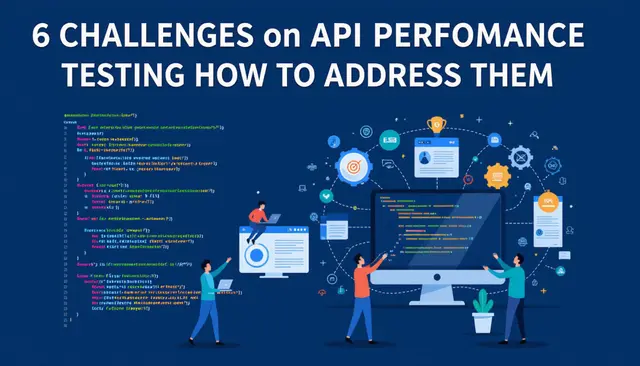
The six problems that most often undermine API performance tests (dependencies, test data, auth, load model, metrics, CI) and a concrete fix for each.

Every response time a load test records includes network latency. See how test location and new connections inflate results, and how to isolate server time.
k6 vs JMeter compared in practice, plus Gatling, Locust and LoadRunner: scripting language, protocols, CI/CD, reporting and what scaling really costs.
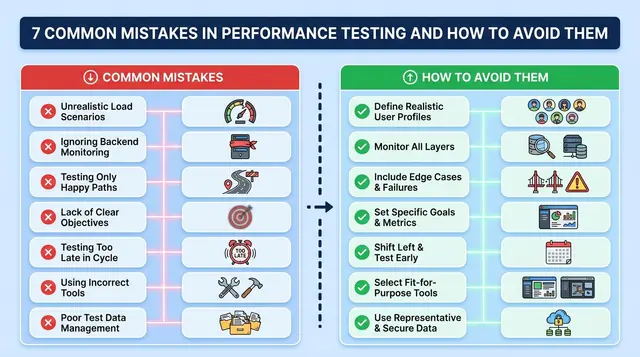
Seven performance testing mistakes that make results lie: testing late, staging unlike production, fake data, averages and an overloaded load generator.

Cloud testing security in practice: keep real data out of test environments, lock down access and secrets, and allow load generators safely.

Test your API from several regions, read p95 and p99 per region, split each request into DNS, connect, TLS and wait, then fix the largest phase and retest.

AI in automated load testing today: drafting scripts, summarising results and where it falls short, plus how to run automated load tests in CI with gates.
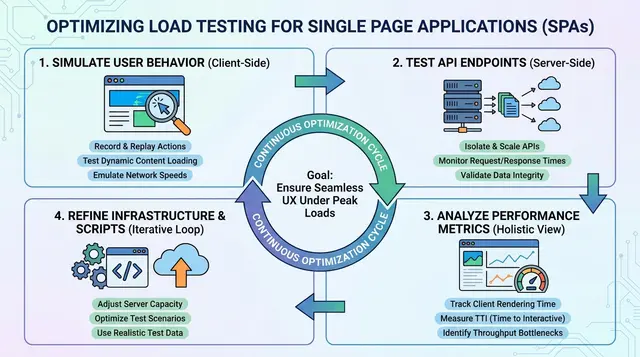
An SPA does its work after the initial HTML, so HTTP-level tests miss most of it. Test the API calls the app makes, weighted the way the app makes them.
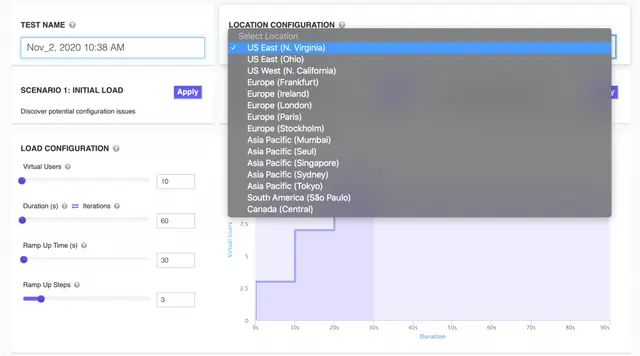
A virtual user simulates one person's session, pauses included. How VUs differ from requests per second, and why think time decides the ratio.
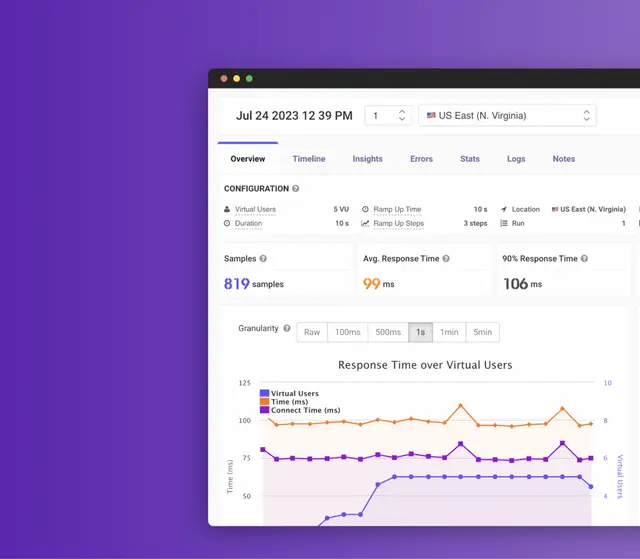
Load tests verify how your system behaves under expected traffic. Stress tests push past it to find the breaking point.

Mobile is most of web traffic, and phones run on slower networks and CPUs. What to measure (Core Web Vitals, API load), on which conditions, and how to test.

Serverless changes how you read load test results: cold starts, throttling and downstream limits look different on the client and in the provider metrics.
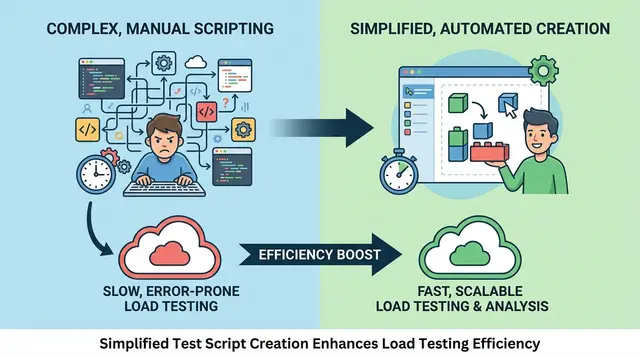
Simplified test script creation: five ways to get a load test script (write, record, import, AI draft, in-browser) and the checks any generated script needs.
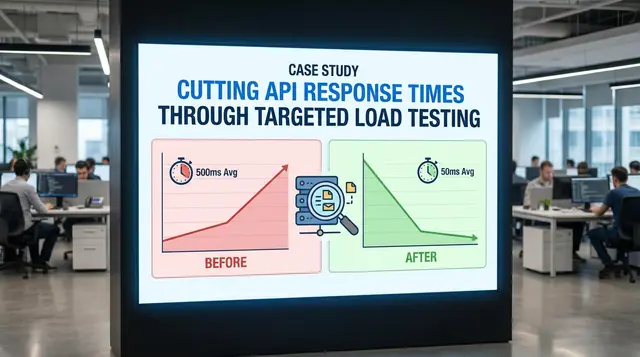
Cut API response times: find the slowest endpoint, split its time by dependency, parallelize or cache the critical path, then retest the percentiles.

What an intuitive load testing dashboard shows: percentiles instead of averages, error rate, throughput, results per region and a trend against a baseline.
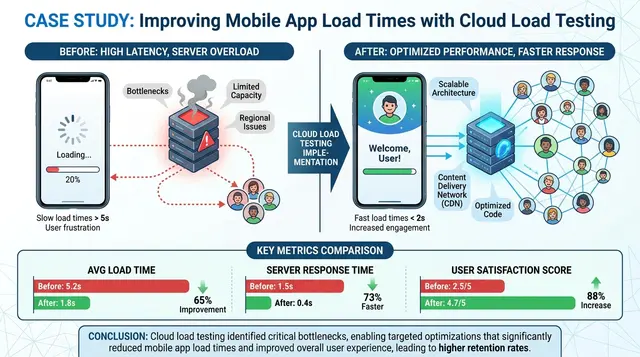
Measure mobile app load times with cloud load testing: record the launch requests, replay them under load from your users' regions, and read p95 and errors.
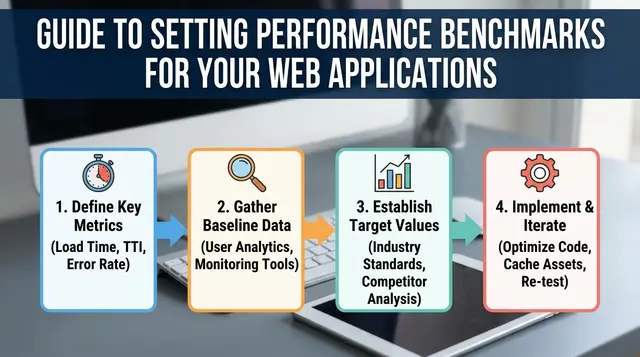
Performance benchmarks for web applications: Google's targets (LCP 2.5 s, INP 200 ms, CLS 0.1 at p75), p95 response time goals under load, and how to set them.
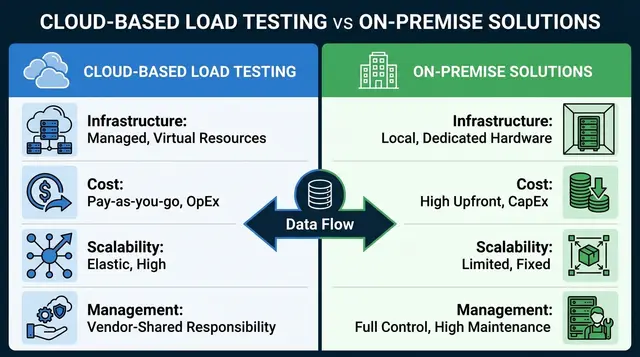
A startup guide to cloud vs on-premise load testing: what each costs in engineer time, where compliance really bites, and a rule for when to switch.
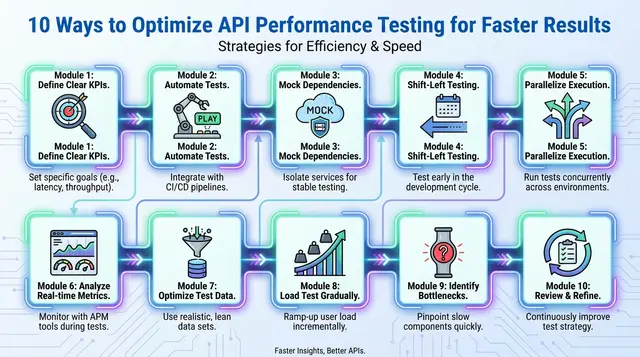
Ten ways to get faster, more reliable API performance test results: p95 targets, load in requests per second, varied test data and CI gates, with a k6 example.

Realistic e-commerce load testing: build the browse, search, cart and checkout mix from your funnel, give each shopper unique data and keep payments safe.

Cloud testing trends in 2026 for CTOs: six decisions on pipeline placement, test ownership, load generation, vendor risk, test data and AI use.

What makes a testing platform usable for a DevOps team: five checks to run in a trial, where easy tools fall short, and what LoadFocus offers.

LoadFocus runs your JMeter scripts in the cloud. Compare self-run Apache JMeter and LoadFocus on scaling, protocols, reporting and CI/CD for enterprise teams.
Don’t miss out on the latest testing tips and tricks, tools and news related to software testing.
Already +20,000 members in the list.
Load test websites and APIs from 25 cloud regions, monitor page speed and uptime, and get AI analysis that explains your results in plain English.