Key Takeaways
Action Steps for Effective IoT Load Testing
- Simulate real-world device diversity. Generic load tests rarely surface the challenges introduced by the wide range of IoT protocols and device behaviors. Effective platforms must mimic millions of heterogeneous endpoints with realistic communication patterns, not just bulk HTTP requests. For more on where test environments can fall short, see this discussion on cloud testing challenges in 2026.
- Use AI-driven analytics to detect performance anomalies in complex IoT traffic. Manual monitoring won’t scale as device data grows. Automated insights are essential for uncovering subtle issues under real-world loads.
- Integrate security checks into your IoT load testing workflow. Delaying security validation risks missing vulnerabilities that only become visible under stress, such as encryption slowdowns or authentication failures.
- Test for edge and resource constraints, not just centralized cloud loads. Many IoT deployments rely on edge devices with tight compute or connectivity limits. Your test plans should simulate these constraints to ensure strong performance in realistic scenarios – see the practical impact in why edge locations matter for cloud testing.
IoT load testing demands specialized tools, integrated security, and advanced analytics to keep pace with real-world complexity. Skipping these steps leaves critical blind spots in reliability and scalability.
How to Identify the Real Bottlenecks in IoT Load Testing
IoT load testing is fundamentally different from traditional approaches. Relying on standard methods risks missing the most critical failure points, because IoT ecosystems introduce a blend of device diversity, unpredictable data flows, and edge-specific behaviors that generic load tests simply can’t capture.
Is Your Infrastructure Ready for Global Traffic Spikes?
Unexpected load surges can disrupt your services. With LoadFocus’s cutting-edge Load Testing solutions, simulate real-world traffic from multiple global locations in a single test. Our advanced engine dynamically upscales and downscales virtual users in real time, delivering comprehensive reports that empower you to identify and resolve performance bottlenecks before they affect your users.
Why Standard Load Testing Falls Short for IoT
Most legacy load testing platforms were designed to simulate web users or API calls at scale. They rarely account for the sheer heterogeneity of IoT devices – from low-powered sensors using proprietary protocols to smart appliances pushing encrypted data in bursts. This diversity isn’t just cosmetic. It fundamentally alters how backends respond under stress. Attempts to mimic “average” traffic or device types often result in blind spots, letting subtle latency spikes or data drops slip through unnoticed.
Key Insight: You only uncover real performance risks in IoT platforms when your tests reflect the true diversity and unpredictability of connected devices, not just their volume.
The Filters That Matter Most
To identify true bottlenecks, you need a selection strategy grounded in realism. The most effective IoT load testing environments filter by:
- Device types and protocols: Simulate a spectrum of devices, each with their actual communication stacks, rather than just scaling up a single device class. Cloud-based frameworks can help, but integrating edge cases remains a real hurdle. See how cloud testing challenges are being addressed in modern platforms.
- Traffic pattern realism: Uniform, steady traffic is the enemy of effective IoT testing. Real-world devices create bursty, event-driven data, shaped by everything from user schedules to power outages. Stochastic models and event-driven simulations surface issues that average load tests miss.
- Edge scenarios: Many teams focus only on normal loads, neglecting failures that emerge during network partitions, protocol mismatches, or bursts caused by firmware updates. Edge-case simulation is essential for authentic risk assessment.
- Backend under pressure: Don’t ignore data velocity and processing at scale. IoT backends need to handle streaming data peaks, not just steady-state ingestion. With data volumes from IoT devices growing rapidly, backend bottlenecks can quickly escalate.
Common Mistakes to Avoid
Teams often fall into the trap of over-focusing on averages – average devices, average loads, average data rates. This approach misses the moments that matter: the spikes, the outages, the oddball device that floods your API. If your testing platform can’t flexibly model these conditions, you’re likely missing lurking threats. For practical guidance on building more nuanced, real-world scenarios, check out this overview of data-driven load testing scripts.
Think your website can handle a traffic spike?
Fair enough, but why leave it to chance? Uncover your website’s true limits with LoadFocus’s cloud-based Load Testing for Web Apps, Websites, and APIs. Avoid the risk of costly downtimes and missed opportunities—find out before your users do!
The bottom line: Uncovering true bottlenecks in IoT requires more than scaling up a test script. It demands a careful filtering of device diversity, data realism, and edge behaviors, with monitoring and analytics that can keep up with the chaos. Only then can you turn your load test results into actionable insights that keep your platform resilient as the device count climbs.
Comparison Table: IoT Load Testing Challenges and Solutions
IoT load testing comes with its own set of complex hurdles that traditional approaches often overlook. Assessing these challenges side by side makes it easier to identify where your testing strategy needs to focus – and where specialized tools like cloud-based testing frameworks can deliver the most value. The table below breaks down six core challenges, outlining their primary strength, main limitation, and ideal use case.
| Challenge | Key Strength | Key Limitation | Best For | Pricing Model |
|---|---|---|---|---|
| Massive Scale & Device Diversity | Scalable cloud environments mimic millions of devices | Simulating heterogeneity across protocols remains difficult | Validating large IoT platforms with varied devices | Usage-based (per test/device/hour) |
| Realistic Traffic Simulation | Supports event-driven and stochastic pattern modeling | Uniform models miss bursty, real-world traffic effects | Identifying latency issues and bottlenecks | Tiered plans by traffic volume |
| Data Volume & Velocity | Stress-tests backend ingestion and analytics | Backend may not scale as fast as device layer | Testing high-throughput data processing | Data volume-based |
| Security & Compliance Under Load | Exposes hidden vulnerabilities during stress | Extends test duration and increases workflow complexity | Ensuring data integrity under load | Feature add-on or bundled |
| Resource Constraints & Edge Computing | Models intermittent connectivity and limited resources | Hard to replicate full spectrum of edge variability | Testing devices in edge or battery-limited scenarios | Per edge node or device |
| Monitoring & Analytics Complexity | AI-driven anomaly detection and predictive analytics | Real-time correlation is challenging across distributed layers | Proactive troubleshooting and optimization | Platform subscription |
This structured view helps teams quickly filter which IoT load testing priorities align with their current pain points, whether that’s scaling up device diversity or integrating security checks under real-world traffic. For a deeper dive into how cloud testing addresses some of these areas, see our analysis of cloud testing challenges and how essential platform features shape outcomes.
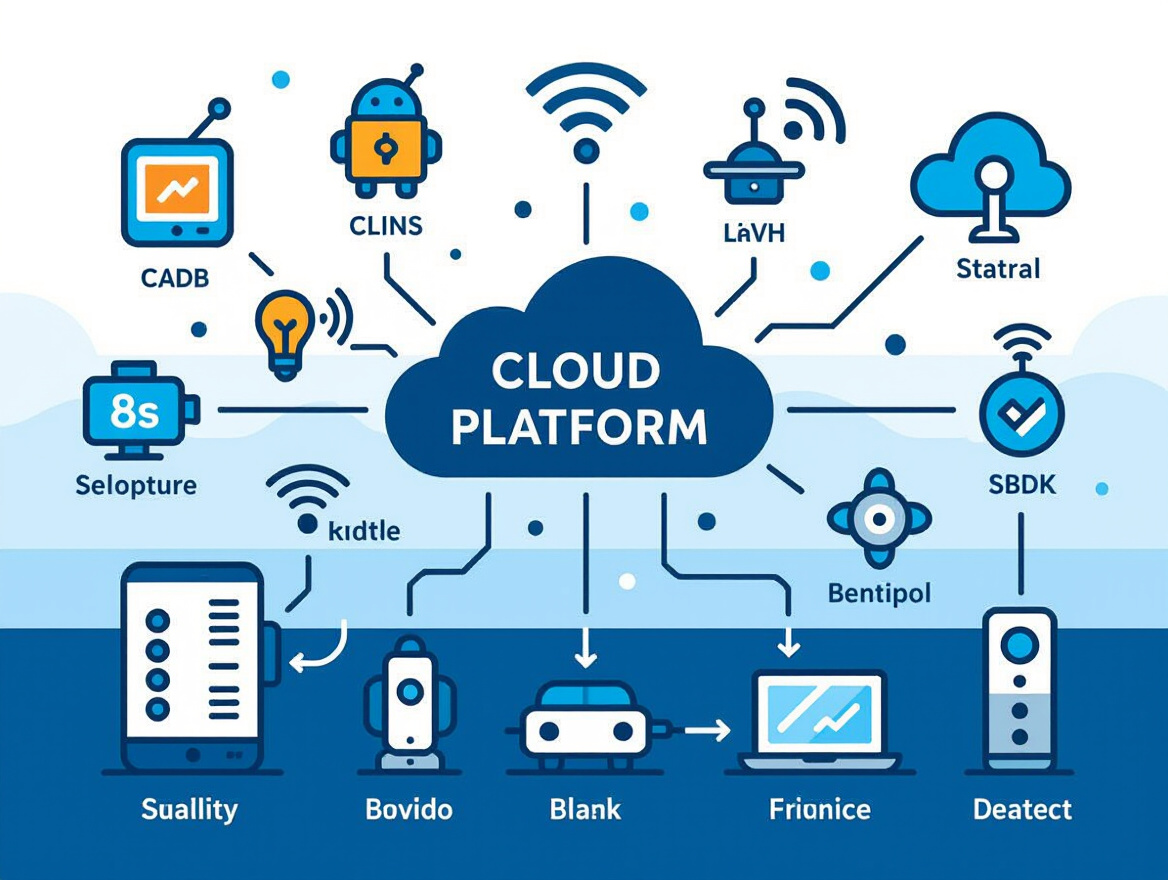
1. Simulating Massive Scale and Device Diversity
Key Insight: Realistic IoT load testing hinges on simulating both the massive scale and the full diversity of devices, protocols, and behaviors found in production environments.
Why Device Diversity Matters
Device heterogeneity is not an abstract challenge – it is the daily reality for anyone building or maintaining an IoT platform. At any given moment, your backend may be handling millions of devices: smart meters pushing usage every few seconds, industrial sensors streaming telemetry, wearables pinging sporadically, and security cameras uploading video in bursts. Each device type speaks its own protocol, expects its own data format, and follows unique communication patterns.
LoadFocus is an all-in-one Cloud Testing Platform for Websites and APIs for Load Testing, Apache JMeter Load Testing, Page Speed Monitoring and API Monitoring!
If your test environment only simulates a sea of identical virtual devices sending uniform data at regular intervals, you’re missing the real risks. Protocol diversity alone can spell the difference between a successful launch and a post-release meltdown. For example, MQTT sensors may be sensitive to network latency, while HTTP-based devices might trigger backend scaling issues you’ll never spot if your test uses only one protocol. Realistic simulation means capturing all this messiness – not just the volume, but the texture of device behavior.
As noted in the Top Cloud Testing Challenges and How to Overcome Them in 2026 post, cloud test environments must reflect real-world device diversity to generate meaningful, actionable performance data. Otherwise, you’re just tuning for a theoretical world that looks nothing like your production reality.
Approaches to Large-Scale Device Simulation
Traditional load testing tools were built for web servers and APIs. They rarely support the full range of IoT protocols out of the box, and retrofitting them for device simulation often leads to brittle, opaque test scripts. Custom protocol plug-ins can extend these tools, but maintaining them as the number of device types grows becomes a burden.
Cloud-based frameworks have pushed the envelope by offering elastic compute and managed environments for massive-scale simulations. These platforms let you spin up virtual fleets mirroring the protocol mix and communication rhythms of your device environment. They support emulating heterogeneity at scale, blending MQTT, HTTP, and other protocols, and injecting realistic data flows. This enables teams to uncover edge cases and bottlenecks before they impact production.
A practical example: you might simulate a morning spike where thousands of smart home devices kick in, alongside continuous trickles from industrial sensors. Orchestrating these variable load patterns gets you closer to the chaos your backend will see in the wild. For those building SaaS or multi-tenant IoT solutions, guides on multi-tenant load testing offer detailed strategies for reflecting real-world usage scenarios.
Limitations and Practical Trade-Offs
Even with modern cloud tools, no test environment perfectly mirrors every nuance of physical IoT deployments. Protocol support is continually expanding, but edge cases creep in: custom firmware variations, proprietary message formats, or constrained devices operating over unreliable networks. Integrating your own protocol plug-ins into cloud platforms is possible, but it often requires significant engineering effort and ongoing maintenance.
There’s also the question of real-world coverage. Simulating millions of devices is achievable, but replicating the exact timing, packet loss, and intermittent connectivity found in the field is another matter. Network variability, especially as devices traverse edge locations, introduces a layer of unpredictability that’s difficult to capture in synthetic tests. As highlighted in the discussion on edge locations in cloud testing, these factors can affect both test fidelity and platform performance data.
Finally, integration costs and operational complexity shouldn’t be understated. Setting up an accurate, heterogeneous test environment takes time – often weeks of scripting and tuning for large IoT projects. Teams must balance the desire for realism against deadlines and budgets. For some, this means focusing tests on the most common device types, accepting that rare behaviors may only surface in production.
Building a reliable IoT platform means embracing these complexities, not ignoring them. Simulate the breadth of your device mix, tune for variability, and accept that your testbed will never capture every possible issue. The goal is to uncover the most damaging blind spots before your users do.
2. Achieving Realistic Traffic Simulation for IoT Load Testing
Most teams run into the same wall the first time they try IoT load testing: their simulated traffic doesn’t resemble reality. Unlike web or API testing, where uniform load can reveal obvious bottlenecks, IoT scenarios are defined by bursty, unpredictable traffic. Sensors don’t send data at even intervals. Instead, real-world device activity is event-driven, triggered by everything from environmental changes to user interaction and network glitches. If your testing scripts assume a steady stream, you’re missing the real story – and likely missing your system’s actual pain points.
What’s overlooked with a basic approach? Uniform traffic models frequently mask latency spikes, fail to stress-test message brokers, and don’t surface cascading failures that only appear during genuine bursts. For IoT, authenticity in simulation matters more than sheer load volume. Cloud-based tools can help scale scenarios, but the nature of the load is just as critical as the amount.
Key Insight: Only realistic, event-driven traffic reveals the true bottlenecks and latency risks in IoT platforms.
Uniform vs. Realistic Traffic: A Before/After Example
| Before (Uniform Traffic) | After (Realistic Traffic) |
|---|---|
|
|
The difference is significant. With uniform traffic, surface-level stability can lull teams into a false sense of security. The real trouble – the kind that leads to missed alerts, lost data, and unhappy customers – only emerges when you mirror the actual rhythms of deployed devices. Event-driven and stochastic simulation exposes how your system handles “rush hour” moments, not just the quiet, predictable times.
Why Realistic Traffic Simulation Matters
Traditional load models are too blunt for the complexities of modern IoT. Simplistic, evenly distributed traffic patterns rarely capture the nuances of device heterogeneity and user-driven bursts. For example, a smart home platform might experience thousands of devices reporting simultaneously when a storm triggers power fluctuations, or a manufacturing system could see sensor surges tied to shift changes and safety events. Testing only for the average case ignores these high-stakes scenarios, where bottlenecks and failures are most likely to occur.
Adopting stochastic and event-driven simulation allows you to model traffic that matches real-world device behavior. This means incorporating randomness, sensor correlations, and even failures into your scripts. The result: test fidelity improves, and so does your ability to spot scaling issues before they affect end users. For practical guidance on cross-domain traffic simulation – especially if you’re working on multi-tenant SaaS platforms – see the detailed advice in the Guide to Load Testing Multi-Tenant SaaS Applications (2026).
It’s worth noting that even advanced cloud-based platforms have limits. While tools can streamline large-scale simulation, reproducing the full spectrum of edge conditions and network jitter found in global IoT deployments is still a challenge. The Impact of Network Latency on Cloud Load Testing Accuracy covers these nuances in depth, reminding us that every test model is an approximation. The closer your simulation gets to the real thing, the more meaningful your insights – and the fewer surprises after launch.
3. Data Volume and Velocity: Stress-Testing IoT Backends
IoT platforms rarely crack under steady, predictable loads. The real test comes when data volume and velocity spike beyond design assumptions. It’s not just about how many connections your backend can accept, but how quickly it can ingest, process, and store torrents of data – often in real time. With billions of IoT devices pushing out metrics, events, and telemetry, backend architectures face significant strain. This pressure exposes subtle bottlenecks in analytics pipelines and storage layers that simple traffic simulation won’t catch.
Unlike conventional load tests, IoT load testing must capture the multidimensional stress of streaming data: surges of packets, unpredictable bursts from sensors, and persistent device chatter. Backend stress means validating that your ingestion APIs, stream processors, and databases can sustain both the arrival rate and the compounding effect of data retention and analysis workloads. If your architecture buckles, you risk silent data loss, delayed analytics, or outright system crashes – problems that only surface under realistic, layered stress scenarios. For a deeper background on volume-specific testing, see What is Volume Testing in Software Testing?.
| Layer | Typical Bottleneck | Monitoring Approach | Remediation Tactics |
|---|---|---|---|
| Data Ingestion | API throughput limits, connection pool exhaustion | Track request/second, concurrent connections, error rates | Scale API gateways, implement backpressure, tune thread pools |
| Stream Processing | Processing lag, event queue backlog | Monitor queue depths, event latencies, CPU saturation | Horizontal scaling, optimize serialization, load-shed non-critical events |
| Storage (DB/File) | Write latency, IOPS limits, table locks | Measure DB write latency, disk IOPS, deadlock events | Sharding, switch to write-optimized stores, asynchronous writes |
| Analytics/Reporting | Query timeouts, report generation delay | Track query duration, resource usage during batch jobs | Pre-aggregate data, cache reports, offload analytic jobs |
| Retention/Archival | Cold storage bandwidth, retention policy misalignment | Audit archival job completion, storage growth rates | Tiered storage, automate retention enforcement, compress data |
Monitoring Data Flows Effectively
Visibility is everything when stress-testing IoT backends. Instrumentation needs to cover each layer: ingestion endpoints, processing engines, and persistent storage. Real-time dashboards should report not just throughput, but also latency spikes, error rates, and queue depths. If an API endpoint starts dropping requests or a processing queue grows without bound, you need immediate alerts – before end users notice the problem.
Cloud-based testing platforms provide actionable insights by correlating backend metrics with simulated traffic. AI-driven anomaly detection can surface subtle slowdowns or data loss that would otherwise slip by. Combining these observability tactics with layered volume and velocity tests ensures you catch both obvious and hidden bottlenecks.
The bottom line: don’t conflate traffic with true backend load. It takes careful, layered testing and granular monitoring to guarantee that your IoT backend can scale with the relentless pace of device-generated data.
4. Integrating Security and Compliance Checks Into IoT Load Testing
Why Security Is Still an Afterthought in IoT Load Testing
Despite years of industry warnings, security validation often lags behind performance checks in many IoT load testing pipelines. Teams focus on scale and throughput while assuming that vulnerabilities will show up during traditional penetration testing or code review. That approach is risky. Load conditions often trigger issues that go unnoticed during standard security reviews – the classic example is a cryptographic operation that works fine under light loads but fails or degrades when thousands of devices connect simultaneously. Race conditions and session handling bugs may only appear when the infrastructure is stretched.
Compliance, especially for sectors like healthcare and critical infrastructure, requires more than spot-checking after the fact. Regulators increasingly expect proof that platforms remain secure even at peak load, not just when the system is idle. IoT environments, with their sheer volume of connections and highly variable device behavior, multiply the chances of a slip. Waiting until after a high-profile incident is not a strategy.
How Load Conditions Expose Unique Vulnerabilities
IoT load testing, by design, pushes platforms to their limits. That’s where real security flaws often surface. For example, you might see authentication services that rate-limit legitimate devices, or encrypted traffic that starts dropping packets because CPU resources are maxed out. Compliance controls like audit logging can lag or fail silently when data volume spikes. Attackers can exploit these windows of opportunity – problems that simply don’t appear in a quiet staging environment.
Integrating Security Validation Into Load Testing Pipelines
Embedding security and compliance checks into IoT load testing adds complexity and can slow down release cycles. There’s no shortcut. You’ll need automated scripts to simulate malicious device behavior, frequent updates to compliance test cases, and close coordination between QA and security teams. But the payoff is measurable resilience. When your load test includes penetration attempts, authorization failures, and real-world device misbehavior, you’re far more likely to catch systemic weaknesses before deployment.
There’s a reason top cloud testing providers are building more security-focused features into their platforms. Teams that treat security as an integral part of load testing – not a separate phase – ship safer products and face fewer regulatory surprises. For further insights into the complexity of scaling tests and monitoring for subtle failures, see our overview of cloud testing challenges.
Incorporating security into IoT load testing isn’t just about checking a box for compliance. It’s about building systems that don’t crack under real-world pressure, no matter how creative or persistent the threat.
5. Accounting for Edge Computing and Resource Constraints
Key Insight: IoT load testing that ignores edge constraints and real-world connectivity gaps leads to dangerously incomplete performance data.
IoT load testing becomes especially challenging when you move beyond the predictable environment of the cloud. Edge devices introduce new variables: limited CPUs, memory, and battery life, along with connections that can drop without warning. Traditional load testing models, built for stable, high-powered servers, can’t anticipate these realities. If you’re not simulating edge conditions, you’re missing the vulnerabilities that matter most in the field.
Let’s break down why resource constraints require a different mindset, how scenario-based testing exposes problems cloud-only approaches miss, and where the concept of reproducibility starts to get slippery.
Simulating Intermittent Connectivity: Techniques for Modeling Real-World Dropouts and Reconnects
Edge devices don’t operate with constant, high-bandwidth connectivity. Whether you’re dealing with industrial sensors deep underground or wearables moving in and out of Wi-Fi, intermittent connectivity is the norm. It’s not enough to test with always-on links. Instead, your test framework must simulate:
- Random connection drops, where devices lose access for seconds or minutes at a time
- Variable latency, reflecting real-world network congestion or poor signal environments
- Staggered reconnection patterns, as hundreds or thousands of devices come back online unpredictably
Edge frameworks now let you script network conditions directly into your tests. For example, you can create scenarios where a portion of devices go offline periodically, or a sudden burst of reconnects triggers a surge in authentication requests. These patterns frequently expose failure modes that never emerge in cloud-only scenarios – such as missed telemetry, duplicate data, or backend service overloads when connectivity resumes.
Too often, teams default to uniform, always-on connectivity in their test plans. This creates a false sense of reliability. By contrast, scenario-based testing captures the realities of the field and delivers data that better predicts user experience. For deeper technical discussion on why uniform traffic fails, see our breakdown of API performance testing challenges and the role of realistic simulation.
Partial Offloading: Cloud vs. Edge – When to Run Tests at the Edge, in the Cloud, or Both
With edge computing, deciding where to run your load tests gets complicated. Some workloads execute locally on the device – think filtering raw sensor data or making quick control decisions – while others get offloaded to the cloud for heavy-duty analytics. To get meaningful results, you have to split your test strategy:
- Test device-only processing under low-power conditions, focusing on CPU, memory, and energy drain
- Simulate cloud offload patterns, stressing the backend with data spikes during mass uploads or bulk synchronization after reconnects
- Model hybrid scenarios, where partial results are processed at the edge and the rest sent to the cloud
This division matters: some failures only appear when the device is under load and must prioritize between local tasks and queueing outbound data. Other issues emerge when the backend receives an unpredictable storm of updates after a connectivity blackout. Modern edge frameworks allow partial offloading in simulation, but reproducing these scenarios reliably is tricky. Edge environments are, by nature, highly variable – with different hardware, firmware versions, and network conditions at play. This variability can challenge test reproducibility in ways that cloud-centric teams may underestimate.
For organizations that need to simulate edge, cloud, and hybrid loads at scale, managed providers can coordinate complex test scenarios, integrate diverse device emulators, and provide the analytics needed to pinpoint bottlenecks. For more on the importance of testing across edge locations, see our recent post on why edge locations are essential for cloud testing.
Ultimately, effective IoT load testing is about embracing variability, not fighting it. If you’re not simulating edge realities – resource constraints, faulty networks, partial offloading – you’re running tests in a fantasy world. The cost? You’ll miss the nasty surprises that only show up in production, where they’re most expensive to fix.
6. Managing Monitoring and Analytics Complexity During IoT Load Testing
Why IoT Monitoring is a Different Beast
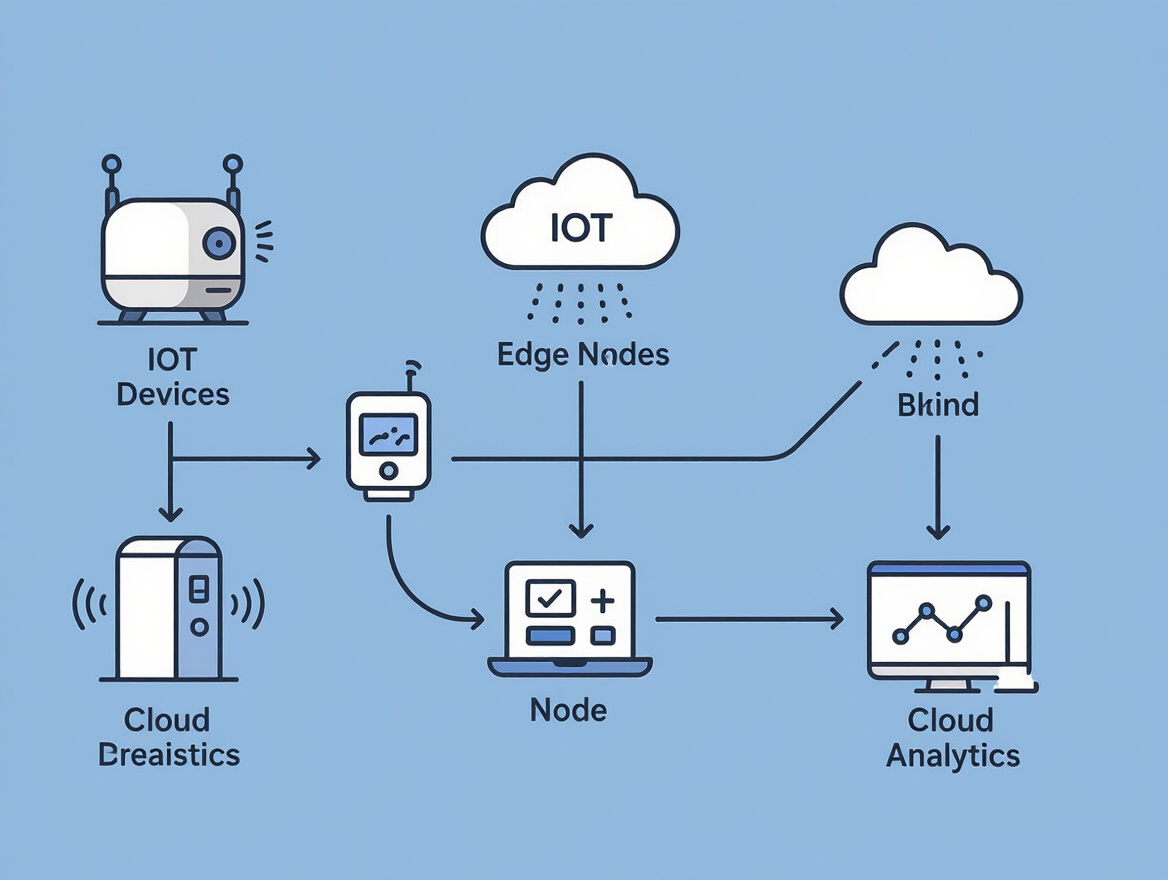
Distributed IoT systems push monitoring complexity to a new level. Unlike traditional web and API load testing, you’re not just tracking a single application stack. Now you have to correlate telemetry across a sprawling array of devices, edge nodes, and cloud services, each speaking its own protocol and generating unique data patterns. When you’re dealing with millions of devices – each with its own quirks – the usual tooling falls short. Even advanced cloud-based solutions struggle to capture the nuances of device diversity and network variability, a point highlighted in discussion of cloud testing challenges.
Correlating Data Streams for Actionable Insights
To get actionable insights during IoT load testing, you need to stitch together raw metrics from the devices, the edge, and the backend. This means looking at device failures, edge compute bottlenecks, and cloud processing lag in the same view – and in real time. Without proper correlation, problems slip through the cracks: a spike in device disconnects might be missed if you’re only watching cloud logs, or edge node stress might not be obvious until it snowballs into a major outage.
Scalable, AI-powered platforms now provide unified dashboards that ingest and analyze these diverse data streams, making it possible to spot subtle patterns that manual checks often miss. For example, AI analysis of load test results surfaces anomalies and failure predictors across the entire IoT stack, giving teams a head start on troubleshooting before end users feel pain.
How AI Analytics Help – And Where They Can Trip You Up
AI-driven analytics are not silver bullets. They excel at surfacing hard-to-find performance issues by learning baseline patterns and flagging deviations, but they aren’t infallible. Out-of-the-box models can produce false positives – flagging harmless outliers as critical – or miss problems unique to your device fleet unless you invest time in tuning and configuring them for your specific context. In practice, you may need several iterations before the models provide consistently useful alerts.
Still, the alternative – manual correlation of logs, metrics, and distributed traces – isn’t realistic at IoT scale. As the volume of IoT data grows rapidly, the only practical path forward is to embrace advanced analytics, while staying vigilant about their limitations. For a closer look at how comprehensive monitoring and analytics can be applied to API-heavy architectures, see this practical guide to API performance testing challenges.
Ultimately, managing monitoring and analytics complexity in IoT load testing isn’t about eliminating all uncertainty – it’s about building the visibility and feedback loops you need to catch issues early, adapt quickly, and confidently support the next billion devices.
How to Choose the Right IoT Load Testing Strategy
Start With the Four Cornerstones: Scale, Diversity, Edge, and Compliance
Selecting an IoT load testing strategy isn’t just about picking a tool and ramping up virtual users. The reality is more nuanced. You need to weigh platform scale (are you supporting hundreds or millions of devices?), protocol and device diversity (do your endpoints vary by manufacturer, firmware, or communication method?), edge complexity (how much logic runs on-device or at the network edge?), and regulatory requirements. Get these wrong, and you risk performance blind spots that only surface post-deployment.
The best approach balances test fidelity – how closely your simulation matches the real world – against the resources you actually have, both in terms of budget and in-house expertise. For example, if your team can’t build custom protocol simulators, a managed cloud testing platform that handles IoT payloads out of the box may be the only practical choice.
Decision Framework: Tailoring Your Testing Plan
Below is a decision table to help you map out the right testing focus and tool type for your scenario. Use this as a concrete starting point, then adapt as your platform evolves.
| Scenario | Best Testing Focus | Tool Type | Caution Point | Next Step |
|---|---|---|---|---|
| Millions of devices, diverse protocols (MQTT, CoAP, HTTP) | Simulate device heterogeneity at scale | Cloud-based IoT load testing platform with protocol support | Traditional web/API tools may miss protocol-specific issues | Prioritize tools with built-in protocol emulation (see essential features for cloud testing platforms) |
| Bursty, event-driven sensor traffic | Stochastic and event-driven traffic models | Custom scripting or AI-driven test generators | Uniform load scripts will overlook latency spikes | Incorporate traffic variability and real-world timing patterns |
| Massive real-time data streams to backend analytics | Stress-test ingestion and storage under high volume | Distributed load test frameworks, preferably cloud-native | Backend bottlenecks may only appear at production-scale data rates | Integrate backend monitoring and volume testing (see volume testing strategies) |
| Edge devices with limited resources, intermittent connectivity | Simulate edge node behavior and offline scenarios | Edge-aware or hybrid testing solutions | Cloud-only tools can’t mimic edge-specific constraints | Include partial edge simulation and network variability |
| Regulated environments (healthcare, automotive, finance) | Integrate security and compliance validation under load | Platforms supporting security testing in parallel with load | Security gaps often emerge under stress, not just at rest | Automate compliance checks as part of load test suite |
| Limited in-house protocol development skills | Out-of-the-box device and protocol simulation | Managed cloud platforms with AI-powered config | Custom scripts may be unsustainable at scale | Choose platforms emphasizing low-code or AI-driven scenario setup |
Expert Guidance: Fit Tools to Scenarios, Not the Other Way Around
Specialized IoT load testing scenarios rarely fit the mold of standard web or API tests. If you’re working with multi-tenant SaaS backends, incorporate multi-tenant load testing guidelines to ensure fair resource allocation between device fleets. For environments pushing significant data to the cloud, always validate that your monitoring stack can keep up with the volume and diversity of performance signals.
Ultimately, the ideal testing strategy is pragmatic. You’ll want to iterate, investing first in the highest-risk areas – typically protocol diversity and backend scale – then layering on edge and compliance complexity as your system matures. Thoughtful planning here is what separates successful IoT deployments from those that buckle under real-world conditions.
Frequently Asked Questions
What makes IoT load testing different from traditional load testing?
IoT load testing requires simulating massive numbers of diverse devices, each using different protocols and communication patterns. Unlike standard web or API testing, where users often behave in predictable ways, IoT platforms must handle everything from sensors sending intermittent data to video feeds generating continuous streams. This device heterogeneity and the unpredictable, bursty traffic patterns mean that traditional load testing tools usually fall short. To capture accurate results, you need tools that can represent real-world device diversity, as well as advanced scripting to mimic event-driven interactions.
How do you simulate millions of IoT devices realistically?
Scalable cloud-based testing frameworks allow you to generate high volumes of simulated device traffic, but realism depends on how well the test environment mimics real device behavior. This means supporting a wide range of communication protocols (like MQTT, CoAP, HTTP) and data formats. For large-scale tests, consider distributed simulators that can introduce device churn, network variability, and intermittent connectivity. Realistic tests go beyond just hitting endpoints – they replicate the quirks and timing of how actual devices behave under varying conditions.
What are the most common bottlenecks uncovered during IoT load testing?
The most frequent pain points are in backend data ingestion, processing, and storage. Many platforms struggle to keep up with peak ingestion rates. It’s common to uncover latency spikes, dropped messages, or database write slowdowns under high load. Backend analytics systems are especially vulnerable if not architected for horizontal scaling. For an in-depth look at these challenges, see our API performance testing challenges guide.
Why is security testing critical during IoT load testing?
Under load, vulnerabilities that remain hidden during normal operation often become exposed. For example, race conditions, degraded encryption, or authentication failures can occur only when the system is stressed with high concurrency. Integrating security checks into your IoT load testing process helps ensure data privacy and regulatory compliance, especially as devices process sensitive information. Security and compliance testing in parallel with load scenarios is now considered a best practice.
How do you account for edge computing and limited device resources?
Many IoT devices run at the network edge, operating with limited CPU, memory, or battery. Tests need to simulate intermittent connectivity, local data processing, and variable power constraints. Advances in edge computing frameworks let you offload test workloads to edge nodes, mirroring real deployment environments. However, this introduces new challenges around test reproducibility and environmental variability, so your strategy should be flexible enough to adapt to these constraints.
How do you monitor and analyze performance across a distributed IoT ecosystem?
Effective IoT load testing depends on comprehensive monitoring that spans from individual devices to cloud backends. Modern approaches use AI-powered analytics to sift through massive amounts of telemetry and spot anomalies, such as unexpected latency or error spikes, during load tests. Correlating metrics across distributed components remains challenging due to architectural complexity. For practical solutions, see our post on why intuitive dashboards matter in load testing platforms.
Can traditional load testing tools handle IoT workloads?
Most conventional tools are designed for web and API testing, not for the unique characteristics of IoT systems. They typically lack support for protocol diversity, device-level scripting, and real-world traffic simulation. Specialized IoT load testing platforms or extensible cloud testing solutions provide features tailored for the scale and complexity of IoT scenarios.
What’s a realistic starting point for teams new to IoT load testing?
Begin by modeling your most common device types and traffic patterns. Focus first on ingestion, processing, and storage layers, then layer on complexity: add protocol diversity, simulate edge conditions, and introduce security checks. As your system scales, invest in monitoring and analytics tools that can handle distributed performance data. Our cloud testing platform checklist offers guidance on what features to prioritize as you ramp up your efforts.
IoT load testing isn’t just about throwing traffic at endpoints. It’s about capturing the unpredictable, messy reality of real-world device interactions to ensure your platform stands up to the scale and complexity of modern connected systems.
Powered by PostNext service