Serverless Computing’s Surge: What’s Driving the Shift in 2026?
Serverless computing has evolved from a specialized approach to a core cloud strategy, reshaping how cloud testing and load testing teams operate. By 2026, its adoption is widespread and shaping the priorities of engineering leaders. The serverless computing market is expected to grow at a compound annual growth rate (CAGR) of over 25% from 2021 to 2026. This rapid expansion signals a fundamental change in how organizations build, deploy, and test digital services.
Why 2026 Is the Tipping Point
Several converging trends have made 2026 a defining year for serverless adoption. Enterprises are increasingly prioritizing scalable and cost-effective solutions that can handle unpredictable workloads. Sectors like e-commerce, streaming, and SaaS are architecting new applications with serverless as the default. For performance testers, this shift is significant: serverless isn’t just another cloud trend, but a new approach that alters the assumptions behind test design. Traditional load scenarios – like pre-provisioning server fleets or planning for static capacity – are being replaced by demand-driven, event-based architectures. The familiar rules about infrastructure, bottlenecks, and scaling thresholds are being rewritten.
Is Your Infrastructure Ready for Global Traffic Spikes?
Unexpected load surges can disrupt your services. With LoadFocus’s cutting-edge Load Testing solutions, simulate real-world traffic from multiple global locations in a single test. Our advanced engine dynamically upscales and downscales virtual users in real time, delivering comprehensive reports that empower you to identify and resolve performance bottlenecks before they affect your users.
Immediate Impact on Load Testing Practices
For performance testing professionals, serverless adoption means rethinking everything from test setup to analysis. Predicting system behavior based on provisioned hardware is no longer viable. Resource allocation and scaling are now managed dynamically by the cloud provider, introducing new complexities: function cold starts, variable response times, and the potential for cost spikes with high-frequency event triggers.
The pace of change in 2026 is especially notable. Serverless platforms now offer advanced integration, improved security, and tighter alignment with DevOps practices. Testing teams must deliver effective strategies that keep up with the speed and elasticity of serverless architectures. Those who adapt quickly can identify performance bottlenecks before they affect production, while others risk outages or unexpected cloud bills.
Serverless computing’s rapid ascent has put performance testing at a crossroads. Testers must evolve their strategies to keep pace with business demands, or risk falling behind as legacy approaches become obsolete.
Think your website can handle a traffic spike?
Fair enough, but why leave it to chance? Uncover your website’s true limits with LoadFocus’s cloud-based Load Testing for Web Apps, Websites, and APIs. Avoid the risk of costly downtimes and missed opportunities—find out before your users do!
The Basics: What is Serverless Computing and Why Does It Matter for Load Testing?
Serverless computing, also known as Function as a Service (FaaS), changes how applications are built and scaled. Rather than provisioning and managing servers, serverless lets you run code in response to events – such as API requests, file uploads, or database changes – without managing infrastructure. The cloud provider handles provisioning, scaling, and maintenance, so you can focus on application logic.
This approach is especially attractive for unpredictable workloads. If traffic spikes during a marketing campaign or drops overnight, a serverless platform automatically scales resources up or down. You pay for execution time, not idle servers, making costs more manageable for event-driven apps. Industry reports highlight strong momentum, with serverless computing expected to continue growing at a CAGR of over 25% through 2026, signaling broader adoption and maturity.
However, these same features introduce new challenges for load testing. Because resources are ephemeral and scale dynamically, old assumptions about capacity planning and bottlenecks no longer hold. Teams need to rethink how they assess performance, reliability, and cost under varying loads.
From Servers to Functions: The Architectural Shift
The move from monolithic or VM-based architectures to event-driven functions is more than a technical upgrade – it represents a fundamental change in system design. In a monolithic setup, you deploy applications on dedicated servers or virtual machines and manage every layer, from the OS to the runtime. You’re responsible for scaling, patching, and resource allocation.
LoadFocus is an all-in-one Cloud Testing Platform for Websites and APIs for Load Testing, Apache JMeter Load Testing, Page Speed Monitoring and API Monitoring!
Serverless flips this model. Individual functions are triggered by specific events and run in isolated containers managed by the cloud provider. There’s no persistent infrastructure to maintain. If thousands of users hit your site at once, the platform automatically spins up as many instances as needed. This model is ideal for bursts of activity – such as flash sales, ticket launches, or unpredictable API request spikes.
This architectural freedom, however, complicates performance assessment. Load testing in a serverless environment isn’t just about simulating traffic volume. You must account for cold starts, concurrency limits, and the unpredictable nature of resource allocation. These factors can impact latency and throughput in ways that don’t appear in traditional server-centric testing. For teams invested in performance testing, the shift to serverless requires new strategies, new tools, and a willingness to challenge conventional wisdom.
As serverless computing matures and expands, understanding these architectural changes is essential for anyone involved in load testing or cloud performance optimization.
Why Serverless Computing is Reshaping Performance Testing Strategies
The rise of serverless computing is prompting organizations to rethink how they approach load and performance testing. Traditional strategies were designed for static, pre-provisioned infrastructure. Now, automatic scaling and on-demand resource allocation have shifted the focus away from hardware capacity and toward the unpredictable nature of real-world user traffic patterns.
| Traditional Infrastructure | Serverless Architecture | Load Testing Implications |
|---|---|---|
| Pre-allocated servers sized for peak | Resources automatically scale per request | Testing must simulate rapid surges and lulls, not just steady loads |
| High fixed costs (idle capacity) | Pay-per-use pricing (cost aligns with traffic) | Tests must account for variable, event-driven cost profiles |
| Manual scaling and provisioning | Fully automated scaling by the platform | Performance issues may only appear under rare, spiky demand |
| Predictable, controllable environments | Dynamically changing execution contexts | Testing must account for unpredictable load patterns and cold starts |
| Resource planning is a major project | Resource allocation is abstracted away | Testers focus on code, configuration, and event triggers rather than hardware limits |
Key Insight: With serverless computing, the biggest challenge in performance testing shifts from managing hardware limits to anticipating unpredictable demand and the unique quirks of rapid, automated scaling.
Automatic scaling is more than a technical convenience. In a serverless model, compute resources expand and contract in real time based on traffic. You can’t just test “peak” and “average” scenarios; you must simulate erratic, bursty traffic and unpredictable event spikes. This unpredictability forces teams to re-evaluate how they design load tests, what metrics matter most, and how to interpret results that might vary run-to-run.
Cost-efficiency is another double-edged sword. Serverless architectures promise that you only pay for what you use, but without disciplined testing, it’s easy to run up costs with high-frequency or poorly optimized function calls. Load and performance testers are now tasked with ensuring that cost projections reflect not only sustained traffic, but also rare, high-volume bursts that can generate unexpected charges.
Innovation in Load Testing Tooling: How Cloud Testing Platforms Are Adapting
As serverless computing accelerates, testing tools are evolving rapidly. Cloud testing platforms are rethinking how to generate, monitor, and analyze load in serverless environments. Rather than assuming a static backend, these platforms provide real-time insights into how your serverless functions respond under sudden spikes, slow ramps, or even low-traffic edge cases.
Newer tooling supports granular, event-driven testing – not just hammering endpoints, but mimicking real-world usage patterns that serverless systems are designed to handle. Some platforms now offer AI-powered analysis that helps teams identify whether performance hiccups are due to scaling behavior, cold starts, or inefficient code paths. This level of automation and context-aware reporting is now essential for optimizing cost and reliability in a serverless world.
As more infrastructure fades into the background, load testers must shift their focus from managing servers to understanding the emergent behaviors of dynamic, event-driven systems. Performance testing becomes less about infrastructure limits and more about real-world usage patterns, business risk, and cost optimization.

Key Benefits of Serverless for Modern Load Testing
Serverless computing has quickly become a mainstay in performance testing. For those responsible for ensuring APIs and websites remain responsive under stress, the value is clear: on-demand scale, cost efficiency, and greater developer focus are the primary benefits. Here’s why these matter in the real world of load testing.
Scaling for High and Variable Loads
Traditional server-based testing environments require forecasting peak loads and manually configuring infrastructure in advance. With serverless computing, this guesswork disappears. Every test – whether simulating a sudden burst or a sustained onslaught – automatically gets the compute it needs, right when it’s needed. This is particularly useful for scenarios like Black Friday readiness or API launch day, where load curves are unpredictable. No more scrambling to provision extra servers or watching tests fail due to resource exhaustion.
Cost Reduction from On-Demand Resource Usage
Resource allocation used to mean paying for idle servers outside of test windows. Serverless flips this model. You only pay for what you use, measured in precise increments. As demand for scalable, cost-effective solutions grows, more organizations are moving away from over-provisioned, always-on infrastructure. For load testing teams, this means budgets go further, waste is minimized, and cost overruns are less likely – provided usage patterns are monitored to avoid the pitfalls of high-frequency function calls.
Developer Focus for Optimizing Testing Logic
One of the most overlooked advantages: developers can focus on writing smart test logic instead of managing servers. The real benefit comes when technical teams are freed from infrastructure minutiae. Serverless abstracts away the plumbing, letting testers experiment with complex scenarios, edge cases, and custom metrics, all without a maintenance burden. This enables teams to move faster and spend more time tuning actual performance rather than wrangling test rigs.
Key Insight: Serverless architectures enable load testing teams to simulate unpredictable real-world traffic patterns at scale, without the traditional headaches of resource planning or wasted spend.
Before and After: Load Testing Without vs. With Serverless
| Before (Traditional Server-Based) | After (Serverless) |
|---|---|
|
Weak Example: “We manually spun up several VMs before our quarterly peak test, hoping it would be enough. When traffic spiked higher than expected, half the test users dropped due to capacity limits.” |
Strong Example: “We used serverless load tests to simulate rapid surges and sudden lulls in traffic, automatically scaling from a few hundred to tens of thousands of virtual users. No manual provisioning, no resource waste, and instant feedback on bottlenecks.” |
This improved approach works because serverless platforms scale instantly and precisely with your test pattern. You’re not guessing at required resources or risking under-provisioning. Instead, you focus on the fidelity of your tests, ensuring realistic simulations for true peak preparedness.
Serverless computing isn’t just another infrastructure shift – it’s a fundamental upgrade for how teams test and optimize at scale. For cloud testing providers and practitioners alike, the difference is immediate and measurable.
Challenges and Limitations: What Testers Must Watch Out For
Key Insight: Serverless computing brings powerful new tools for scalability, but testers must confront unique performance variables and architectural trade-offs to avoid misleading results and costly surprises.
Cold Start Latency: The Hidden Variable
Cold start latency is frequently underestimated in serverless computing, yet it can heavily influence the validity of your load testing results. When a serverless function sits idle for a period, the underlying cloud provider may deallocate resources to optimize costs. The next invocation triggers a “cold start,” where the environment must be spun up before the function runs. This introduces a noticeable delay – sometimes hundreds of milliseconds or more – compared to the near-instant response of a “warm” function.
For testers, this means that cold starts can artificially inflate response times in a way that doesn’t reflect steady-state production performance. If your load test triggers functions sporadically, you’ll see a higher proportion of cold starts, skewing the data. On the other hand, sustained load often keeps functions warm, masking these delays. It’s a balancing act: realistic load patterns must account for both behaviors, especially for applications with unpredictable traffic. Additionally, frequent cold starts can create unexpected cost spikes, since some providers bill for both execution time and resource initialization.
The best approach is to analyze cold start frequency during test design, understand its impact on end-user experience, and explicitly report it as a separate metric. Otherwise, you risk making infrastructure or optimization decisions based on misleading averages.
Vendor Lock-In and Observability Concerns
Serverless computing is dominated by a handful of major cloud providers, each with its own proprietary implementation. This brings two intertwined challenges: vendor lock-in and observability limitations. When you architect tests around a specific provider’s function model and monitoring tools, your team becomes tightly coupled to that ecosystem. Moving workloads – or even running comparative tests across platforms – becomes burdensome, often requiring code rewrites or loss of functionality.
Cross-platform testing is not trivial. For instance, differences in how providers handle concurrency, scaling thresholds, or cold start mitigation can lead to divergent test results. A function that performs well under one provider may struggle elsewhere due to subtle differences in runtime or monitoring granularity. This is a real constraint for businesses aiming for flexibility or multi-cloud strategies.
Observability is another sticking point. While cloud-native tools have improved, they rarely offer the deep, unified insights needed for rigorous performance analysis across multiple environments. Sometimes, you’ll need to stitch together logs, metrics, and traces from disparate sources – slowing down root cause analysis and making comparisons harder. Test strategies should account for these gaps, and teams must factor in the additional time and skill required to build portable monitoring pipelines.
Serverless computing has undoubtedly opened new doors for agile, cost-effective scaling. Yet, as the market surges and architectures shift, testers face a fresh set of hurdles. Understanding these constraints is the first step in producing reliable, actionable performance insights – and in preventing unwelcome surprises when your application scales in production.
How Serverless Computing Demands New Load Testing Methodologies
The shift to serverless computing isn’t just about infrastructure – it fundamentally changes how engineering teams approach load testing. The old playbook, built for monolithic servers or even containerized microservices, doesn’t capture the nuances of platforms that bill per function execution and scale to thousands of concurrent invocations in response to unpredictable events. To get accurate performance insights and avoid surprise costs, you’ll need to rethink everything from test design to metrics collection.
Rethinking Test Scenarios: From Endpoints to Events
With traditional systems, most load tests simulate traffic hitting a set of API endpoints. You start with a user journey, map it to HTTP requests, and ramp up concurrency to see where bottlenecks appear. Serverless architectures break this mold. Here, business logic is split into individual functions, each triggered by specific events: a file upload, a queue message, or a scheduled job. The challenge is that the performance impact of these triggers can’t be captured by simply blasting an endpoint.
Effective serverless load testing means designing scenarios that mirror real event patterns. If a function is triggered by hundreds of parallel file uploads to cloud storage, you need a test system that generates those storage events, not just HTTP calls. If another function responds to a burst of payment processing messages, your test should flood the relevant queue, not simulate a steady stream of web requests. This shift forces teams to think at the event and function level instead of the transaction level.
Another implication: you can no longer gloss over the cold start problem. For example, if a rarely used function is hit after hours of inactivity, the latency on that first invocation will be markedly different from a warm, frequently triggered function. Realistic testing should reflect both bursty, high-concurrency patterns and sporadic triggers that reveal true latency characteristics.
Cost and Resource Metrics: Tracking What Matters
Traditional load testing focuses on throughput, average response time, error rate, and server CPU/memory utilization. In serverless, those metrics only tell part of the story. You’re now billed per execution, sometimes down to the millisecond and fraction of a gigabyte. That means cost-per-execution and total spend under load become first-class KPIs for any meaningful test.
Concurrency limits also come into play. Most providers cap the number of simultaneous function invocations, either globally or per account. If your test traffic spikes beyond this cap, you might discover that additional invocations are throttled, delayed, or even dropped. It’s critical to monitor actual concurrency usage – not just overall throughput – to identify these thresholds before they become production incidents.
Another new consideration: the impact of function chaining and integration with other cloud services (databases, queues, storage). A seemingly simple function may trigger a cascade of downstream calls, each incurring further latency and cost. The best serverless load tests capture not just function latency but also end-to-end workflow timing and aggregate cost across all triggered services.
| Testing Approach | Serverful (Traditional) | Serverless | Key Metrics |
|---|---|---|---|
| Test Focus | API endpoint, monolithic app | Event triggers, function-level logic | Response time, event latency |
| Load Generation | HTTP requests, transaction simulation | Cloud event simulation (queue, storage, schedule) | Burst handling, cold starts |
| Scalability | Server/VM resource limits | Automatic scaling by provider | Concurrency, invocation rate |
| Cost Visibility | Monthly server cost, static allocation | Per-execution billing, dynamic spend | Cost-per-invocation, total spend under load |
| Resource Monitoring | CPU/memory per server | Memory per function, cold start duration | Resource allocation, scaling thresholds |
As serverless computing accelerates, load testing must evolve to address these new realities. The goal is no longer just to find a bottleneck or break a server – it’s to understand how your distributed, event-driven system behaves under real-world conditions, and to identify where costs or latency can spiral out of control before production users feel the pain.
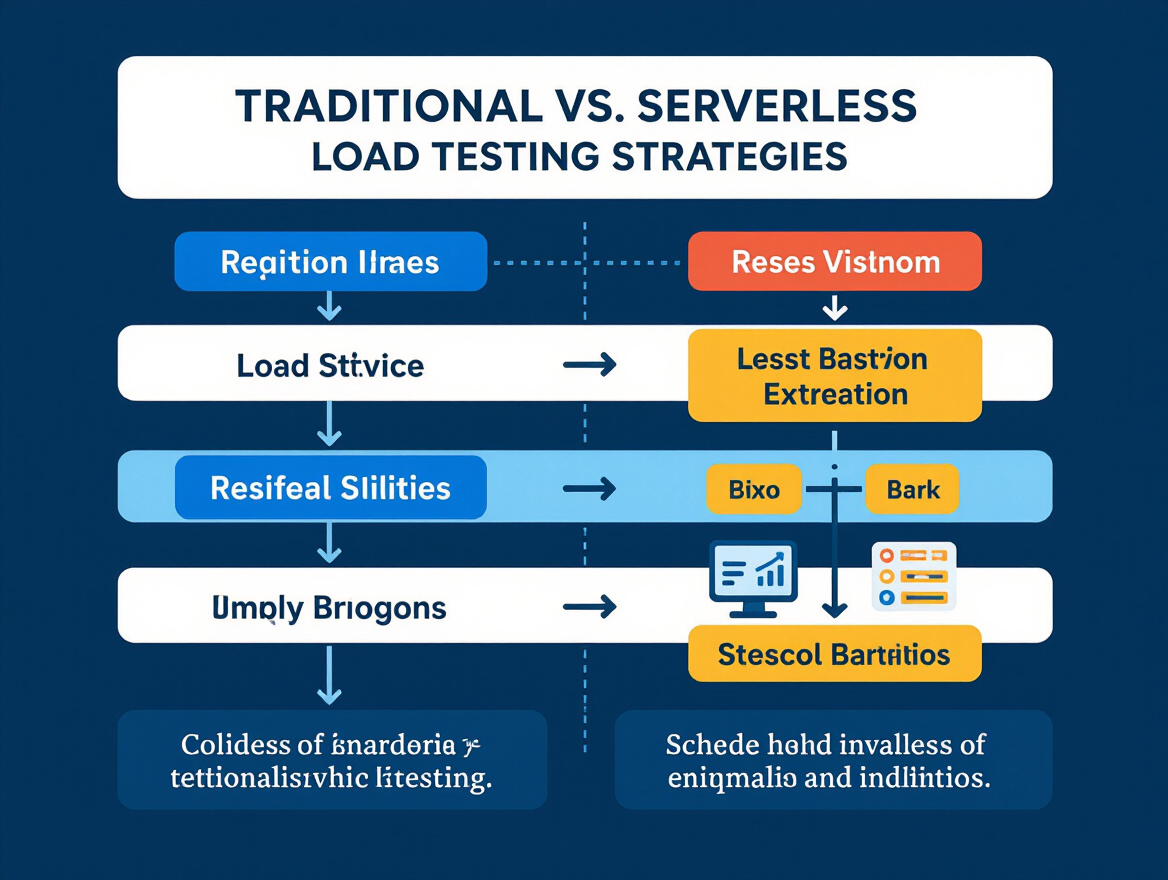
Real-World Example: Serverless Load Testing Patterns Before and After Adoption
The E-Commerce Holiday Rush: A Classic Stress Test
Consider a national e-commerce retailer preparing for Black Friday. Every year, the site faces a sudden, unpredictable spike in traffic – sometimes doubling or tripling normal load within hours. In the past, their load testing strategy mirrored their traditional server-based infrastructure. Now, with serverless computing, the approach looks entirely different.
Before Serverless: Manual Provisioning and High Overhead
| Pattern | Resource Provisioning | Cost Management | Monitoring & Feedback |
|---|---|---|---|
| Traditional Load Testing | Pre-purchased VM instances sized for expected peak, often overestimating to avoid outages | High, fixed costs for idle capacity; risk of wasted spend if traffic is lower than planned | Batch testing; slower reporting cycles; delays between test and actionable feedback |
Before adopting serverless, the engineering team spent weeks forecasting peak capacity, negotiating with cloud vendors, and manually spinning up large clusters well ahead of the event. Over-provisioning was standard practice to avoid outages, which meant paying for resources that sat idle most of the time. Load tests ran against this static fleet, generating reports that might take hours to analyze and interpret.
After Serverless: Dynamic Scaling and Real-Time Insight
| Pattern | Resource Provisioning | Cost Management | Monitoring & Feedback |
|---|---|---|---|
| Serverless Load Testing | Automatic, granular scaling – resources spin up and down on demand per function call | Pay-as-you-go; no charge for idle time; cost scales directly with real usage | Real-time dashboards; instant alerts; rapid iteration based on live results |
With serverless computing, the same retailer now configures event-driven functions to scale automatically as test scripts simulate thousands of concurrent shoppers. There’s no need to estimate in advance or reserve expensive capacity. Billing is granular – costs accrue only as functions execute – so the team isn’t penalized for over-provisioning. Monitoring tools surface response times and bottlenecks on live dashboards, offering feedback as soon as tests run.
Before/After Example: Resource Provisioning Language
| Before | After |
|---|---|
| “We maintained a fleet of 100 VMs for a month, just in case Black Friday demand spiked.” | “Our serverless test plan automatically scaled to 10,000 concurrent users in minutes, with no advance provisioning.” |
The after version highlights the core benefit. Instead of static, costly infrastructure, the focus shifts to true elasticity and efficiency – resources appear exactly when needed and disappear when not. This reduces waste and lets teams focus on optimizing performance, not infrastructure.
The shift to serverless load testing is more than just a technical upgrade. It represents a new mindset: optimize for agility, cost-efficiency, and actionable insight, especially as unpredictable demand becomes the new normal in digital business.
Expert and Industry Perspectives: What Leaders Say About Serverless and Testing
What the Experts Are Saying
Serverless computing has become a focal point in technical circles, and industry leaders are largely in agreement about its potential. As one leading cloud services executive put it, “Serverless computing is not just about reducing costs; it’s about enabling innovation by freeing developers from infrastructure management.” By shifting operational overhead away from engineering teams, organizations unlock time and resources that can be redirected toward building new features and addressing customer needs.
There’s a strong consensus that serverless architectures are a catalyst for agility. When infrastructure scales dynamically and predictable provisioning headaches are removed, teams can experiment and iterate faster. The market for serverless computing is growing rapidly, a clear indicator of mainstream adoption and confidence.
Why This Matters for Testing Teams
For testers and decision-makers, the shift to serverless represents a meaningful change in how performance testing and load testing are approached. Testing professionals need to adapt their methodologies to address new dynamics, like unpredictable workload spikes and event-driven scaling.
Balancing Opportunity and Complexity
Of course, the optimism comes with a dose of realism. Experts frequently point out that serverless brings both opportunity and complexity. On one hand, it enables faster delivery and can reduce costs for variable workloads. On the other, testers must contend with new challenges like “cold start” latency and the potential for vendor lock-in. There’s also a learning curve for teams transitioning from traditional server-based models to event-driven, stateless functions.
In practice, forward-thinking organizations are weighing these trade-offs carefully. The emerging industry sentiment is clear: serverless computing is not a silver bullet, but for teams ready to rethink their approach to testing and performance monitoring, it offers a compelling path to greater efficiency and innovation.
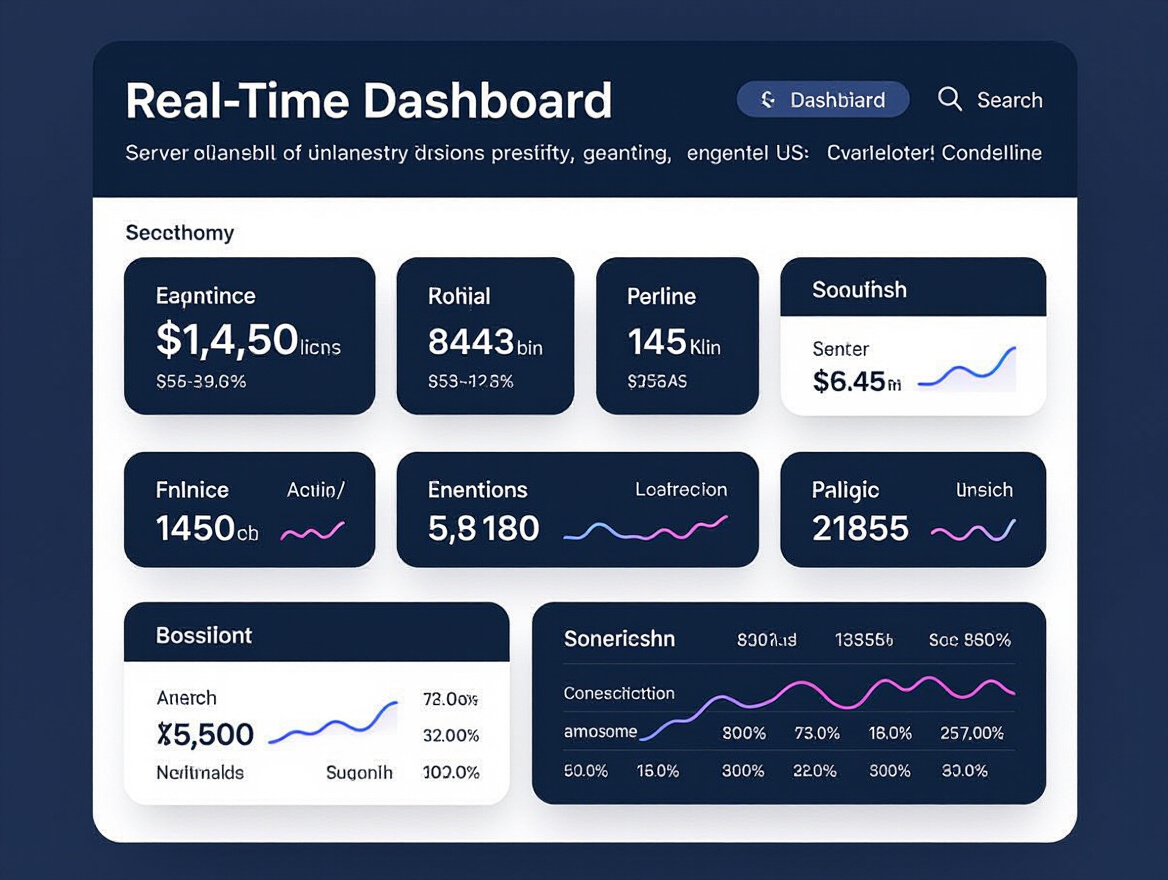
How Cloud Testing Platforms Are Evolving for Serverless Testing
Serverless computing has redrawn the lines for cloud testing platforms. Traditional load testing relied on stable, persistent infrastructures, but serverless flips that equation, demanding tools that can watch and interpret highly dynamic, event-driven workloads. Platforms are responding with targeted features that address these new realities, all while keeping the end goal clear: help teams optimize performance, control costs, and confidently adopt serverless architectures.
One of the most significant upgrades is real-time monitoring of serverless workloads. Unlike static infrastructure, serverless functions spin up and scale in unpredictable ways, often handling thousands – or millions – of short-lived executions per day. Load testing platforms now offer live dashboards that track invocation rates, response times, and error spikes as they happen. This is essential for catching transient performance drops that could otherwise go unnoticed.
Equally important is the shift to AI-powered performance analysis. Human testers can’t manually sift through the vast stream of logs and metrics generated by serverless architectures. Modern cloud testing tools employ machine learning to spot anomalies, flag outliers, and even suggest likely causes – whether it’s a misconfigured resource limit or an unexpected traffic pattern. This analysis turns what used to be a post-mortem exercise into actionable, real-time feedback, resulting in faster troubleshooting and more effective serverless deployments.
Integration capabilities have also moved to the foreground. The new expectation is direct connections with serverless platforms such as AWS Lambda, Azure Functions, or Google Cloud Functions. Load testing tools now hook directly into these services, capturing metrics without cumbersome setup or custom scripts. This tight integration removes friction and gives development teams a unified view of function-level performance, cost trends, and scaling events.
API Monitoring and Serverless: A New Frontier
API monitoring has always been a staple of performance testing, but serverless ecosystems raise the stakes. With APIs often acting as the entry points to serverless workloads, every millisecond of delay or every intermittent timeout can ripple through the entire application. The stateless, ephemeral nature of serverless functions means that traditional monitoring tools frequently lack the granularity or agility needed to keep up.
To address these challenges, platforms now offer adaptive API monitoring tailored for serverless computing. This includes tracking not just endpoint response times, but also the behavior of underlying serverless functions – capturing cold start latency, invocation concurrency, and event-triggered anomalies. Instead of just testing the surface, these tools can correlate API slowdowns directly with specific backend function events, making root cause analysis much more precise.
The result: teams can catch and resolve issues such as throttling, configuration errors, or scaling bottlenecks before they impact end users. As serverless architectures continue to gain ground, expect cloud testing platforms to keep evolving – delivering smarter analytics and integrations that match the pace of serverless innovation.
Actionable Takeaways: Preparing Your Load Testing Strategy for a Serverless Future
Assess Application Readiness for Serverless Testing
Before shifting resources to new tooling, evaluate how your current applications perform under variable workloads. Serverless computing excels in scenarios with unpredictable demand, like retail spikes or flash sales. If your app’s load patterns are traditionally steady, consider potential spikes that could benefit from automatic scaling. Review legacy code for compatibility with Function as a Service models – some tightly coupled architectures may require refactoring to take full advantage of serverless elasticity.
Invest in Updated Tooling and Monitoring
Traditional load testing approaches often fall short in serverless environments. You’ll need cloud testing tools designed to simulate real-world event triggers and manage the nuances of cold starts and ephemeral infrastructure. Modern platforms are evolving to provide real-time insights into peak traffic response and help teams understand true end-to-end performance in distributed, serverless setups. Monitoring also changes – metrics such as function invocation frequency and execution duration become just as important as raw server CPU or memory stats. Don’t wait to update your stack; with rapid market growth projected through 2026, teams that lag behind risk missing out on critical learnings.
Educate Teams on New Approaches and Metrics
Serverless isn’t just a technology shift; it’s a mindset change. Engineers and testers must get comfortable with the event-driven model, new cost structures, and concepts like cold start latency or vendor lock-in. Invest in workshops or peer learning sessions focused on serverless-specific best practices and metrics. Encourage team members to experiment with building and testing small serverless functions so they can see first-hand how scaling, monitoring, and troubleshooting differ from traditional stacks.
Serverless computing will keep growing in influence, but smart preparation – by assessing readiness, investing in modern tools, and upskilling teams – lets you ride the wave instead of scrambling to catch up.
Frequently Asked Questions
How does serverless computing impact load and performance testing?
Serverless computing changes the nature of both load testing and performance testing by shifting focus from infrastructure limits to function execution patterns. Since serverless platforms automatically scale resources in response to demand, traditional bottlenecks like CPU and memory allocation are less predictable. Testers need to focus on how well their functions perform under sudden spikes or unpredictable traffic, and how quickly the platform can provision resources in these scenarios.
Can serverless environments handle unexpected traffic surges?
One of the main strengths of serverless architectures is their ability to scale automatically based on incoming workload. Instead of pre-provisioned server clusters, serverless platforms allocate resources on demand. This makes them particularly effective for applications with highly variable or seasonal traffic, such as online retailers during major sales events. However, with this flexibility comes the responsibility to monitor actual usage patterns, since high-frequency invocations can also result in increased costs.
Do serverless functions experience delays or latency, and how does this affect tests?
A well-known challenge is the so-called “cold start”. When a function is invoked after a period of inactivity, the platform may need to initialize the execution environment, resulting in a short delay. Testers should explicitly measure this behavior, as it can impact real-world response times, especially for APIs serving sporadic or low-frequency requests. Modern testing tools increasingly include metrics that highlight cold start impact alongside traditional throughput and latency measurements.
Is serverless always the most cost-effective option for my workload?
Serverless pricing is typically based on the number of function executions and the resources consumed per invocation. For workloads with unpredictable or spiky traffic, this model can lead to significant savings, because you only pay for what you use. However, for consistently high or predictable traffic, traditional server-based models might sometimes be more economical. It’s important to analyze both your traffic patterns and your application’s compatibility with a serverless approach before migrating.
What are the main risks or limitations of serverless computing for testing teams?
Teams should be aware of a few key challenges. Vendor lock-in is a real concern; once deeply integrated with a provider’s serverless platform, moving to another cloud becomes more complex. There’s also a learning curve, as teams adjust to new deployment models and event-driven architecture. Security and integration patterns can differ from traditional server-based apps, so testers will need to update their practices accordingly.
How are cloud testing platforms adapting to serverless?
Cloud testing platforms are expanding their toolkits to better support the unique requirements of serverless workloads. This includes improved detection of cold starts, granular analysis of function-level performance under different loads, and real-time insights into how serverless functions behave during simulated traffic bursts. As serverless adoption continues to grow through 2026, expect these tools to focus even more on visibility, cost optimization, and actionable analysis tailored for event-driven architectures.
Powered by PostNext service