Key takeaways
- Test data is the exposure. Production copies in a test environment are the most common leak.
- The shared responsibility model means the provider secures the platform and you secure the data.
- Mask or synthesise data at generation, not after it has been loaded somewhere.
Is Your Infrastructure Ready for Global Traffic Spikes?
Unexpected load surges can disrupt your services. With LoadFocus’s cutting-edge Load Testing solutions, simulate real-world traffic from multiple global locations in a single test. Our advanced engine dynamically upscales and downscales virtual users in real time, delivering comprehensive reports that empower you to identify and resolve performance bottlenecks before they affect your users.
Clearing Up Cloud Testing Security: Misconceptions vs. Reality
Cloud testing security remains a source of confusion for many IT teams. It’s not simply about protecting your test environment, nor is it interchangeable with general cloud security. In the context of load testing and performance testing, cloud testing security means safeguarding the data, assets, and processes involved in evaluating how your website or API performs under stress, all within a cloud-based environment. This includes securing the cloud infrastructure, managing test data, controlling access permissions, and identifying vulnerabilities throughout the testing lifecycle.
One persistent misconception is that “the cloud provider secures everything.” In reality, cloud vendors such as AWS, Azure, and Google Cloud are responsible for the underlying hardware, networking, and some core services. However, the responsibility for securing data, configurations, and application logic always falls on the customer. This “shared responsibility model” is a common source of security gaps. Data shows that 44% of companies reported a cloud data breach recently, with misconfiguration accounting for 31% of incidents. Assuming the provider handles it all is a costly mistake.
Cloud testing security is distinct from general cloud security. While both require vigilance, cloud testing security specifically addresses the risks introduced during load and performance testing – such as exposing sensitive test data, unintentionally opening internal APIs, or overlooking configuration errors during rapid test cycles. Leading platforms now incorporate security checks directly into the testing process, rather than treating them as an afterthought.
Think your website can handle a traffic spike?
Fair enough, but why leave it to chance? Uncover your website’s true limits with LoadFocus’s cloud-based Load Testing for Web Apps, Websites, and APIs. Avoid the risk of costly downtimes and missed opportunities—find out before your users do!
Key Insight: The biggest risk in cloud testing security comes from confusing provider-side protections with your own responsibilities – security gaps often start where assumptions end.
Why Test Data Security Matters in the Cloud
Test data is rarely trivial. It often includes personally identifiable information (PII), customer details, or proprietary business logic. Moving testing to the cloud expands the attack surface. Poorly secured test data is an easy target, especially if stored in shared environments or used in automated tests lacking proper access controls.
The financial and reputational risks are substantial. Breaches involving insecure test data can violate compliance mandates like GDPR or HIPAA, damage customer trust, and result in regulatory penalties. For example, if a testing storage bucket contains production-like records and is left exposed, a simple oversight could escalate into a major breach.
Organizations cannot afford to ignore these risks. Isolating test and production data is not enough. Strong encryption, granular access controls, and continuous monitoring of test data generation, storage, and usage are essential. Skipping these safeguards is like leaving the back door open while installing a new alarm on the front.
Understanding the Shared Responsibility Model
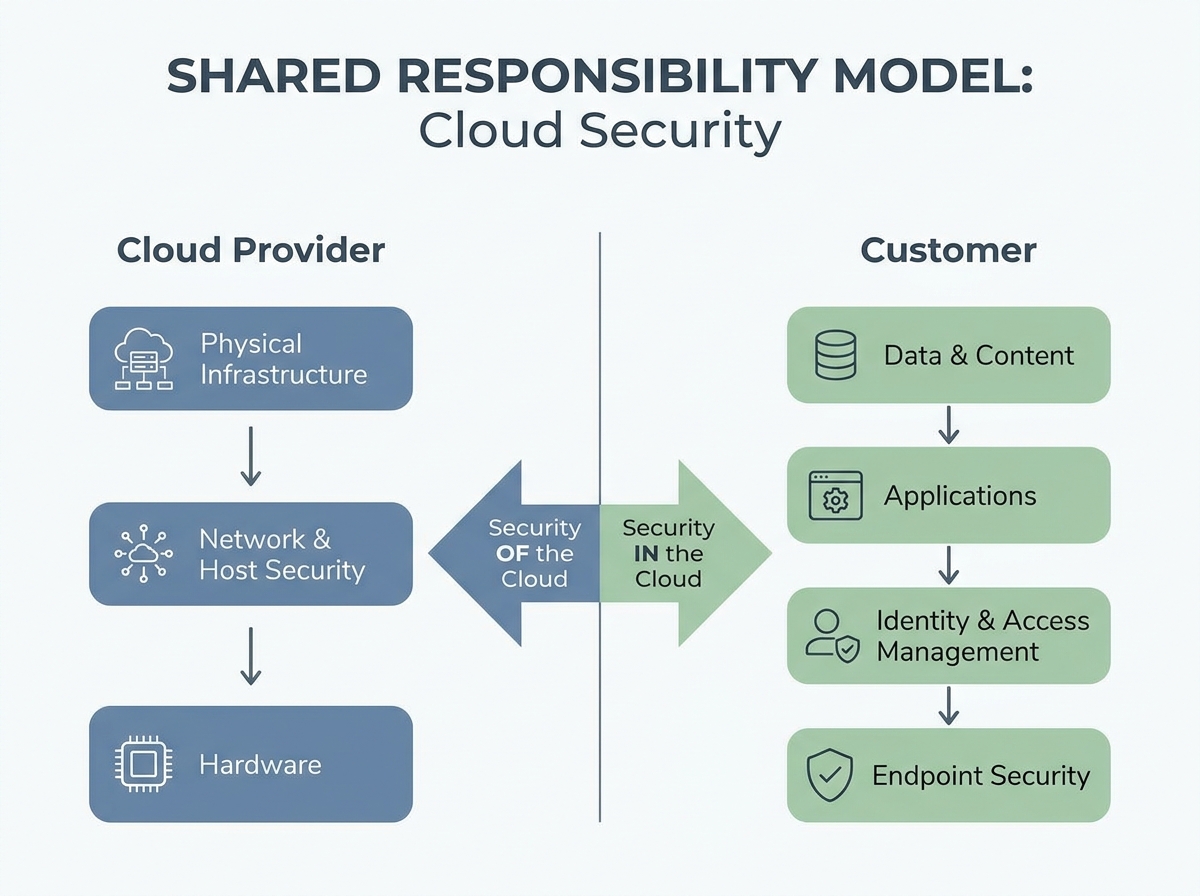
The shared responsibility model is central to cloud testing security, yet it remains one of the most misunderstood aspects of cloud adoption. While cloud providers secure the physical infrastructure, customers are accountable for everything built on top: applications, data, configurations, and user access. In cloud testing environments, teams must have absolute clarity about where their responsibilities begin and end – or risk creating dangerous blind spots.
LoadFocus is an all-in-one Cloud Testing Platform for Websites and APIs for Load Testing, Apache JMeter Load Testing, Page Speed Monitoring and API Monitoring!
At a high level, cloud providers ensure the security “of” the cloud: data centers, hardware, networking, and foundational software. Customers, meanwhile, handle security “in” the cloud: workloads, data protection, network controls, and user permissions. In testing environments, this includes configuring IAM roles, encrypting test data, reviewing access logs, and ensuring no sensitive information or credentials leak during performance or load tests.
| Component | Who Secures It | What Can Go Wrong |
|---|---|---|
| Physical servers & storage | Cloud provider | Provider-side failures (e.g., hardware theft, data center breach) are rare but possible |
| Cloud platform software (hypervisors, networking) | Cloud provider | Unpatched vulnerabilities may be exploited before the provider issues a fix |
| IAM roles & permissions | Customer | Misconfigured IAM can lead to privilege escalation or unauthorized access – misconfigurations are a leading cause of breaches |
| Data encryption (at rest/in transit) | Customer | Failure to enable encryption exposes test data, leading to compliance violations |
| Storage buckets (S3, Blob, etc.) | Customer | Publicly accessible test storage reveals sensitive test data or credentials |
| Application code & dependencies | Customer | Unpatched libraries or insecure code can be exploited during test runs |
Common Pitfalls in Responsibility Assignment
Misunderstandings around who secures what are frequent, leading to some of the most costly lapses in cloud testing security. Misconfigurations – especially of IAM roles and storage permissions – are a leading cause of cloud breaches, as noted earlier. One common scenario: a team assumes their cloud provider encrypts all data by default, but in reality, encryption must be explicitly configured for test databases and storage buckets. This oversight can result in sensitive test data being inadvertently exposed to the public internet or unauthorized internal users.
Another frequent pitfall is the use of default or overly broad permissions for testing environments. Test engineers may provision resources quickly, granting excessive access to speed up automation or debugging, but never revisit those settings. These environments become a weak link, especially when overlooked during regular security reviews. Attackers often target test and staging environments, exploiting the fact that security controls there are typically less stringent than in production.
Finally, organizations sometimes believe that penetration testing and vulnerability scanning are the provider’s job. In reality, most providers prohibit customers from scanning their infrastructure but expect customers to rigorously test their own applications and configurations. Failing to run regular security scans and compliance checks – using tools like SAST, CASB, or CSPM – leaves critical gaps that automated attacks can exploit.
Operationalizing the boundaries of the shared responsibility model requires ongoing education, cross-functional alignment between security and testing teams, and proactive monitoring of all moving parts within your cloud testing environments. Treating it as a living discipline, not a static policy, is essential for preventing costly breaches.
Top Cloud Testing Security Threats in 2026
The risks facing cloud testing security are more acute than ever. The difference between a secure test environment and a reputational crisis often comes down to how you manage access, visibility, and complexity.
| Threat | Risk to Test Data | Mitigation Priority |
|---|---|---|
| Misconfigured IAM and Access Controls | Unauthorized access by internal or external actors; risk of exfiltration or tampering with sensitive test data | Critical – Misconfigurations are a leading cause of breaches |
| Publicly Exposed Test Data (Storage Buckets, Endpoints) | Direct exposure of confidential test datasets via open storage or unsecured endpoints | High – Immediate remediation required |
| Privilege Escalation & Lateral Movement | Attackers move from lower-privilege accounts or services to access higher-value data | Critical – Can quickly lead to full environment compromise |
| Insecure Integrations (APIs, Third-party Tools) | Weak links in connected services can become entry points for attackers | High – Regular security reviews needed |
| Compliance Risks & Data Residency Violations | Storing or processing test data in non-compliant regions can result in fines and legal exposure | High – Audit and enforce data residency policies |
Where Most Teams Stumble: IAM, Exposure, and Integrations
IAM misconfigurations are a root cause for many breaches. A single overly permissive role or neglected service account can give attackers undue access. In cloud-based testing, where automation rapidly spins up and tears down environments, permissions often linger or expand unnoticed.
Publicly exposed test data is another frequent issue. Storage buckets intended for internal use sometimes go live without encryption or authentication, exposing sensitive datasets. Even a single open endpoint can lead to a breach, especially since test data often mirrors production in structure or content.
Privilege escalation and lateral movement are especially dangerous in cloud testing environments. If an attacker compromises a test automation host or CI/CD integration, they may use that foothold to pivot into other systems, escalating privileges and harvesting more sensitive data along the way.
Integrating with third-party tools and APIs increases risk. An insecure API or outdated plugin can become an attacker’s entry point. Many teams rely on a mix of open-source, SaaS, and internal tools – each with distinct security postures and update cadences. Every integration should be audited and continuously monitored.
Compliance, Data Residency, and the Cost of Mistakes
Compliance violations are rarely intentional, but they’re expensive. Storing test datasets in regions that violate GDPR, HIPAA, or PCI DSS requirements can result in heavy fines and brand damage. The lines between production and test data are increasingly blurred – test environments sometimes contain real customer data, making data residency and encryption as critical in non-production as in production.
Continuous cloud security testing – using SAST, CASB, and CSPM tools – is now standard practice for organizations aiming to stay ahead of attackers and regulators. Periodic audits are no longer sufficient. The attack surface grows and shifts daily.
Emerging Risks in Multi-Cloud and Hybrid Environments
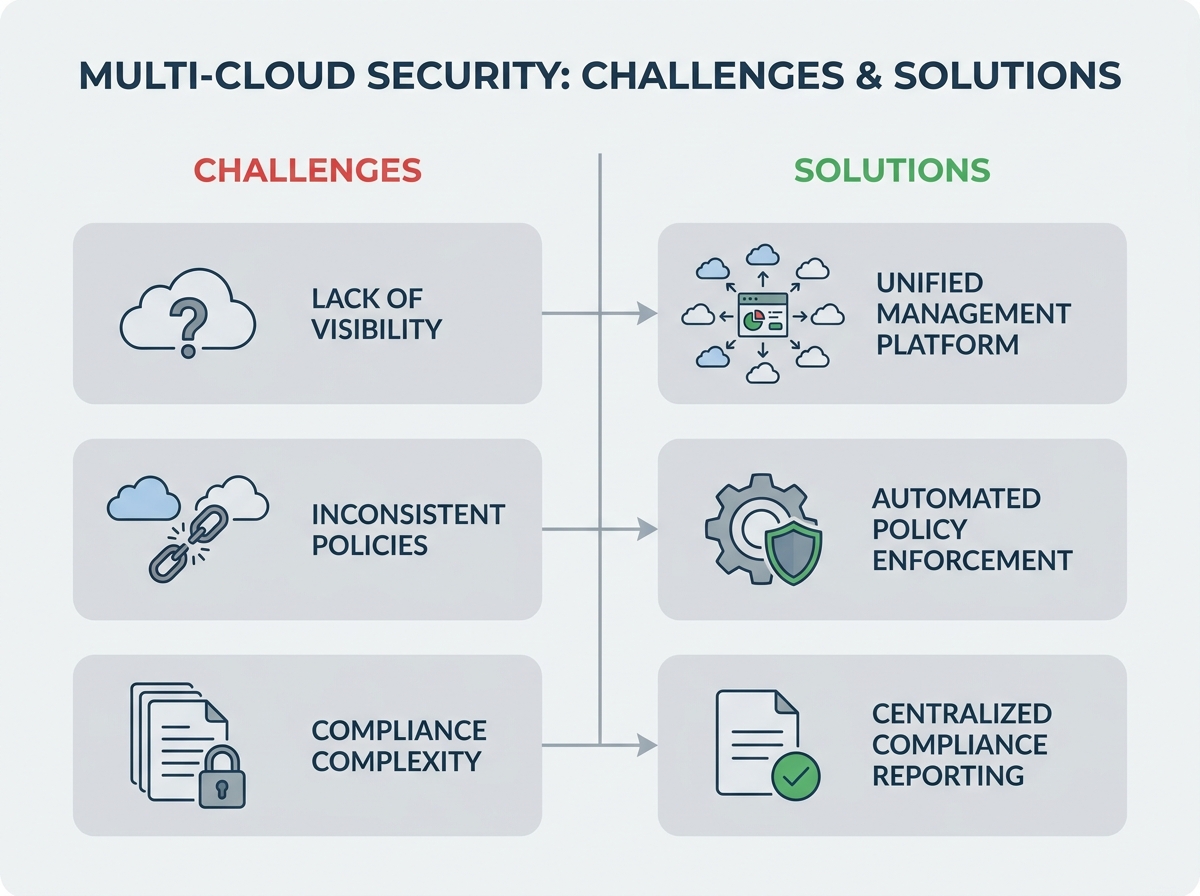
The move toward multi-cloud and hybrid cloud setups brings both flexibility and increased complexity. Each provider has its own IAM model, encryption defaults, and compliance frameworks. Orchestrating security across AWS, Azure, GCP, and private clouds introduces complexity that often results in blind spots. For example, a misconfigured storage bucket in one provider may go unnoticed because security tooling is not standardized across all environments. Likewise, inconsistent audit logging or delayed alerting can allow threats to persist across clouds.
Hybrid environments bring their own challenges. Data in transit between on-premises and cloud systems can be intercepted if not encrypted properly. Synchronization lags may leave old permissions active longer than expected. Attackers capitalize on these lapses, moving laterally between cloud and on-premises resources to locate vulnerable data or under-protected test systems.
Staying ahead in 2026 means treating multi-cloud and hybrid complexity as a primary security concern. Invest in unified policy enforcement, cross-cloud visibility, and regular posture assessments. Continuous vigilance is the only way to keep critical test data secure in interconnected cloud environments.
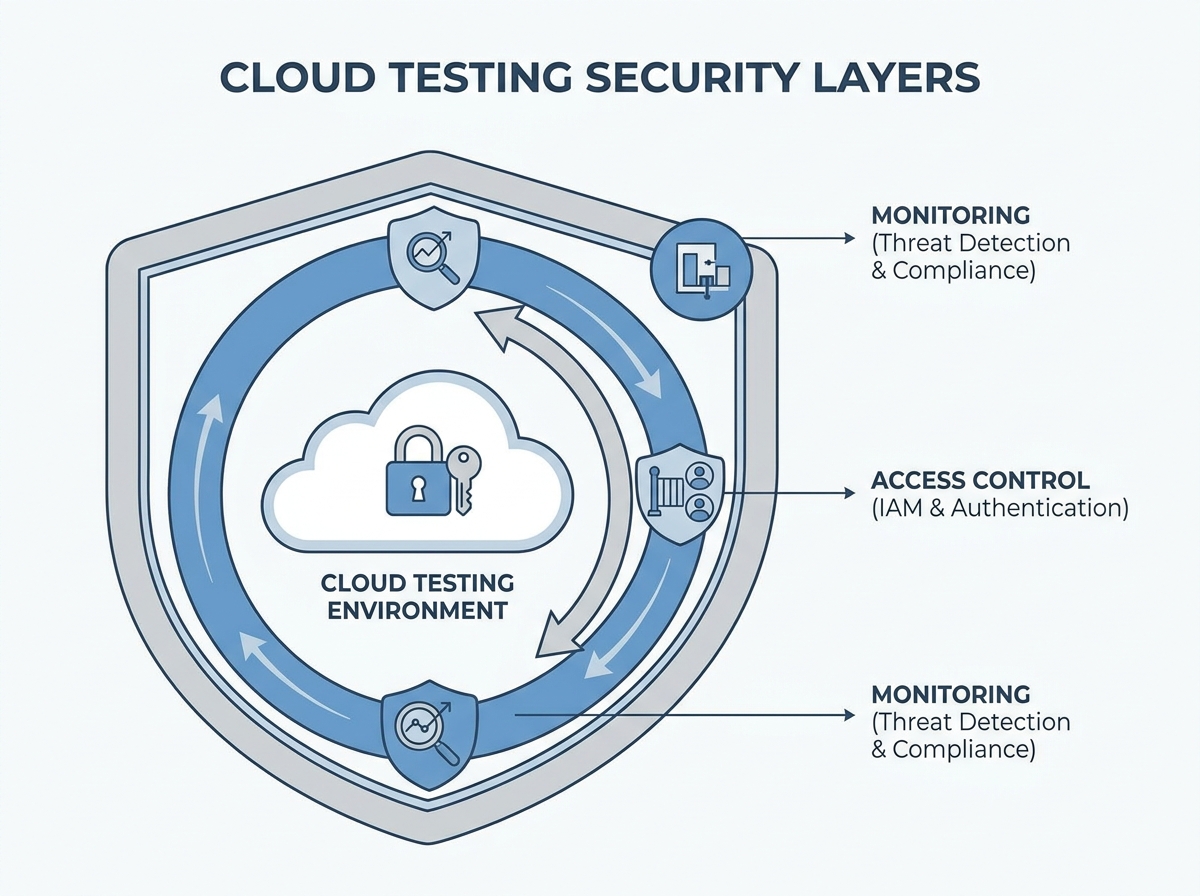
Building a Secure Cloud Testing Environment: A Practical Framework
Architecting secure cloud testing environments requires more than spinning up temporary instances and running tests. With misconfigurations responsible for a significant share of cloud data breaches, a practical framework for cloud testing security prioritizes network segmentation, role-based access controls, and secure configuration management from the outset. Here’s how to put it into action.
| Framework Element | What It Does | Why It Matters |
|---|---|---|
| Network Segmentation & Isolation | Separates test environments from production and other sensitive networks using virtual private clouds (VPCs) and subnets. | Limits blast radius if test data is compromised and prevents lateral movement during a breach. |
| Role-Based Access Controls (RBAC) | Assigns granular permissions to users and services, enforcing least privilege across testing tools and infrastructure. | Reduces risk of privilege escalation and accidental exposure of sensitive data or systems. |
| Secure Configuration Management | Automates deployment of hardened, compliant test environments with predefined templates or blueprints. | Prevents misconfiguration and ensures environments meet compliance standards. |
| Automated Provisioning | Uses scripts or orchestration tools to spin up and tear down environments on demand, reducing human error. | Minimizes exposure window and ensures ephemeral test data is not left accessible after tests complete. |
| Continuous Monitoring & Audit | Implements logging, anomaly detection, and audit trails for all test environment activities. | Enables rapid detection and investigation of suspicious activities or policy violations. |
Automating Security with IaC (Infrastructure as Code)
Manual configuration is a major liability in cloud security testing. Infrastructure as Code (IaC) tools, such as Terraform or AWS CloudFormation, allow you to codify your security standards and provision environments that are secure by default. With IaC, you define network segmentation, RBAC policies, and resource constraints in code – reviewed, version-controlled, and reusable.
For example, IaC templates can ensure test VPCs are provisioned with no internet-facing endpoints, subnets are configured with strict security groups, and test data is accessible only to authorized roles. Embedding compliance controls directly into these templates guarantees that every new environment meets your required baseline, eliminating ad-hoc changes that introduce risk.
Automated provisioning also means environments are ephemeral. Once tests complete, teardown scripts ensure all resources and test data are destroyed, leaving no lingering exposures. This approach not only strengthens your cloud testing security posture but also supports auditability, since every change is traceable through source control.
Integrating Security into CI/CD Pipelines
Security checks must become an integral part of your CI/CD process. Embedding SAST, CASB, or CSPM scans directly into your pipeline ensures vulnerabilities and misconfigurations are caught before code or infrastructure ever reaches production or even a test environment.
Platforms can trigger automated compliance and vulnerability scans as part of the build process. For instance, after provisioning a test environment, your pipeline can run security validation scripts to confirm that IAM roles aren’t over-permissioned, that no test data is exposed to public networks, and that all monitoring hooks are active.
This approach shifts security left and reduces friction by catching issues at the point of introduction. By automating security gates early and often, teams avoid the common scenario where compliance or security review becomes a bottleneck late in the release cycle.
Ultimately, a secure cloud testing environment relies on continuous vigilance, proactive automation, and a culture that treats security as a shared responsibility. As cloud services and integration points grow in complexity, organizations that embrace structured frameworks and automated controls are best positioned to protect both their data and their reputation.
Data Protection Strategies for Cloud-Based Test Data
When you move application testing to the cloud, safeguarding sensitive test data becomes a critical concern. Many organizations have reported cloud data breaches, often linked to misconfigurations and weak data protection controls. A practical, layered approach to data protection is essential for anyone serious about cloud testing security.
Data Masking, Anonymization, and Tokenization for Test Datasets
Your test environments don’t need live Social Security numbers, credit card details, or customer names. Yet, teams often clone production data into cloud test systems out of convenience – creating a compliance and privacy risk. The solution is to replace or alter real data using masking, anonymization, or tokenization before it enters the cloud:
- Data masking scrambles sensitive fields – such as masking all but the last four digits of a credit card number – so test cases function but attackers can’t extract value.
- Anonymization strips data of identifying details, suitable for analytics and non-functional tests where traceability isn’t needed.
- Tokenization swaps sensitive values with reversible tokens, allowing restoration for specific tests if absolutely required.
Encryption at Rest and in Transit: Options and Limitations
Encryption is foundational for cloud testing security, but implementation details matter. Every cloud provider now offers server-side encryption for storage, but relying on default settings is risky. Explicitly enable encryption for all test data buckets and persistent disks, and manage keys through your provider’s KMS or a dedicated HSM. For data in transit, enforce TLS 1.2 or higher for all connections, including internal API calls and between test runners and storage.
Encryption’s main limitation is that it does not prevent misuse by insiders or over-permissioned accounts. If someone with access to your test environment dumps decrypted data, encryption alone is insufficient. Combine it with the principle of least privilege and audit logging for effective protection.
Managing Secrets and Credentials Securely (Not in Code or Configs)
One of the most common mistakes is embedding database passwords, API keys, or cloud credentials directly in test scripts or configuration files. This creates a goldmine for attackers – especially in shared or open-source codebases. The only secure approach is to use a dedicated secrets manager (AWS Secrets Manager, GCP Secret Manager, HashiCorp Vault, or similar) and inject secrets at runtime via environment variables or secure API calls. Rotate credentials frequently and audit access, especially for ephemeral test environments that may spin up and down automatically.
| Data Protection Method | When to Use | Limitation |
|---|---|---|
| Data Masking | Functional testing, when format is needed but values must be obfuscated | May not fully protect if patterns are predictable or masking is weak |
| Anonymization | Analytics, non-functional tests, privacy-first scenarios | Irreversible; test data can’t be mapped back to real users |
| Tokenization | Integration tests needing round-trip validation or data restoration | Requires strong token management; risk if tokens are leaked |
| Encryption at Rest | Any stored test data (buckets, disks, databases) | Doesn’t protect against privileged misuse or live access |
| Encryption in Transit | APIs, inter-service calls, external integrations | Vulnerable if endpoints accept plaintext fallback or outdated TLS |
| Secrets Manager | Storing credentials, API keys, tokens for test environments | Added complexity; requires disciplined access management |
Before/After: Test Data Handling Transformation
| Before | After |
|---|---|
|
Test environment is seeded with a direct copy of the production database, containing real customer names, emails, and credit card details. Database connection strings and API keys are stored in plaintext within config files checked into the test repo. No encryption is enforced, and S3 buckets are set to public-read for convenience. |
Test data is masked and anonymized: names and emails are replaced with synthetic values, credit cards are tokenized. No sensitive secrets are stored in code or configs; all credentials are injected at runtime from a secrets manager and rotated regularly. All test data stores are encrypted at rest and in transit, with access restricted to test automation accounts only. |
The difference is significant. In the first scenario, any breach exposes real customer data and hardcoded secrets, creating regulatory and reputational risk. The improved approach ensures test data is de-identified, secrets are managed centrally, and even if a leak occurs, attackers gain nothing of value. These changes require discipline and the right tools, but they are now expected practice for any cloud-first team prioritizing cloud testing security.
As cloud adoption expands, building these data protection controls into your testing workflow is not just about compliance – it’s about keeping your test environments from becoming the weakest link in your security chain.
Continuous Cloud Security Testing: Tools and Automation
With cloud testing security taking center stage in 2026, continuous monitoring and automation have become essential. The days of occasional, point-in-time assessments are over. Organizations face a reality where many have experienced cloud data breaches, and the stakes are high. The tooling must keep pace.
Automated Scans: Closing Gaps and Saving Time
Manual checks can’t keep up with the pace of cloud change. Cloud-native assets – such as IAM roles, containers, and serverless functions – are spun up and deprecated in minutes. Automated security scans and continuous monitoring address this speed and complexity. Tools like SAST (Static Application Security Testing), DAST (Dynamic Application Security Testing), CASB (Cloud Access Security Broker), and CSPM (Cloud Security Posture Management) run scheduled or event-driven scans to uncover vulnerabilities, misconfigurations, and compliance drift.
For example, a well-tuned CSPM tool can flag an exposed S3 bucket or an overly permissive IAM policy within minutes of a change. CASBs help monitor traffic and access patterns to identify shadow IT and risky behaviors, while SAST and DAST help secure application code before it hits production. These automated checks reduce manual effort, catch issues that humans miss, and – when integrated into CI/CD pipelines – let teams block risky deployments before they go live.
Choosing the Right Tools for Your Cloud Stack
Not every organization needs the same security stack. Tool selection should consider:
- Cloud provider coverage: Multi-cloud shops need tools that support AWS, Azure, and Google Cloud without gaps.
- Integration: Look for solutions that plug into your CI/CD, ticketing, and notification systems. Time-to-remediation should be measured in hours, not days.
- Depth vs. breadth: Some tools excel at deep scanning of cloud infrastructure (CSPM), while others focus on application-layer vulnerabilities (SAST/DAST) or user behavior analytics (CASB).
- Contextual prioritization: Alert fatigue is real. The best tools help teams focus by grouping findings by risk, asset criticality, and compliance impact.
Platforms in the cloud testing space are increasingly integrating with these security tools. For instance, after running a load or performance test, a platform can trigger security scans or send results to a CSPM for correlation with infrastructure changes. This creates a feedback loop: performance and security insights inform each other, reducing blind spots.
| Tool Type | Primary Focus | Strength | Typical Integration Points | Example Use Case |
|---|---|---|---|---|
| SAST | Source code analysis | Early detection of code flaws | Code repos, CI pipelines | Flagging hardcoded secrets in code before deployment |
| DAST | Running applications | Finds runtime vulnerabilities | Staging/prod environments | Scanning APIs for injection flaws during staging tests |
| CASB | Cloud access and usage | User activity monitoring | Cloud apps, identity providers | Detecting unauthorized file sharing in SaaS apps |
| CSPM | Cloud infrastructure | Misconfiguration detection | Cloud consoles, IaC tools | Alerting on exposed storage buckets in real time |
Integrating Security Alerts into DevOps Workflows
Automated detection is only useful if teams act on what’s found. The most mature cloud testing security programs embed actionable alerts directly into developer and operations workflows. Here’s how:
- Route alerts to the right people: Use tags, asset ownership data, or code commit metadata to assign incidents. Avoid dumping every alert in a generic Slack channel.
- Tune alerting thresholds: Integrate risk context and asset criticality. For example, block deployment on critical misconfigurations but allow informational findings to simply open a ticket.
- Automate response playbooks: For recurring issues – like a public S3 bucket or a privilege escalation path – trigger scripts to auto-remediate or roll back changes while notifying the responsible team.
Platforms support webhook integrations and custom alerting logic, making it possible to connect test results with incident management tools or chatops workflows. This tight feedback loop minimizes exposure windows and ensures no alert is lost in the noise.
Continuous, automated security testing is no longer a luxury. With breaches and costs rising, organizations that invest in end-to-end automation and smart alerting stand the best chance of keeping their cloud assets secure and their reputations intact.
Compliance in Cloud Testing: Meeting GDPR, HIPAA, PCI DSS and Beyond
Achieving regulatory compliance in cloud testing demands more than simply encrypting test data or checking a box in your security checklist. Each regulation – whether GDPR, HIPAA, or PCI DSS – carries unique requirements that directly impact how you manage, store, and use data in your test environments. As noted earlier, misconfigurations, including in test and staging environments, account for a significant share of cloud data breaches.
To stay compliant, you need a disciplined approach to mapping regulatory requirements to your cloud testing scenarios. For GDPR, this means ensuring all test data is pseudonymized or anonymized, and that you have explicit records of data processing activities. HIPAA requires strict auditability of who accesses protected health information (PHI) in your test systems. PCI DSS mandates that test data doesn’t expose real cardholder information, and that all access is logged, monitored, and limited to those with a clear business need.
Audit trails, logging, and documentation are your foundation for demonstrating compliance. Every access to sensitive test data should be logged, with immutable records that detail when, who, and what was accessed or changed. Automated tools can help here: integrating logging and monitoring directly into cloud-based testing pipelines not only ensures accuracy but also saves hours during audits. Documentation – mapping data flows, permission sets, and incident response procedures – serves as your evidence during regulatory reviews.
Continuous compliance monitoring is now essential. The dynamic, ephemeral nature of cloud test environments means configuration drift or vulnerabilities can appear overnight. Modern cloud testing platforms offer real-time monitoring and analysis that can flag compliance risks as soon as they arise. Embedding these checks into your CI/CD pipelines ensures that new changes are automatically vetted against your compliance posture.
Key Insight: The fastest way to lose compliance in cloud testing is to treat test environments as exempt from the rules that govern production – regulators and attackers certainly do not.
Common Compliance Pitfalls in Test Environments
Most compliance breaches in cloud testing originate from test setups that mirror production data and permissions without the same security rigor. Frequent pitfalls include using live customer data for testing, neglecting to encrypt data at rest and in transit, and failing to implement strong access controls for developers, testers, and automation tools.
Another recurring error is insufficient audit logging or failing to review logs regularly. Even if you generate logs, a lack of process to analyze them leaves you exposed. Documentation gaps – like not mapping which test systems hold sensitive data – can turn a minor oversight into a major compliance failure during an audit. Finally, configuration drift – where test environments gradually diverge from baseline security settings – can silently introduce vulnerabilities that go unnoticed until it’s too late.
To avoid these pitfalls, use only sanitized or synthetic data in testing, enforce the same access controls as in production, and automate compliance checks wherever possible. Make audit logs immutable and continuously review them for anomalies. Properly documenting your test environment architecture and data flows is essential for proving compliance when it matters most.
Before/After: Real-World Cloud Testing Security Improvements
Contrasting Insecure and Secure Load Testing Patterns
When it comes to cloud testing security, the difference between a risky approach and a strong one is stark – especially in how teams handle load testing for sensitive APIs. Insecure practices not only open the door to breaches and non-compliance, but they can also undermine trust when customers expect airtight data protection.
| Before (Insecure Approach) | After (Secure Approach) |
|---|---|
|
API authentication keys and test credentials are stored in plain text within test scripts and shared over email or chat apps. Load tests are run from untrusted personal laptops, sometimes outside of sanctioned cloud regions.
Test data includes real customer records pulled from production. IAM roles for test runners are over-provisioned, with broad write/delete permissions across cloud resources. No automated scan for exposed endpoints or credential leaks before pushing to production. |
Secrets management is enforced using encrypted vaults or managed secret stores, with test accounts isolated and tightly scoped to minimal privileges. Load tests are executed through a dedicated, hardened cloud environment, configured to use only approved IP ranges and compliant cloud regions.
Synthetic or masked data replaces all sensitive records. IAM roles are provisioned with the principle of least privilege – test runners can only access what they absolutely need. Pre-production pipelines include automated scans for misconfigurations, exposed endpoints, and credential exposure using CSPM tools. |
Why the Secure Approach Matters
The insecure pattern above exposes organizations to the same risks that contribute to many cloud data breaches. Storing credentials in plain text and using real customer data for testing dramatically increases the chance of a costly breach. Overly broad IAM permissions and uncontrolled test environments make compliance with GDPR or HIPAA almost impossible to demonstrate during an audit.
By shifting to a secure, policy-driven approach, organizations not only reduce technical risk, but also create a repeatable process for meeting regulatory obligations. Using proper secrets management, least-privilege IAM, and synthetic data helps limit the attack surface and decrease the impact of human error. Embedding tools that automate misconfiguration checks ensures that even as environments grow more complex, exposures are detected before they reach production.
This before/after shift in cloud testing security isn’t just about compliance – it’s about operational resilience and building a reputation for trust in a market where security failures are increasingly public and expensive.
Common Cloud Testing Security Mistakes to Avoid
Reusing Production Data in Test Environments Without Masking
A frequent and risky misstep in cloud testing security is copying production data directly into test environments without proper masking or anonymization. This shortcut exposes sensitive information – such as customer names, addresses, or payment details – to unnecessary risk. Test environments often have broader access or less monitoring than production, making them a favorite target for attackers.
To prevent this, always obfuscate or tokenize sensitive data before use in testing. Masking tools and data generation scripts can help maintain test coverage while protecting regulated or private information. Never assume your test environment is immune to breach, especially in organizations with multiple cloud accounts or regions.
Neglecting to Revoke Temporary Access After Testing
Temporary privileges are a necessity during cloud testing, but they’re often forgotten once the project wraps up. When testers or external consultants retain unused access, you leave open doors for future incidents. Misconfigurations – often in IAM policies – are a common cause of cloud breaches, and lingering credentials play a significant role.
The best approach is to implement automated expiration policies for any test-related credentials or permissions. Where possible, use short-lived tokens and enforce post-test audits to ensure privileges are removed promptly. Regularly review IAM logs to catch any overlooked accounts before they become a liability.
Assuming Compliance Is Handled by the Cloud Provider
Many organizations fall into the trap of believing that regulatory compliance – such as GDPR, HIPAA, or PCI DSS – is fully covered by their cloud service. The reality is quite different. While providers secure the infrastructure, you remain responsible for data handling, access controls, and application-level safeguards.
To bridge this gap, stay up to date on your provider’s shared responsibility model and verify your own configuration against recognized standards. Use continuous compliance tools to scan for policy drift and misconfigurations. Regular audits, combined with cloud-specific security testing, help ensure you aren’t caught off guard by a gap that no vendor contract will magically close.
Avoiding these pitfalls requires a disciplined approach and ongoing vigilance.
Key Takeaways: Building Trust Through Cloud Testing Security
Security as a Foundation for Brand Trust
Recent data shows that many companies have reported cloud data breaches, with significant financial impact. These findings highlight how strong cloud testing security underpins brand reliability and customer confidence. When organizations actively demonstrate compliance with standards like GDPR or PCI DSS, they do more than avoid fines – they earn the trust of clients who are increasingly discerning about where their data lives.
Innovation and Risk: Striking the Right Balance
Adopting new cloud technologies brings fresh opportunities, but it also increases the attack surface. Misconfigurations cause a significant portion of cloud breaches. Proactive cloud testing – using tools for continuous scanning, penetration testing, and automated audits – lets you innovate without gambling on security. Embedding these checks within your development pipeline is a strategic move to keep risk and agility in balance.
Continuous Improvement is Non-Negotiable
Cloud environments never stay static. As services interconnect and compliance requirements shift, ongoing cloud testing security is the only way to ensure you’re not caught off guard. Continuous monitoring and rapid adaptation are now essential for anyone serious about protecting data and maintaining trust.
Key Insight: Consistent, proactive cloud testing security turns compliance and risk management into competitive advantages that strengthen brand reputation and customer loyalty.
Frequently Asked Questions
What makes cloud testing security unique compared to traditional security testing?
Cloud environments introduce risks that rarely appear in on-premises setups, such as misconfigured access controls, publicly exposed storage, and complex service interconnections. Unlike traditional testing, cloud security assessments must focus heavily on identity and access management (IAM) and the dynamic nature of cloud infrastructure. For example, an overlooked IAM policy could accidentally grant broad access to sensitive data, which is a leading cause of breaches in the cloud.
How do I reduce the risk of data breaches when testing in the cloud?
Consistently review IAM roles, encrypt test data, and limit user privileges to only what is necessary. Misconfigurations are a common cause of cloud breaches, so double-check storage permissions and audit API endpoints. Use automated tools like SAST, CASB, and CSPM to help flag issues before they become incidents. Avoid using real production data in lower environments unless it’s fully anonymized and encrypted.
What is the shared responsibility model, and why does it matter?
In the shared responsibility model, cloud providers secure the underlying infrastructure, while customers are responsible for securing their own data and application configurations. Many organizations are caught off guard by this split, leading to security gaps. For example, while your cloud provider handles the physical security of servers, you must configure access controls, encryption, and monitoring on your resources. Not understanding this division can lead to overlooked vulnerabilities.
How often should I conduct cloud security testing?
Continuous cloud security testing is strongly recommended over point-in-time audits. Cloud environments change rapidly, so a single assessment may miss new exposures created by frequent deployments. Integrate automated security scans and compliance checks into your CI/CD pipelines to catch issues early and reduce your exposure window.
Which compliance standards should I prioritize for cloud testing?
Start with those most relevant to your industry and geography. GDPR, HIPAA, and PCI DSS are common benchmarks for data protection and privacy. Compliance is not just about avoiding fines – it’s about building customer trust. Demonstrate your commitment by documenting cloud testing security practices and audit trails.
What are the most common mistakes teams make with cloud testing security?
- Relying solely on cloud provider defaults for security settings
- Ignoring IAM misconfigurations and leaving excessive permissions in place
- Failing to monitor for changes in multi-cloud environments
- Using real customer data in unsecured test environments
Avoiding these pitfalls requires a disciplined approach and ongoing vigilance.
Where should I start if my team is new to cloud testing security?
Educate your team on the basics of cloud security, especially the shared responsibility model. Start with a baseline audit of current configurations, then implement automated testing with tools that fit your stack. Prioritize quick wins, such as locking down IAM policies and encrypting test data. As your program matures, expand into continuous monitoring and broader compliance coverage.
Cloud testing security is a moving target. Staying proactive and informed is the best way to protect your organization and build lasting credibility with customers and stakeholders.
Created with PostNext tool