Key takeaways
- FMP tried to capture when the main content appeared, rather than the first pixel.
- It proved hard to measure consistently and has largely been replaced by LCP.
- Use LCP for anything current; FMP appears mainly in older reports.
First Meaningful Paint (FMP) was a performance metric introduced by Google engineers: the time to paint the main content that users are interested in, the thing they came to the page for. Lighthouse deprecated it, and Lighthouse 13 removed the audit; Chrome’s own documentation now points to Largest Contentful Paint instead (developer.chrome.com, November 2026).
Rendering some background color can be much easier and faster, but that’s definitely not what the users was looking for when they entered your website.
To identify the main content of the page, FMP treated the primary elements as Hero Elements, but at the time there was no clear way to get the paint times of specific elements of the DOM (Document Object Model). LCP solved that problem by reporting the render time of the largest image or text block.
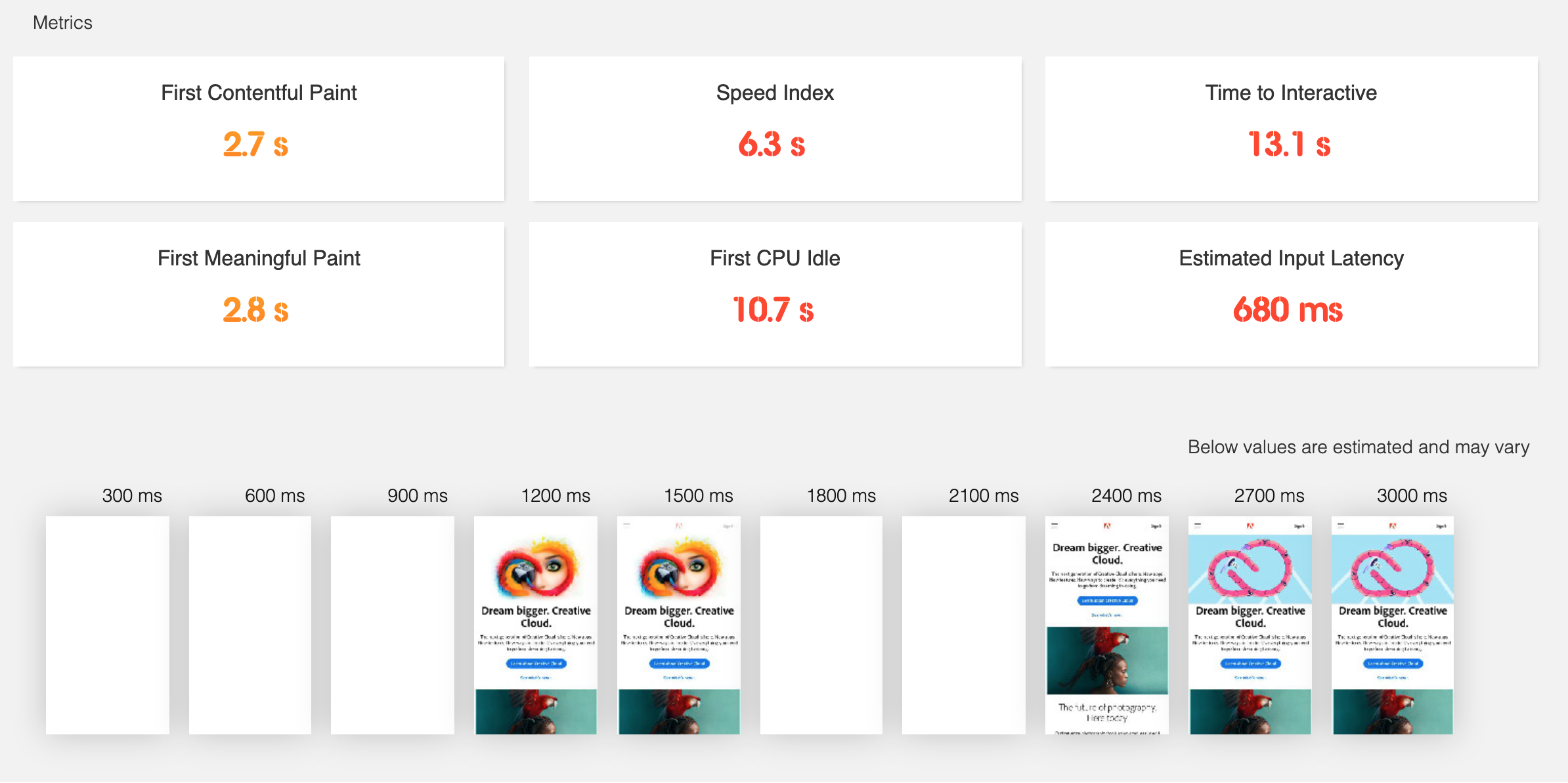
No browser ever exposed FMP as a web API. Today you can inspect First Contentful Paint (FCP) and LCP with LoadFocus page speed monitoring, which runs Lighthouse on a schedule; it does not report FMP.
First Meaningful Paint was defined as the paint after which the biggest layout change had happened.
Frequently Asked Questions
What was First Meaningful Paint?
An attempt to capture when the main content appeared, rather than the first pixel of anything. The intent was to measure when the page became useful.
Why is it no longer used?
It proved hard to measure consistently, since deciding which paint was the meaningful one is not straightforward. Largest Contentful Paint replaced it.
What should I use instead?
LCP for anything current. FMP still turns up in older reports and tooling, so it is worth recognising, but it is not the metric to optimise against today.